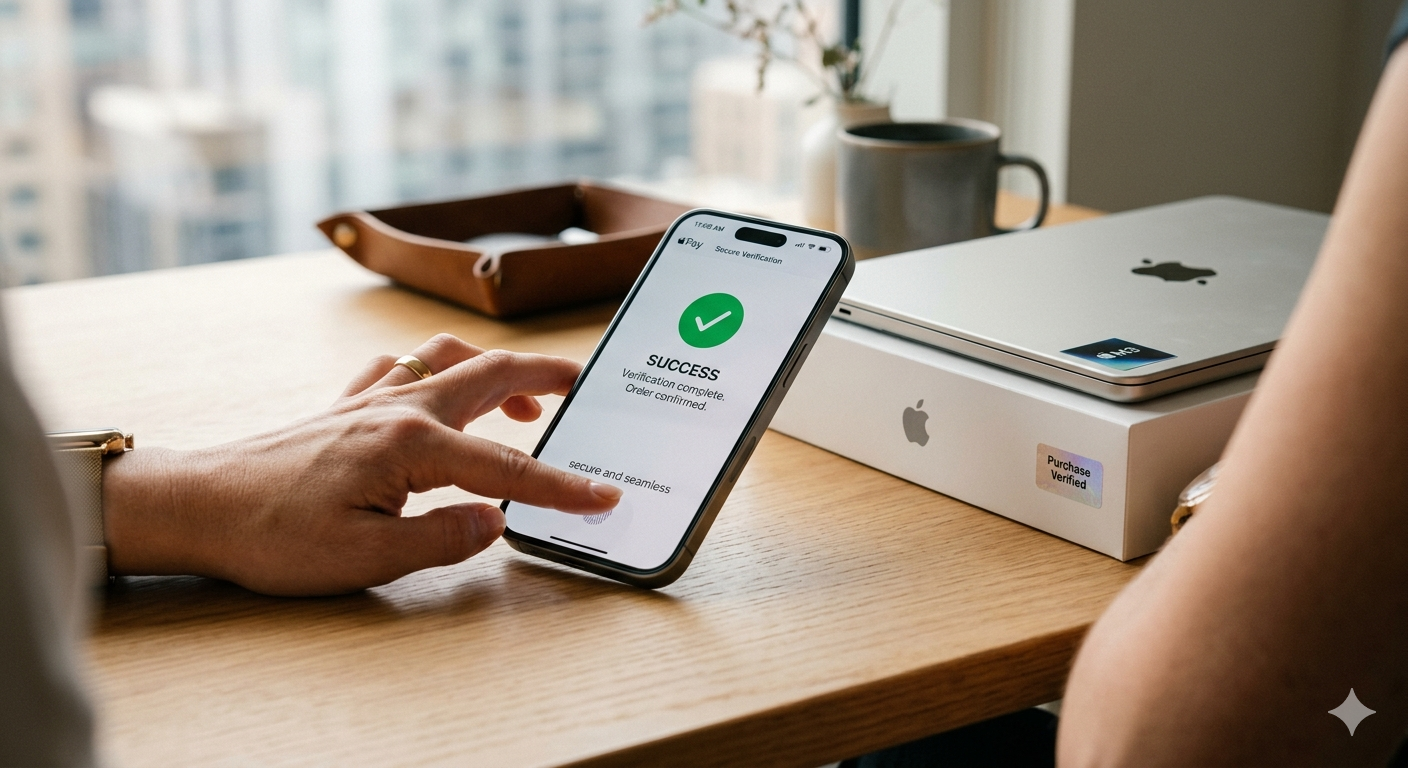
Why Your Products Need Passkeys, Not Passwords: The Future of Digital Product Identity
Key Takeaways
- Traditional warranty registration forms capture only 10–28% of eligible customers; passkey-based registration removes every friction point that causes the remaining 72–85% to abandon
- The FIDO Alliance reports over 15 billion accounts globally enabled for passkey sign-in — adoption has hit critical mass across iOS, Android, and Windows
- Passkeys authenticate a person to a specific product unit (not just a platform account), enabling cryptographic ownership transfer, scoped installer access, and phishing-resistant recall verification
- CPSC data shows traditional recall completion rates of 15–30%; passkey-verified ownership gives manufacturers a direct, verified channel to every registered owner of an affected serial number
A customer unboxes a new dishwasher. There's a QR code on the door panel. They scan it. The experience loads — setup guidance, warranty registration, product support. It looks promising.
Then the wall: Create an account.
Email address. Password. Confirm password. Agree to terms. Verify email. Come back to the page. Log in. Now fill in the warranty form.
Most people close the tab. The ones who don't are trusting an email-and-password pair — a model designed for websites in 2004 — to represent their ownership of a physical product worth several hundred pounds. A model that can be phished, shared, forgotten, and compromised. A model that has nothing to do with the person physically holding the product.
There is a better way. And it's already in every smartphone your customers own.
| Key Metric | Value |
|---|---|
| Warranty registration abandonment | ~44% form abandonment rate |
| Traditional registration capture | 10–28% of eligible customers |
| FIDO Alliance passkey adoption | 15+ billion accounts globally enabled |
| Phishing resistance | 100%—cryptographically impossible to intercept |
| Device support | iOS, Android, Windows, macOS (all major platforms) |
The unique position: BrandedMark is the only connected product platform implementing passkey-native product identity. No competitors currently offer FIDO2/WebAuthn product ownership—making this a category-defining capability.
The Authentication Problem Nobody Talks About
Why do connected product platforms lose the majority of customers at the moment of peak engagement? Every platform shares the same structural problem: the moment a customer scans a product QR code, the experience requires knowing who that person is. And resolving that question has always meant forcing account creation. The numbers tell the story. Warranty registration through traditional web forms captures 10–28% of eligible customers. Desktop form abandonment runs as high as 44%. The customers lost are early adopters — the buyers most likely to tell their networks — who abandon at the account creation wall. This is not a UX problem solvable with shorter forms. It is an architectural problem: the authentication model is wrong for the use case. When a customer scans a product they physically hold, the system should not ask for an email and password. It should ask one question: are you the person holding this product? That is exactly what passkeys do.
What Passkeys Are (and Why They Matter Now)
What are passkeys, and why does their adoption timing matter specifically for connected product manufacturers? Passkeys are the consumer-facing implementation of the FIDO2/WebAuthn standard — a W3C Level 2 Recommendation with mandatory browser support since 2022 (W3C WebAuthn Specification). Instead of typing a password, the user authenticates with their fingerprint, face, or device PIN. The credential is a cryptographic key pair stored on the device — the private key never leaves. There is no shared secret to phish, no password to forget, no credential database to breach. Every modern smartphone supports passkeys: Apple, Google, and Microsoft have built the infrastructure into iOS, Android, and Windows. Passkeys sync across devices within each ecosystem. They are phishing-resistant by design because the credential is cryptographically bound to a specific domain. The FIDO Alliance reports over 15 billion accounts globally enabled for passkey sign-in (FIDO Alliance Passkey Statistics). Apple and Google now default users to passkey creation. The web platform has caught up. The connected product industry has not noticed yet.
From Account Ownership to Product Ownership
What is the fundamental paradigm shift that passkeys introduce for product manufacturers — and why does it matter more than a UX improvement? A password authenticates a person to a platform. It says: this person has an account on our system. It says nothing about their relationship to any specific product. A passkey can authenticate a person to a product. The cryptographic key pair — public key stored against the product's digital identity, private key on the owner's device — creates a verified binding between a specific person and a specific serialised unit. Not "this person has an account." Rather: "this person is the verified owner of serial number DW-2026-0847291." This distinction transforms what is possible downstream. Ownership becomes a cryptographic fact rather than a database entry. Authentication happens at the product level, not the platform level. The customer scans, authenticates with their face or fingerprint, and the product knows them — without requiring knowledge of or loyalty to any particular platform. The model finally maps to how physical ownership actually works.
What This Unlocks for Manufacturers
What specific capabilities does passkey-based product identity unlock for manufacturers — beyond better registration rates? Five distinct use cases open up: zero-friction warranty registration that collapses the flow to under 15 seconds, cryptographic ownership transfer that survives resale and makes second owners first-class customers, scoped installer and technician access without credential sharing, anti-counterfeiting verification that is hardware-bound rather than visual, and recall notification with cryptographic identity confirmation. Each of these is a direct consequence of the shift from platform-level to product-level authentication. The same infrastructure that makes registration frictionless also makes ownership transferable, service access manageable, and recall completion verifiable — because all of them depend on the same underlying question being answered correctly: who is the verified owner of this specific unit?
Zero-Friction Warranty Registration
The entire registration flow collapses to seconds:
- Customer scans the QR code on the product
- The experience prompts: "Register this product as yours"
- Customer confirms with Face ID, fingerprint, or device PIN
- A passkey is created, binding the customer's device to this specific product serial
- Warranty is registered. Owner is known. Relationship begins.
No email. No password. No form. No verification email. No "come back and log in." The customer goes from unboxing to registered owner in under 15 seconds, using a gesture they perform dozens of times a day — unlocking their phone.
Compare this to the current state: a web form that captures 15-28% of customers. Passkey-based registration removes every friction point that causes the other 72-85% to abandon.
Secure Ownership Transfer
Products change hands. Appliances are sold with houses. Power tools are gifted. Commercial equipment is leased and returned. Every ownership change is currently either invisible to the manufacturer or requires a "contact support" process to update.
With passkey-based ownership, transfer becomes a cryptographic operation:
- Current owner initiates transfer from the product experience
- New owner scans the product and creates their own passkey
- The previous owner's key is revoked; the new owner's key is bound to the product
- Warranty status, service history, and product data transfer with the product — not with the old owner's email account
No support tickets. No account sharing. No "I bought this secondhand and I can't access anything." The product's digital identity persists across owners, and each owner is cryptographically verified.
Installer and Technician Access
Many durable goods — HVAC systems, commercial kitchen equipment, smart home devices — involve professional installation and field service. Today, giving a technician access to product data means either sharing login credentials (insecure), creating temporary accounts (friction), or printing configuration sheets (defeats the purpose of digital).
Passkeys enable scoped, time-limited access. An installer scans the product and authenticates with their own device. The system grants them an installer-level credential — access to configuration data, installation guides, and commissioning workflows — without sharing the owner's credentials or creating a platform account. The credential can be scoped to a time window and automatically revoked after the service visit.
Anti-Counterfeiting
Counterfeiting in consumer durables and industrial equipment is a growing problem, particularly for spare parts. A product with a passkey-protected digital identity creates a verification chain:
- The product's QR code links to its digital identity on the manufacturer's platform
- The digital identity is bound to a cryptographic record that cannot be duplicated
- A customer scanning a genuine product gets the authenticated experience; scanning a counterfeit gets nothing — or a warning
This is fundamentally stronger than hologram stickers, scratch-and-verify codes, or any visual authentication method. The verification is cryptographic, not visual. It cannot be counterfeited because the private key material never leaves the manufacturer's infrastructure.
Recall Verification
When a safety recall is issued, manufacturers need to reach the actual owners of affected units — and verify that the person responding is the real owner. Today, with 15–30% recall completion rates — a figure cited repeatedly in US Consumer Product Safety Commission (CPSC) research — the majority of affected products are never addressed because the manufacturer has no direct relationship with the owner (CPSC Recall Effectiveness Research).
Passkey-based ownership inverts this:
- The manufacturer knows exactly who owns each affected serial number
- They can push a notification directly through the product's digital experience
- When the owner responds, their identity is verified cryptographically — not by asking them to read a serial number off the back of the product
- The recall completion record is tied to verified ownership, not self-reported data
The DPP Intersection
How do EU Digital Product Passport requirements and passkey-based ownership interact — and why does their intersection create an architectural advantage? The ESPR regulation requires a persistent digital identity for every regulated product. Passkeys provide a persistent, phishing-resistant digital identity for the product's owner. These are two halves of the same system. A DPP records what the product is: materials, compliance data, sustainability metrics, repairability score. A passkey-based ownership layer records who owns it, verifying that claim cryptographically every time the owner interacts with the product. Manufacturers who combine both layers have something neither compliance-only DPP platforms nor traditional connected product tools can offer: a product identity system that is simultaneously regulatory-compliant, genuinely secure, and built for ongoing customer relationships. Understanding digital product passport architecture and DPP implementation patterns shows why passkeys unlock compliance more elegantly than alternatives. Three layers — DPP compliance, product identity, and passkey-bound ownership — drawn from the same QR code and the same scan. The first layer satisfies the regulator. The second and third build the business. For manufacturers exploring ownership transfer, see passkey to wallet for how ownership becomes a transferable asset rather than tied to an email account.
| Layer | What it contains | Who it serves |
|---|---|---|
| DPP compliance layer | Material composition, sustainability data, repairability score, regulatory documentation | Regulators, supply chain |
| Product identity layer | Serial number, manufacture date, scan history, configuration, service record | Manufacturer, service partners |
| Ownership layer (passkey-bound) | Verified owner identity, warranty status, parts purchases, support history | Customer, manufacturer |
Implementation Reality
What does implementing passkey-based product ownership actually require in practice — and is it as complex as it sounds? Passkeys are not vapourware. The standards are mature, device support is near-universal, and every component exists in production systems today. Implementation requires five things. First, WebAuthn integration at the platform level — the product experience platform must support the WebAuthn API for credential creation and authentication, a platform capability rather than a per-product addition. Second, conditional UI for first scan — detecting device and browser support at the moment a customer scans for the first time, presenting passkey creation for supported devices and a fallback for the minority that do not yet support the standard. Third, key recovery via a backup email or phone number used only for account recovery, not day-to-day authentication. Fourth, an ownership transfer protocol that revokes the prior owner's credential and binds a new one seamlessly. Fifth, scoped, time-limited credentials for installer and service partner access. No component is speculative. The gap is assembly — no connected product platform has combined them into a product-ownership model yet.
Why Now
Why is 2026 the right moment for manufacturers to implement passkey-based product identity — rather than waiting for the technology to mature further? Three forces are converging that make the timing compelling. First, passkey adoption has hit critical mass: with Apple, Google, and Microsoft all defaulting users to passkey creation, the install base is large enough that a passkey-first product experience no longer excludes meaningful numbers of customers. The objection that "not everyone supports it yet" no longer holds. Second, DPP regulation is already driving digital identity infrastructure investment. Manufacturers preparing for ESPR compliance are about to build product identity systems anyway — the incremental cost of adding passkey-based ownership to that same infrastructure is a fraction of a separate project. Third, customer expectations have shifted. Consumers use biometric authentication dozens of times daily. Asking them to create a password to access a product they are physically holding grows more incongruous every month. The window to be first is open now.
FAQ: Passkeys and Product Identity
Will passkeys work for customers in regions with lower smartphone penetration?
Passkeys require modern device support (iOS 16+, Android 9+, Windows 10+), which covers ~95% of global device installed bases. For the small percentage without biometric devices, a recovery email/phone method provides access. The fallback path ensures nobody is locked out while maintaining security.
How do passkeys handle account recovery if a customer loses their device?
Passkeys synced through iCloud Keychain (Apple) or Google Password Manager (Android) are automatically available on new devices within the ecosystem. For complete device loss, a recovery email or phone number—used only for account recovery, not daily authentication—provides access. The system never stores the private key centrally.
Is passkey implementation difficult or expensive?
No. WebAuthn is a W3C standard with mature library support in all major frameworks. BrandedMark provides WebAuthn integration out of the box with conditional UI for first-time use. The platform handles cryptographic ceremony; your team configures the enrollment flow. Implementation typically takes 1–2 weeks from integration to production.
Can we still use passwords for customers who don't want passkeys?
Yes, but we don't recommend it. Passkeys are strictly more secure than passwords (phishing-resistant, no shared secrets), and adoption is accelerating rapidly (Apple and Google default users to passkey creation). A password fallback creates security gaps. Instead, offer exceptional user experience at passkey creation so the friction that would drive password preference disappears entirely.
Try It: Live Passkey Demo
Experience what passkey authentication feels like. This demo uses the real WebAuthn API in your browser — no server, no account required.
Interactive Passkey Demo
Register a passkey with your fingerprint or face, then sign in with it. This is what your customers would experience.
Requires HTTPS and a device with biometric support (Face ID, Touch ID, Windows Hello, or Android biometrics).