I Still Haven’t Found What I’m Looking For… A Genuine Gibson
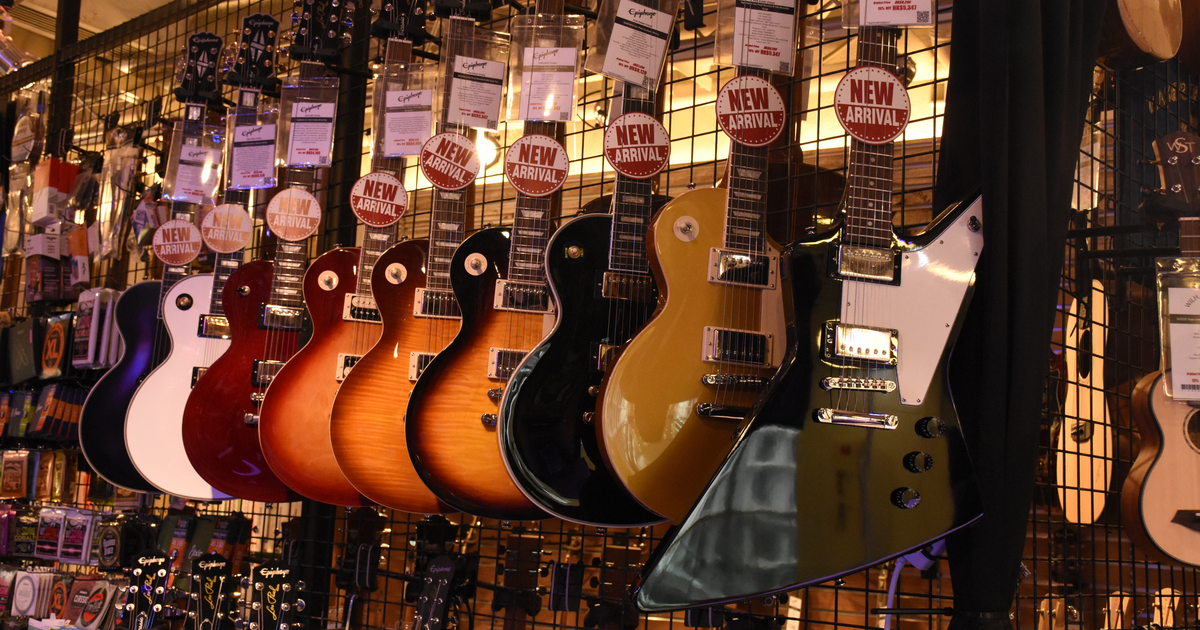
There is a factory in China producing Gibson Les Pauls at volume. The headstock says Gibson. The truss rod cover says Gibson. The case candy is convincing. The guitars sell on eBay and Reverb for £300-£800 — plausible enough that buyers think they're getting a deal.
Gibson's serial number system is public knowledge. Counterfeiters have studied it in detail. A convincing fake will carry a serial that matches a real guitar's production batch. The brand has no way, short of physical inspection by an expert, to verify whether a specific instrument is genuine — and neither does the buyer.
This is the counterfeit problem in premium musical instruments: it's not just about brand damage, it's about buyers being deceived at meaningful price points. And the brands most affected — Gibson, Fender, Marshall, Boss, Moog — have the least robust per-unit identity infrastructure of any product category at comparable price points.
The Secondhand Market Is Where the Real Problem Lives
Reverb, eBay, Gumtree, Cash Converters. The secondhand instrument market is enormous. Musicians upgrade regularly, gear gets sold between friends, vintage instruments change hands for eye-watering sums, and student guitars circulate endlessly through university cities.
The brand is invisible in all of this. When a Fender Stratocaster changes hands between two musicians on Reverb, Fender doesn't know. The warranty (which is typically non-transferable) lapses. The new owner has no relationship with the manufacturer. The serial number is the only link to the original product — and as Gibson's experience shows, serial numbers alone are not enough.
Certified pre-owned programmes are one approach to this. Some car manufacturers have turned secondhand sales into a structured commercial channel. There is no equivalent in musical instruments — no manufacturer-verified authenticity check, no ownership transfer mechanism, no way for a buyer on Reverb to confirm that the guitar they're looking at is genuine and still within its service window.
That's a gap. The secondhand market is where mid-market musicians spend most of their gear budget. Brands that participate in that market authentically — by providing a verifiable ownership history, confirming authenticity, offering to transfer warranty to new owners — turn secondhand buyers into brand relationship holders.
Amplifier Consumables: The Recurring Revenue Nobody Is Capturing
Valve amplifiers are the most technically demanding products in mass-market consumer electronics. A vintage Marshall JCM800 might be worth £1,500-£2,000 on the used market. Its EL34 output valves need replacing every 1,000 to 2,000 hours of playing. The preamp tubes last longer but still need attention. Bias setting after valve replacement requires either specialist knowledge or a technician visit.
This is a significant, predictable, recurring maintenance need. And Marshall does not know who owns any of the amplifiers they've manufactured.
The owner buys replacement tubes from Watford Valves, or Tube Town, or a generic supplier who ships from the EU. Marshall sees none of it. The brand that made the amplifier has no commercial relationship with the person servicing it.
Third-party parts and service revenue is a structural leak in every product category. In musical instruments, the leak is particularly unnecessary because the maintenance cycle is predictable. A brand that knows its owner base can time communications to valve replacement intervals, offer authenticated replacement components, provide bias settings specific to the serial number and production batch, and build an ongoing service relationship with high-value customers.
A £1,500 amplifier owner is not price-sensitive about valve quality. They want the right tubes, correctly specified. A brand that provides that — directly, with authenticity and technical accuracy — captures revenue that currently flows to generics, and builds a relationship that makes the next amplifier purchase a foregone conclusion.
Warranty in a Category Built on Secondhand Trade
Guitar warranties are typically transferable only from the original retailer purchase and non-transferable thereafter. This is a policy inherited from a world where secondhand sales were informal and untrackable.
But most guitar purchases are now secondhand. The NAMM industry data consistently shows that secondhand instrument sales represent a larger volume than new instrument sales in almost every price segment above £200.
A warranty policy that covers only the original purchaser is effectively a warranty that covers a minority of the instruments in active use. The rest — the majority — are owned by people with no manufacturer relationship whatsoever.
Digital product identity opens a different model. An instrument with per-unit digital identity can carry its ownership history. A buyer on Reverb can scan the QR code on the back of the headstock, see the production date, confirm authenticity, see the service history if the previous owner logged it, and optionally register as the new owner.
The manufacturer now knows who has the instrument. The buyer has a verified genuine product. The warranty situation is transparent. Everyone benefits — except the counterfeit producers, who cannot replicate a per-unit cryptographic identity.
Authentication as a Feature, Not an Afterthought
Premium instrument brands spend significant effort on visible authenticity markers. Hand-applied serial numbers. Certificates of authenticity. Case candy. Truss rod covers. Binding details. These are all physical features designed to signal genuine provenance.
They're also features that counterfeiters study and replicate.
A QR code linking to a manufacturer-controlled digital identity cannot be replicated. It is either registered to a genuine serial or it isn't. A buyer scanning the code gets a definitive answer from the brand's own infrastructure, not from a visual inspection of physical details that a skilled counterfeiter has reproduced.
This is what a digital product passport enables in practice: per-unit, verifiable, manufacturer-controlled authenticity that lives at the product level and travels with it through every ownership change.
For a category where counterfeiting costs brands hundreds of millions annually and buyer trust is foundational to premium pricing, this is not a nice-to-have feature. It's a core commercial imperative.
Ownership History Adds Instrument Value
Here's a dynamic that is specific to musical instruments and almost no other category: provenance adds monetary value.
A guitar owned and played by a known musician is worth more. A vintage amplifier with documented service history — known components, dated valve replacements, verified original transformer — commands a premium. The history of an instrument is part of its value in a way that is true of almost nothing else.
Brands that provide the infrastructure for ownership history documentation aren't just helping buyers and sellers. They're building value into the product itself. An authenticated, fully documented instrument history — who owned it, when, what service it received — is commercially valuable to every subsequent owner.
The spare parts opportunity compounds this. An owner who registers their instrument, logs their service history, and sources authenticated replacement components from the brand is building a documented product life that makes the instrument more valuable when they eventually sell it.
That's an unusual dynamic. Most product categories have no mechanism for creating value through documented ownership. Musical instruments are one of the few where it works — and the brands best positioned to provide that infrastructure are the manufacturers themselves.
The tools exist. The market need is clear. The brands that move first in authenticated product identity will own the secondhand market relationship in a category where the secondhand market is where most of the customers actually are.