The Hidden Cost of a Failed Warranty Claim
A customer's appliance stops working. They call support. They wait. They explain the problem. The agent asks for the serial number. The customer cannot find it. The agent asks for the model. The customer guesses. The agent walks through generic troubleshooting.
Forty minutes later, the issue is not resolved. An engineer visit is booked. The engineer arrives days later and identifies a simple fix the customer could have done themselves if they had been shown which component on their specific model.
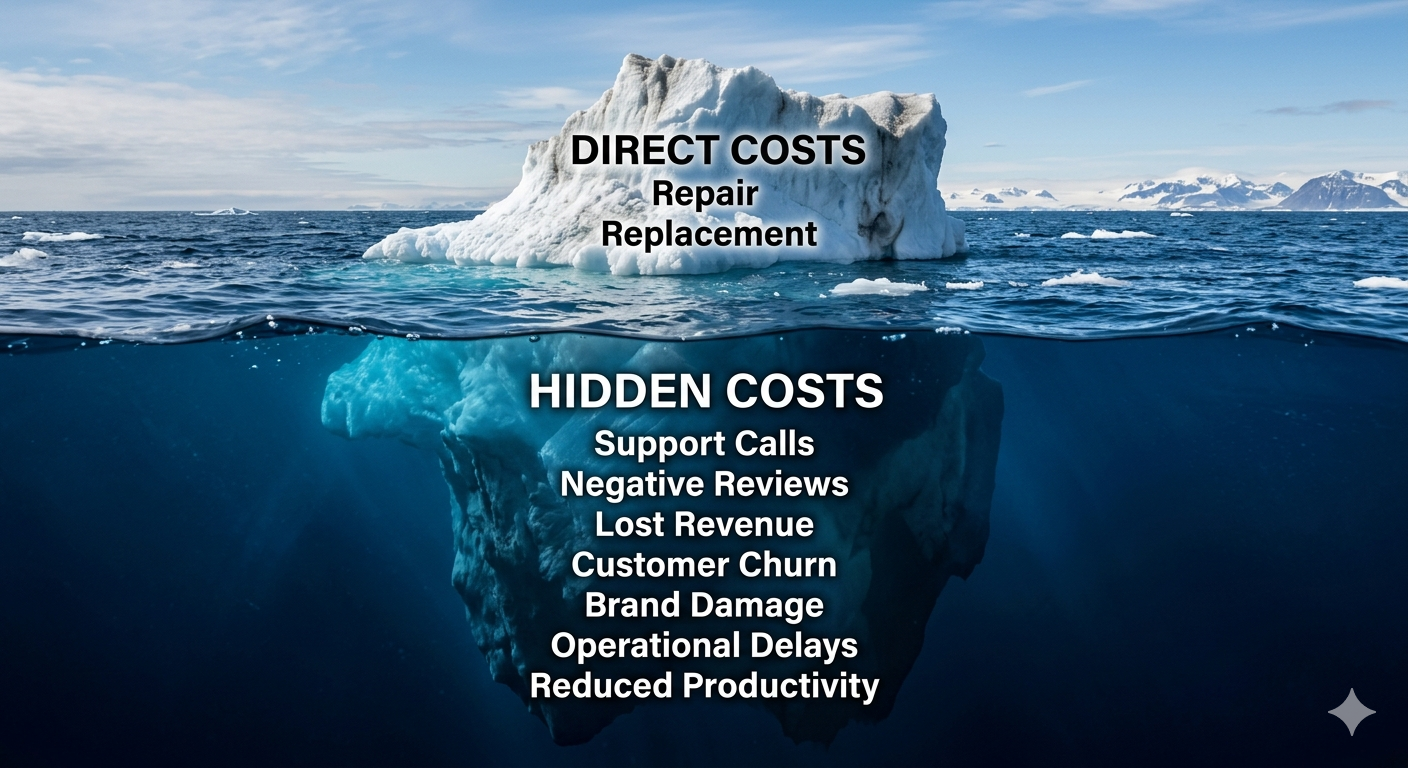
The direct cost of the claim: nothing (no parts, no repair). The hidden cost: the support call, the engineer visit, and a frustrated customer who posts a negative review and does not buy from this brand again.
The hidden costs of a failed warranty claim are typically several times larger than the claim itself.
The Five Hidden Costs
1. Repeat Contacts
When the first interaction does not resolve the issue, the customer calls again. US manufacturers paid 1.329% of total product revenue on warranty claims in 2024 (Warranty Week). Each additional contact for the same issue multiplies the cost without advancing the resolution. The primary driver: the agent lacks product context. Without knowing the specific model, revision, and service history, every call starts from scratch.
2. Unnecessary Engineer Visits
Not every warranty issue needs an engineer. Many are user error, setup problems, or simple resets. But without product-specific troubleshooting at the point of need, the default is "we'll send someone out." Each unnecessary visit costs significantly in engineer time, travel, and scheduling, for a problem that could have been resolved by a guided video specific to the customer's model.
3. No-Fault-Found Returns
A meaningful share of product returns involve no actual fault. The product works, but the customer could not set it up, did not understand a feature, or misdiagnosed a problem as a defect. Each return costs the manufacturer in reverse logistics (shipping, inspection, repackaging, restocking) plus the margin loss if the product cannot be resold as new.
Most of these returns could be prevented by contextual support at the moment of frustration: not a generic FAQ, but answers grounded in which exact product the customer has. See The Economics of Product Support for the cost framework.
4. Negative Reviews
A customer whose warranty claim fails, or succeeds but feels painful, tells the internet. The warranty experience is often the only post-purchase interaction a customer has with the brand. If that interaction is frustrating, it becomes the brand impression. Not the product quality. Not the design. The warranty phone call.
5. Customer Defection
A customer whose claim is handled poorly does not buy from you again. They do not recommend you. They do not register their next product. For brands with multi-year product lifecycles, losing a customer through poor warranty experience means losing years of parts revenue, accessory sales, and eventual replacement purchase.
Why Claims Fail
Claims fail not because brands do not care, but because they lack context at the moment of need:
No serial-level awareness. The agent does not know which exact product the customer has: which revision, which compatible parts, which known issues for that batch. Every unit is treated as generic.
No history. The agent does not know if this product was serviced before, if a part was replaced, if a recall applies, or if this is a repeat of a previous fault.
No self-service path. The customer's only option is to call. There is no scan-to-troubleshoot, no product-specific diagnostic that knows their model. Only 6% of consumers "always" register products (University of Michigan, 2015), so the manufacturer often has no relationship with the customer before the call.
No claim verification. The agent cannot verify warranty status without asking the customer to find a receipt. Claims from out-of-warranty products consume the same agent time as legitimate ones.
What Reduces These Costs
Each failure mode has a structural fix:
- Serial-level identity (digital product identity) loaded at scan: the agent or self-service system knows the exact product before the customer describes it
- Self-service troubleshooting grounded in the specific product's data: resolves issues at the product, not at the phone queue. See Zero-Agent Support
- Lifecycle memory: every service event, part replacement, and prior claim recorded against the unit, not in a disconnected CRM
- Instant warranty verification at scan: coverage status, dates, eligibility confirmed before the customer explains anything
- Claim pattern aggregation by serial and batch: identifies systemic issues before they escalate
The combined effect: warranty handling costs drop not by denying more claims, but by resolving the right answer faster and preventing unnecessary contacts, visits, and returns.
BrandedMark is the post-purchase operating system for physical products. Every product scan provides serial-level context, warranty verification, and self-service resolution before a claim reaches an agent. See how it works.