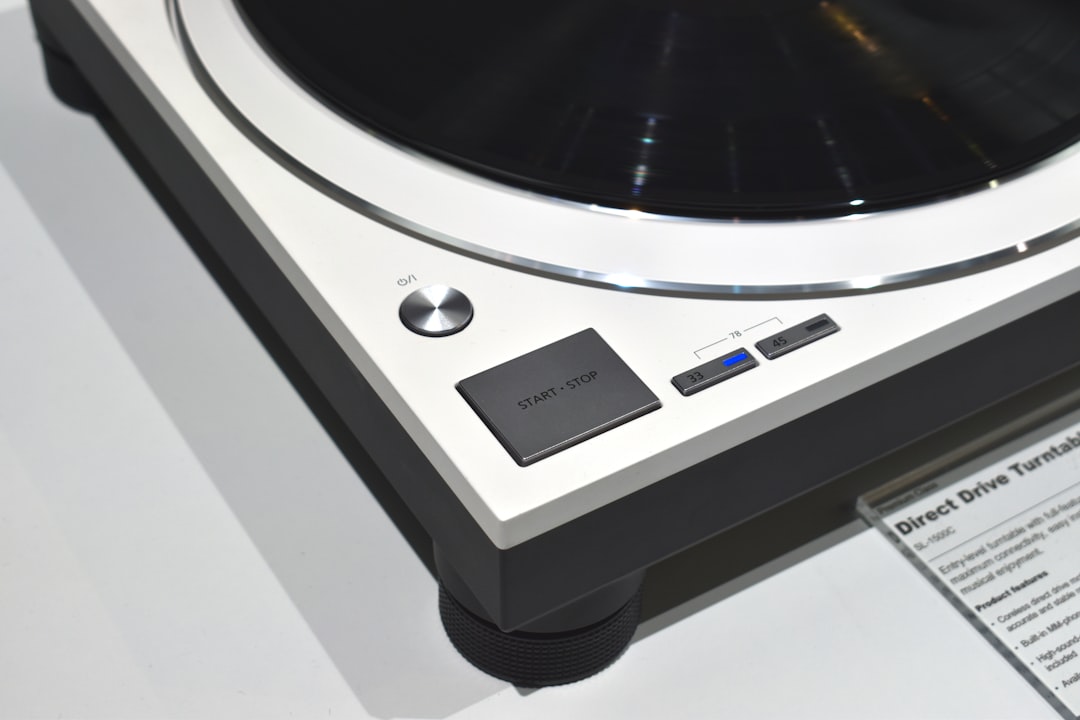
The £500 Turntable Problem
A Rega Planar 3 leaves the factory in Southend-on-Sea. Tested by hand, dressed with a hand-fitted cartridge, shipped to a specialist dealer in Leeds. The buyer spends two hours with the shop's demonstrator. They bring it home. They scan nothing. They register nothing. And Rega — despite building one of the finest affordable turntables in the world — has no idea who owns it.
Three years later, that same deck appears on HiFi Wigwam's classifieds. The seller has lost the receipt. The warranty is void at transfer. The buyer doesn't know if the stylus has been replaced. Rega doesn't know the product changed hands. Nobody knows anything — and a product worth £600 new trades for £300 because the provenance is missing.
This is the £500 turntable problem. And it's happening across one of Britain's most quietly successful export industries, every single day.
UK Hi-Fi Is a World-Class Industry with a Post-Sale Blind Spot
The numbers are more impressive than most people realise. The UK is home to an extraordinary cluster of precision audio manufacturers:
- Rega Research — Southend-on-Sea, Essex. Turntables, tonearms, cartridges, amplifiers exported globally.
- PMC — Luton, Bedfordshire. Studio monitors trusted by the BBC, Abbey Road, and broadcasters across 60+ countries.
- Chord Electronics — Maidstone, Kent. DACs and amplifiers found in professional mastering suites and audiophile homes from Tokyo to Toronto.
- Monitor Audio — Rayleigh, Essex. Loudspeakers at every price point from £300 to £30,000+, sold in over 70 markets.
- Wharfedale — Founded in the Yorkshire Dales, now part of International Audio Group, producing speakers since 1932.
- Naim Audio — Salisbury, Wiltshire. Amplifiers and streamers with a cult following and a resale market that holds value better than most British cars.
These brands compete and win against German, Danish, and American rivals. They do it on build quality, engineering heritage, and hard-won reputation. The products last decades. The problem is: the manufacturer's relationship with the customer rarely lasts past the point of sale.
The Secondhand Market Is Enormous — and Invisible to Manufacturers
Hi-fi has one of the most active secondhand markets of any consumer product category. The platforms are well established:
- eBay UK — hundreds of hi-fi listings every day, spanning £50 turntable needles to £15,000 power amplifiers
- Discogs — primarily vinyl, but turntable and cartridge trading is common
- HiFi Wigwam and StereoNET UK — dedicated community forums where members sell and trade directly, often with detailed photographs and "system context"
- Analogue Seduction, Grahams Hi-Fi, and other specialist dealers — all operate part-exchange and pre-owned programmes
A conservative estimate: the UK secondhand hi-fi market turns over tens of millions of pounds annually. The original manufacturers see precisely none of that revenue. Worse, they lose something more valuable than money — they lose the customer relationship entirely.
When a Naim Uniti is sold privately, the new owner isn't in Naim's CRM. They're not receiving firmware update notifications. They're not being offered the Naim app ecosystem, streaming subscription bundles, or upgrade trade-in programmes. If that unit develops a fault, the new owner either rings the original dealer (who doesn't know them) or posts on a forum and hopes someone recognises the fault code.
What Actually Happens at Resale
Walk through the sequence when a £1,200 integrated amplifier changes hands:
The warranty dies. Most UK hi-fi warranties are registered to the original purchaser and explicitly non-transferable. The second owner is outside warranty from day one — regardless of how new the unit is.
The service history vanishes. Has the output stage been recapped? Has the tonearm bearing been re-adjusted? Has the unit been returned to the manufacturer for a known issue? The new buyer has no way to know. They rely on the seller's word, which relies on the seller's memory.
The manufacturer relationship ends. The original owner is gone from the CRM. The new owner never enters it. Nobody sends them a stylus replacement reminder at 1,500 hours. Nobody tells them about the new phono stage that pairs perfectly with their deck. Nobody offers them a trade-in when the next model arrives.
The product support starts from scratch. When the new owner scans a barcode or types a serial number into a support form, the system returns a blank. No purchase date, no configuration, no history. Support agents either fall back on generic guidance or — more commonly — the owner turns to YouTube and community forums.
This is not a niche problem. Most products are never registered at all, and in a high-resale category like hi-fi, the figure for second-owner registration is close to zero. The manufacturer's picture of their installed base is systematically incomplete. This registration gap has cascading consequences across warranty management, product support, and the ability to deliver consistent warranty response expectations that customers now expect.
The Audiophile Community Actually Values Provenance
Here is the thing that makes hi-fi different from, say, kitchen appliances: the buyers care deeply about history.
Go to HiFi Wigwam or PinkFishMedia and read any thread about buying secondhand. The questions are always the same: Has it been recapped? Who set it up? Is the stylus original? Has it ever been to a dealer? Does it come with the original box? These aren't niche concerns — they are the primary evaluation criteria for a significant purchasing decision.
A Linn LP12 with documented service history — logged dealer visits, confirmed Radikal upgrade, box and accessories — commands a meaningfully higher price than an identical-spec deck with no history. The community has already priced provenance into the market. They are already paying for it. They're just doing it informally, based on printed receipts and forum post histories.
This is the gap. The audiophile buyer wants a provenance certificate. They'd pay more for it. The manufacturer has no mechanism to provide it — so it gets approximated by paper receipts and the seller's reputation on a forum.
The certified pre-owned opportunity for manufacturers is sitting in plain sight. The demand already exists. What's missing is the infrastructure. Connected products increase customer lifetime value across multiple ownership cycles and multiple touchpoints.
What a Per-Unit Digital Identity Changes
Attach a QR code and a serial-linked digital identity to every product — not a static information page, but a living record — and the post-purchase picture changes completely.
Ownership Transfer That Carries History Forward
When the original owner sells the deck, they transfer ownership digitally. The new owner scans the QR, takes ownership via a secure passkey, and inherits the full product history: purchase date, service records, cartridge hours logged by the previous owner, and any warranty coverage that remains. The manufacturer knows the product changed hands. The relationship continues — with a new customer.
This is passkey-secured ownership transfer in practice: unforgeable, frictionless, and auditable.
Service History That Lives With the Product
Every dealer service visit can be logged against the unit's serial identity. Stylus replaced at 1,450 hours. Output stage inspected. Azimuth adjusted. The record travels with the product through every owner, every decade. A buyer can scan the QR before they complete the purchase and read the full documented history. The provenance certificate isn't a paper document in an envelope that gets lost — it's the QR code on the bottom of the plinth.
Accessories and Consumables at the Point of Need
A turntable owner scanning their deck at the 18-month mark is telling you something: they're thinking about the product. That is the exact moment to surface stylus replacement options, compatible cartridge upgrades, dust covers, phono stage pairings. Not six months later in a generic email blast. The aftersales revenue manufacturers leave uncaptured is substantial — but it requires engagement at the moment of need, with the exact product context the recommendation requires.
Stylus replacement alone is a significant revenue opportunity. A mid-range moving-magnet cartridge needs a stylus replacement every 500–1,000 hours. At £60–£200 per replacement, and with tens of thousands of Rega, Pro-Ject, and own-brand decks in the field, the numbers accumulate quickly. Currently, most of that revenue goes to third-party sellers on Amazon and eBay. It doesn't have to.
Extended Warranty and Trade-In Programmes
The second owner of a product is not a lost customer. They are, in many cases, a more engaged buyer than the first — they have already demonstrated enough commitment to the category to research, evaluate, and purchase a secondhand unit. They are precisely the audience for an extended warranty programme, a trade-in incentive, or an invitation to an upgrade event at a local dealer.
Without digital identity, the manufacturer cannot reach them at all. With it, the second owner becomes the start of a new relationship, not the end of an old one.
The Revenue Opportunity Is Real
Map the hi-fi lifecycle and the revenue moments become clear:
| Moment | Current state | With product identity |
|---|---|---|
| Unboxing | No registration, no data | Scan-to-register in 30 seconds |
| 18 months in | No contact | Stylus replacement prompt, product-specific |
| Resale | Relationship ends | Ownership transfer, new customer entered |
| Second owner, year 1 | Invisible | Warranty option, dealer introduction |
| Third owner, decade later | No record exists | Full service history, parts catalogue |
The aftersales revenue that manufacturers leave uncaptured is substantial — and in a high-value, long-life category like hi-fi, it compounds across years and multiple ownership cycles.
The Practical Path Forward
None of this requires rearchitecting the product. The physical turntable doesn't change. The QR code goes on the underside of the plinth or inside the dust cover — somewhere that survives transport without affecting the aesthetics a hi-fi buyer is paying for.
The per-unit identity is created at the point of manufacture. The dealer activates it at sale. The owner inherits it at registration. The next owner inherits it at transfer. The service history accumulates automatically.
Building a post-purchase operating system that supports multi-owner lifecycle management isn't a theoretical future state. It's an operational decision that a manufacturer can make this year.
For the audiophile community, which has spent decades arguing the merits of one tonearm bearing over another, provenance and documented history are not abstract concepts. They are already part of how value is assessed and communicated. The brands that build the infrastructure to support that — officially, verifiably, at scale — will hold a meaningful advantage in both the primary and secondary markets.
The £500 problem has a straightforward answer. The question is which UK hi-fi manufacturer moves first.
BrandedMark gives every product a digital identity, lifecycle memory, and post-purchase interaction layer — from first registration through ownership transfer, service history, and beyond. See how it works.