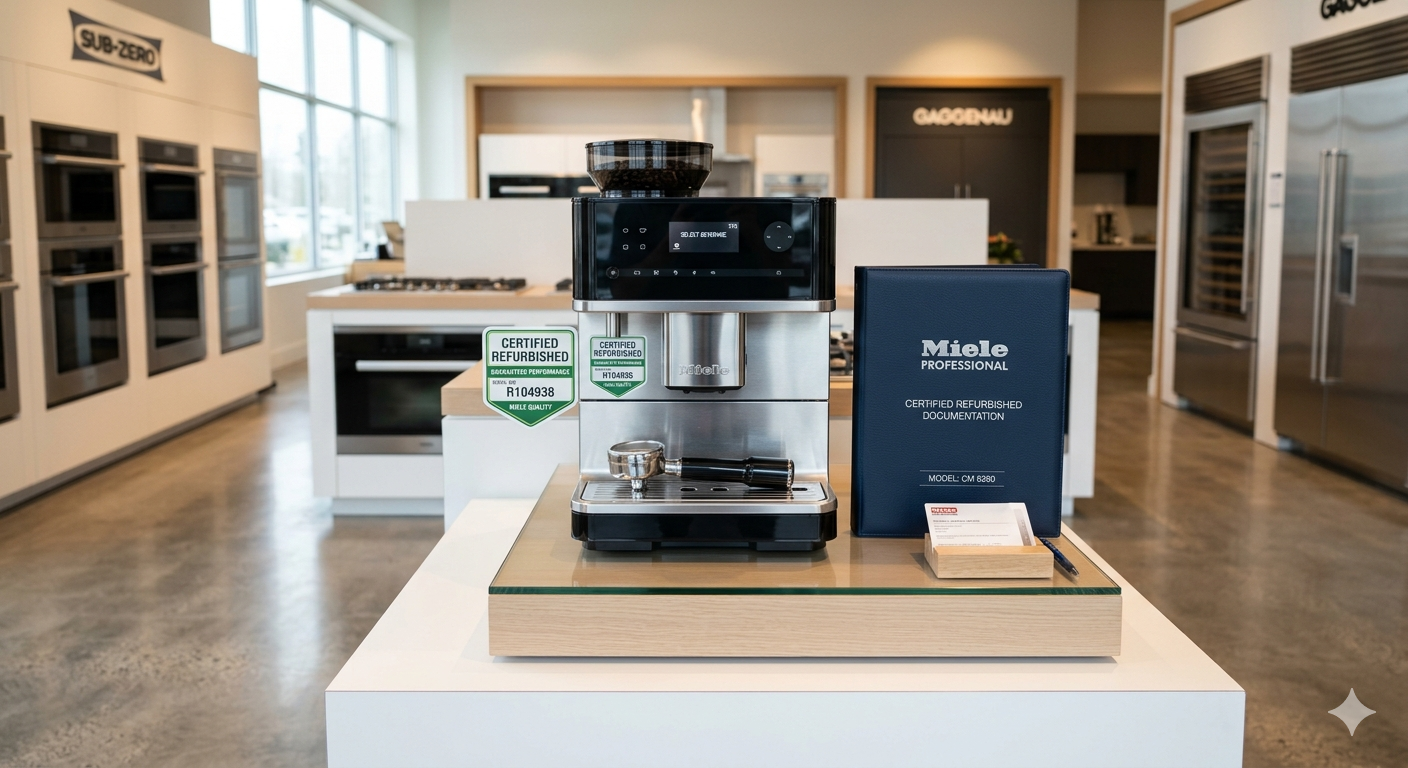
Certified Pre-Owned: Digital Identity Creates the Programme
Key Takeaway: Automotive CPO programmes generate billions annually because manufacturers, not third-party dealers, own the certification and the second-owner relationship. The same model is now available to any durable goods manufacturer whose products carry a persistent digital identity: a unique per-unit identifier that accumulates ownership records, service history, and chain-of-custody data from first scan to resale. Automotive CPO programmes command meaningful price premiums over uncertified used vehicles; manufacturers in power tools, HVAC, and commercial equipment can replicate this by deploying serialised QR codes on their next production run.
Only 6% of consumers "always" register products (University of Michigan, 2015). Second owners register at an even lower rate. The automotive industry figured this out two decades ago: the second sale of a car is as valuable as the first. BMW, Mercedes, and Lexus did not sit back and let used-car dealers own their brand in the resale market. They built Certified Pre-Owned programmes (with inspections, fresh warranties, and manufacturer-backed confidence) and turned resale into a revenue stream that is now a major revenue category across the automotive industry.
Every other durable goods manufacturer is still watching that market from the car park.
Power tools, HVAC systems, commercial kitchen equipment, and premium electronics are bought and sold second-hand every day. The transaction happens on eBay, Facebook Marketplace, or industry auction platforms. The manufacturer gets nothing: no certification fee, no new warranty sale, no second-owner data, no control over how their brand appears in that exchange. A rusted, poorly maintained unit sells alongside a pristine one: and both say the same brand name on the side.
The reason manufacturers have not built CPO programmes is simple: they had no way to verify the product's history. They did not know who owned it, how it was used, whether it had been serviced, or whether it was the same unit that left the factory. Without that data, certification is just a sticker.
Digital product identity changes that. Now it is possible: and the window to own this category is open.
Why CPO Requires Digital Identity
A CPO programme is only worth the paper it is printed on if the certification is grounded in verified facts. Automotive CPO works because the vehicle has a VIN: a persistent, unique identifier that travels with the car from manufacture to scrapyard, accumulating a history that any party can query.
Most physical products outside of automotive have no equivalent. A cordless drill has a model number. Maybe a serial number, if you squint at the label. But that serial number connects to nothing: no ownership record, no service history, no scan log, no chain of custody.
To build a CPO programme, you need four things:
- A unique digital identity per unit: not a model-level QR code, but a serialised identifier tied to that specific item
- An ownership record: who has owned it, since when, and under what warranty terms
- A usage and service history: what happened to the product over its life
- A transfer mechanism: a way for one owner to hand the digital identity to the next, and for the manufacturer to verify and certify that handover
Without all four, you cannot certify. You can only guess.
With all four, you can build a programme that rivals what BMW has done with vehicles: applied to any durable category you choose.
For more on how digital identity transforms the resale market broadly, see connected product ROI and how resale programmes factor into lifetime customer value. For a deep technical dive on building the infrastructure, see digital product identity guide.
How a Manufacturer CPO Programme Works
The mechanics are straightforward once the identity infrastructure exists. Here is the flow:
Step 1: Original Owner Initiates Transfer
The first owner scans the product's serialised QR code and selects "Transfer Ownership." They confirm the product details, enter the new owner's contact information (or generate a transfer link), and submit. The platform logs the transfer request, timestamped and tied to the specific serial number.
This single action triggers everything that follows.
Step 2: Manufacturer Reviews and Certifies
The manufacturer's after-sales team (or an automated rules engine) reviews the product record. They can see the original purchase date, warranty registration details, any service claims submitted through the platform, and the full scan history (how often the product was accessed, what support content was used, whether parts were ordered).
For a higher-value programme, the manufacturer can require a physical inspection (sending the unit to a service centre or dispatching a technician) before certification is granted. For lower-value items, automated rules may be sufficient: "units under 24 months old with no claims are auto-certified."
Once certified, the digital identity is updated. The product record now carries a certification badge, a new warranty start date, and the second owner's details.
Step 3: New Owner Gets a Verified Experience
The new owner scans the product and lands on a page that shows the full verified history: original manufacture date, first owner's registration, service records, certification status, and their new warranty terms. They can register their own ownership in seconds, activate the fresh warranty, and access the full support library for their specific unit.
From their perspective, buying this certified unit feels nothing like buying a random second-hand product. They are buying a product with a known past and a manufacturer-backed future.
This is the same confidence premium that CPO automotive commands: and buyers will pay for it.
The Revenue Model
This is where the business case becomes compelling. Automotive CPO is profitable because the manufacturer captures value at every stage of the second transaction. A manufacturer CPO programme built on digital identity does the same.
| Revenue Stream | How It Works | Estimated Value per Unit |
|---|---|---|
| Certification fee | Charged at transfer | Variable by category |
| New warranty sale | Fresh warranty to second owner | Revenue varies by product value |
| Parts and accessories | Second owner discovers parts via scan | Additional revenue stream |
| Second-owner data | CRM entry for net-new customer | Zero-cost acquisition |
| Extended warranty upsell | Offered post-certification | High-margin conversion |
For a commercial HVAC unit, a single certified transfer generates revenue across multiple streams: from a transaction that previously generated nothing. Run the numbers across your installed base and the opportunity is significant.
The comparison with platforms like Back Market and Refurbed is instructive. Those marketplaces have built substantial businesses around refurbished consumer electronics, but the refurbishment and quality assurance is carried out by independent third-party refurbishers who sell through the platform. The original manufacturer earns nothing from the transaction and has no relationship with the buyer. A manufacturer-run CPO programme reclaims both the revenue and the customer.
For a detailed look at how B2B equipment resale creates similar dynamics, see B2B Equipment Resale and Digital Identity. Understanding product registration software is essential for implementing the ownership transfer workflows that a CPO programme requires.
Which Categories Are Ready
Not every product category is equally suited to a CPO programme today. The economics favour categories where:
- The product has a long usable life (5+ years)
- The resale market is already active and significant
- The second owner values confidence and warranty coverage
- The unit value is high enough to justify a certification process
Power tools are an ideal starting point. The professional power tool market has a thriving second-hand segment: contractors buy and sell constantly, and a Milwaukee or DeWalt tool in good condition holds significant value. A manufacturer CPO programme with a 1-year warranty would command a meaningful premium over an uncertified eBay listing.
HVAC and climate control equipment is a strong candidate for commercial applications. A certified pre-owned commercial air handling unit with a verified service history and a fresh manufacturer warranty is worth substantially more than the same unit sold at auction with no documentation. The certification fee and warranty revenue easily justify the infrastructure investment.
Commercial catering and kitchen equipment follows the same logic. Restaurant closures and fit-out changes generate constant second-hand supply. Manufacturers who certify that supply own the premium end of that market.
Premium consumer electronics (particularly professional audio, photography, and video equipment) have passionate communities of second-hand buyers who care deeply about provenance. Brands like Sony or Canon running CPO programmes would immediately differentiate from grey-market resellers.
Industrial and laboratory equipment may have the strongest unit economics of all. A certified pre-owned analytical instrument with a full service history commands a dramatically different price than an uncertified auction lot. The certification process itself can be a premium service.
Controlling the Resale Narrative
Beyond the direct revenue, there is a strategic argument that matters at the board level: who controls how your brand appears in the second-hand market?
Right now, the answer is eBay. And Facebook Marketplace. And whatever wholesale liquidator your retail partners use when they clear overstock.
In those channels, your products appear with no context, no quality signal, and no manufacturer presence. A unit that failed in service sits next to one that was barely used. Both carry your brand name. The buyer has no way to distinguish them, so they use price as the only signal: and the floor drops.
A CPO programme reverses this. Certified units carry a visible quality tier. The manufacturer's presence in the transaction reassures the buyer and anchors the price above the uncertified market. Over time, "certified" becomes a meaningful word in your category: and it is your word, not a third-party platform's.
Registria and similar warranty and ownership management services have built businesses on the ownership transfer problem, but without the certification layer that turns a transfer into a revenue event. The opportunity for manufacturers is to own the full stack: identity, transfer, certification, and the second-owner relationship that follows. This directly ties to warranty analytics: CPO programmes generate new warranty claims patterns and second-owner behaviour that differ markedly from first-owner data.
For a broader view of how keeping customers engaged after the initial warranty period creates compounding value, see Keeping Customers After the Warranty Expires.
Frequently Asked Questions
Does a CPO programme require changes to the physical product?
No physical changes are required if your products already carry serialised QR codes that resolve to a digital identity platform. If your current QR codes link to a generic model page rather than a unit-specific record, you will need to move to serialised codes on new production: which is a straightforward change for most manufacturers. Existing installed base can be onboarded through a service technician scan or a customer self-registration flow.
How do manufacturers prevent fraudulent certification claims?
The digital identity record is the fraud control. Because the ownership history, scan log, and service claims are all tied to the serial number and cannot be altered retroactively, a unit that has had a claim submitted against it will show that in its record. Manufacturers can set automated rules: for example, units with active claims pending, or with more than one claim in 12 months, are flagged for manual review before certification is granted. The record-level audit trail is far more verifiable than any paper-based inspection regime.
What happens to the CPO warranty if the product is sold again?
The programme rules are set by the manufacturer. Most CPO programmes treat the certified warranty as non-transferable: it applies to the registered second owner only, and expires with that ownership. If the second owner wishes to sell, the transfer and re-certification process begins again, generating another certification event and another revenue opportunity for the manufacturer. Some manufacturers may choose to allow one further transfer within the warranty period; the platform enforces whatever rules are configured.
The Window Is Open
Automotive manufacturers spent years building the infrastructure that makes CPO work: the VIN system, the dealer certification network, the consumer trust in the concept. Other durable goods manufacturers are starting from a better position: digital identity infrastructure can be deployed in months, not years, and the serialisation can begin with the next production run.
The second-hand market for your products exists whether you participate in it or not. The question is whether you are the silent bystander or the trusted certifier that buyers seek out and pay a premium to access.
BrandedMark gives every product a persistent digital identity: unique per unit, ownership-tracked, and built to support exactly this kind of programme. The scan that registers a product at unboxing is the same scan that initiates a certified transfer two years later and lands the second owner in your ecosystem.
That is what a Product OS makes possible: a revenue-generating relationship with every owner, in every transaction, across the entire product lifetime.