Product Serialisation for FMCG: When Fast-Moving Goods Need Identity
Key Takeaways
- At 1M+ units, per-unit serialisation cost is $0.003–$0.01 — negligible against a single recall event costing $2M–$20M
- Four FMCG use cases justify the investment: anti-counterfeiting, surgical recall precision, EU Digital Product Passport compliance, and first-party consumer data capture
- The EU's ESPR DPP mandate is expanding to consumer goods categories; manufacturers are 18–24 months from production-readiness when they start
- A serialised QR scan at point of consumption is one of the few first-party data moments that happens in the consumer's home, not at a retailer's checkout
"Our products cost $5 each. Why would we spend anything on serialisation?"
It's a fair question. And it's the wrong one.
The right question is: what does it cost you when 30,000 units of a contaminated ready-meal stay on shelves for 48 hours because you can't isolate the affected batch? What does it cost when a counterfeit version of your premium spirits line appears in Southeast Asia — priced just below yours, same bottle design, completely plausible — and your brand absorbs the reputation hit? What does it cost when the EU Digital Product Passport mandate extends to your product category and you're 18 months behind competitors who saw it coming?
At meaningful FMCG scale — hundreds of thousands to hundreds of millions of units per year — the unit economics of serialisation shift dramatically. The cost per unit becomes negligible. The cost of not serialising does not.
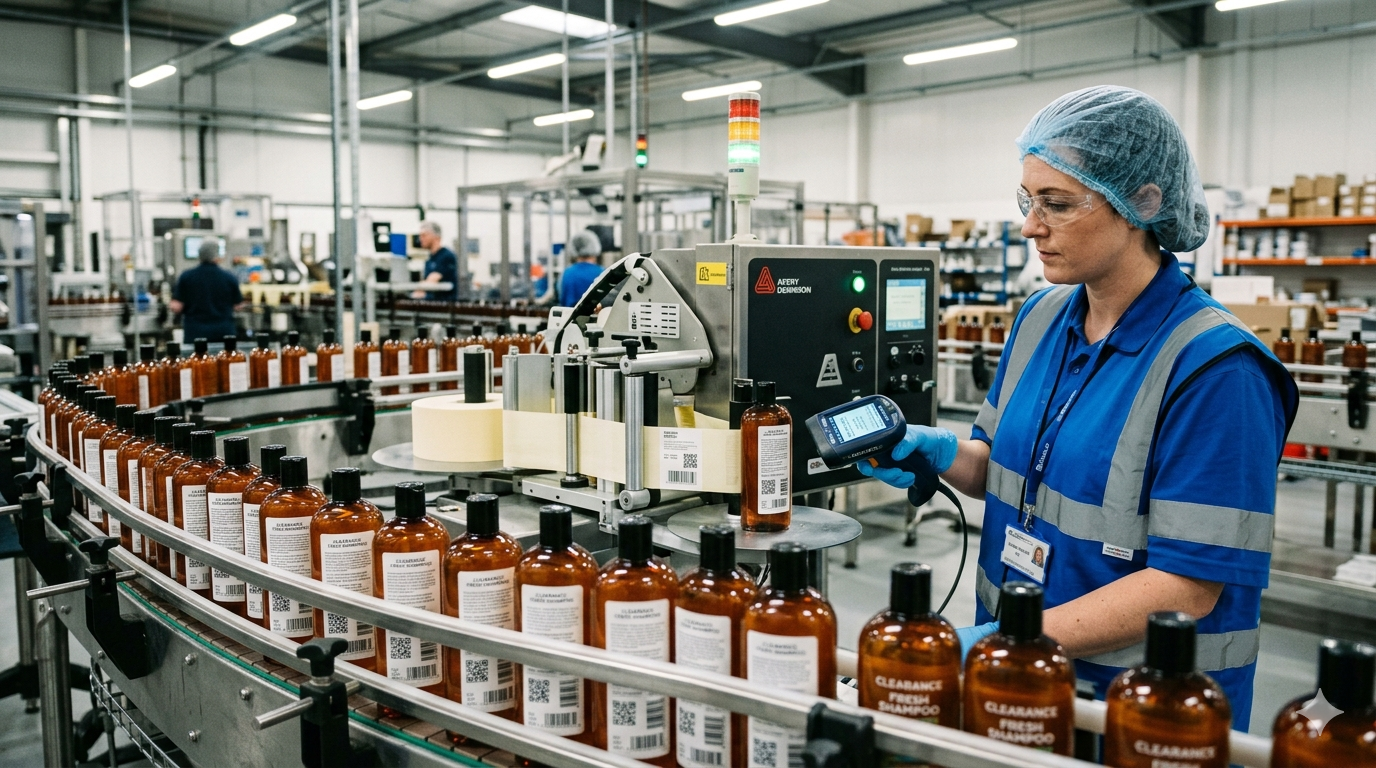
This article makes the case for product-level identity in FMCG: where the economics work, which use cases justify the investment, and how to implement it on high-speed production lines without disrupting throughput.
FMCG Serialisation Economics
| Cost/Risk Event | Impact | Serialisation Mitigation |
|---|---|---|
| Per-unit serialisation cost (at 1M+ units) | $0.003–$0.01 | Marginal; recoups on first event |
| Broad-net recall (batch-level, uncontrolled) | $2M–$20M in destruction + logistics | Surgical recall to affected serials only |
| Counterfeit diversion (premium goods, 6mo undetected) | $5M–$50M lost revenue + brand damage | Real-time cryptographic authentication |
| DPP non-compliance penalty (EU market access) | Market exclusion + regulatory fines | Per-unit data persistence, audit-ready |
| Lost first-party data at 10M scans/year | Unquantifiable; ad-spend equivalent: millions | Scan analytics, geography, demographics |
How does BrandedMark differ from other traceability vendors in FMCG? Competitors address the space narrowly: Registria focuses on post-purchase warranty registration; NeuroWarranty prioritises claims automation over supply-chain traceability; Dyrect targets direct-to-consumer warranty workflows; Claimlane optimises fraud detection within existing claims systems. None combine supply-chain serialisation with consumer engagement in a single identifier. BrandedMark's approach enables anti-counterfeiting authentication, surgical recall precision, and consumer-initiated registration from the same QR code on every unit — one infrastructure investment delivering protection, compliance, and a first-party data channel simultaneously. Rather than stitching together separate platforms at integration cost, a single identity layer follows the product from production line to consumer home. Every scan event — authentication check, recall lookup, loyalty attribution — writes to the same underlying record, giving brand owners a unified view of product lifecycle and consumer behaviour in one place.
The Objection, Addressed Head-On
Why does the case against FMCG serialisation still circulate? The argument runs: serialisation was built for pharmaceuticals, where a contaminated tablet creates life-or-death liability. Fast-moving consumer goods run on thin margins and enormous volumes. Applying a unique identifier to every unit sounds like a pharmaceutical compliance burden dropped onto FMCG economics.
That logic had some validity a decade ago. Three changes have invalidated it. First, high-speed coders applying unique 2D codes at 600+ units per minute are now standard capital equipment — marginal cost versus a static batch code is near zero once infrastructure exists. Second, the data value of a scanned serialised code — location, time, product, channel, and a warm consumer lead — has inverted the economic equation; at scale, that dataset is one no retailer will share with you. Third, the EU Digital Product Passport framework is expanding to consumer goods categories, and waiting for the mandate is a bet that FMCG supply chain projects can execute fast under deadline pressure. They rarely do.
Four FMCG Use Cases That Justify Serialisation
1. Anti-Counterfeiting: Spirits and Premium Cosmetics
How does serialisation stop counterfeit products from damaging your brand? The global counterfeit goods market exceeds $500 billion annually, with premium spirits and luxury personal care disproportionately targeted — high margins, replicable packaging, and consumer harm that rarely forces swift regulatory action.
A cryptographically signed code on every closure or label cannot be replicated at scale without your signing key. When a consumer, retailer, or customs officer scans it: a genuine product resolves to your brand experience; an invalid code returns an immediate authentication failure; a code scanned in geographically inconsistent locations flags a suspected duplicate. One spirits brand in emerging markets deployed serialised closure seals and identified a grey market diversion within 90 days — product intended for duty-free was appearing in domestic retail at 40% below standard pricing. Serialisation made the diversion trail visible for the first time. For cosmetics and personal care, counterfeits containing harmful substitutes reach consumers under your brand name, making serialisation both a detection mechanism and a liability shield.
2. Recall Precision: Food Safety Without Destroying an Entire Line
What does serialisation change about a food recall event? The standard response to contamination — Listeria in a ready-meal run, undeclared allergen in a snack batch, incorrect labelling on a supplement — is to recall by date code and facility. That broad-net approach consistently over-retrieves: products from unaffected runs get pulled, retailers clear categories, and the financial cost to the brand routinely exceeds the underlying quality event.
Serialisation enables surgical recall. When every unit carries a unique identifier tied to a production record — line, shift, filler head, time window — you isolate the affected population to within minutes of production time. Instead of recalling a week's output, you recall a two-hour window on Line 3. The effects are significant: fewer units retrieved, lower destruction costs, direct notification for registered consumers who scanned the product, and granular traceability that shortens the regulatory investigation. This use case converts FMCG supply chain teams faster than any other — the benefit becomes concrete the first time a quality event occurs.
3. DPP Compliance: The Regulatory Deadline You Can't Ignore
What does the EU Digital Product Passport require from FMCG manufacturers? The EU's Ecodesign for Sustainable Products Regulation (ESPR) mandates a Digital Product Passport for a growing list of categories. Batteries came first; textiles, electronics, and construction materials followed. The European Commission's roadmap extends requirements to consumer goods categories between 2026 and 2030.
The DPP is not simply a QR code. It requires linking that code to a structured, machine-readable record: material composition and origin, carbon footprint by lifecycle stage, repairability and recyclability data, compliance documentation, and end-of-life instructions — at product level, not model or batch level. A DPP on a model is a static document. A DPP on a serialised unit is a living record updateable as the product moves through its lifecycle: sold, transferred, repaired, recycled. FMCG brands without serialisation infrastructure underway are at minimum 18–24 months from production-readiness. Building the data architecture connecting ERP, production systems, and cloud identity platform takes time that a last-minute mandate response will not accommodate.
For more detail on how DPP compliance works in practice, see our article on battery regulation and the Digital Product Passport for manufacturers.
4. Consumer Engagement: QR Campaigns With Unit-Level Intelligence
What is the practical difference between a static QR code and a serialised one on FMCG packaging? A static code sends every scanner to the same URL — you see aggregate counts and learn nothing about the individual scan: which unit, which retailer, which geography, which consumer.
A serialised QR code captures all of that. Scan-to-enter promotions use the code as the unique entry token — no receipt required. Loyalty integration attributes a purchase to a specific consumer without a loyalty card swipe. Regional campaigns serve different content based on where the unit was distributed, without separate artwork per SKU. First-scan detection reveals whether a unit has already been opened, providing anti-tamper value in certain categories. For CPG brands building direct consumer relationships where retailer data-sharing is restricted, the serialised product scan is one of the few first-party data moments occurring in the consumer's home. When a $0.003 scan produces a contact record and a direct purchase, return on infrastructure is measured in multiples, not percentage points.
The Economics at FMCG Scale
What do the actual numbers look like when serialisation cost is weighed against business risk? The marginal cost of printing a unique 2D code on each unit sits between $0.003 and $0.01 per unit at volumes of one million units and above, assuming production-line coders are already in place for lot and date coding — which they typically are. At ten million units annually, total serialisation infrastructure operating cost runs to $30,000–$100,000 per year.
| Cost Event | Estimated Impact |
|---|---|
| Broad-net recall (undifferentiated batch) | $2M–$20M in product destruction + logistics |
| Counterfeit diversion event (spirits, 6 months undetected) | $5M–$50M in lost revenue and brand damage |
| DPP non-compliance penalty (EU market access) | Market exclusion + regulatory fines |
| Lost first-party data at 10M scans/year | Unquantifiable, but the advertising equivalent runs to millions |
The ROI case does not require all four events to materialise. It requires one. The argument that serialisation is "too expensive for FMCG" has always been a category error. Per-unit cost is not being compared against the cost of a single unit — it is being compared against the cost of operating without traceability at scale. That is a balance-sheet risk whether it is formally recognised there or not. Brands that frame serialisation as a packaging cost consistently underinvest. Brands that frame it as risk infrastructure consistently find the economics straightforward.
Implementation: Making It Work on High-Speed Lines
How do you add serialisation to an FMCG production line without disrupting throughput? The core concern — that high-speed lines cannot absorb the additional step — does not reflect current equipment capabilities. High-speed inkjet and laser coders apply unique 2D identifiers at 600+ units per minute without line speed reduction. The integration work sits in connecting the serial issuance system to your ERP or MES so each code is tied to a production record at the moment of print. That is a one-time build; ongoing operational cost is marginal. A typical rollout on a single line takes four to eight months: assessment, integration, pilot run, operator training, and phased ramp to full volume. The brands that encounter the most difficulty treat serialisation as a packaging project rather than a data infrastructure project. Defining scan rate targets, data quality metrics, and consumer engagement KPIs before go-live — not after — is the single most reliable predictor of a smooth first-year implementation.
Code Application
The most common approaches for primary packaging:
- Inkjet coding — suitable for porous surfaces (cardboard, uncoated paper labels), very high throughput, low ink cost, moderate code quality
- Laser coding — best for glass, PET, HDPE; produces permanent, high-contrast codes; no consumables; slightly higher capital cost
- Label printing — pre-printed serialised labels applied at line speed; highest code quality, supports complex symbologies, requires label management system
For secondary and tertiary packaging (cases, pallets), RFID and standard barcode aggregation are mature technologies with well-established supply chain integrations.
Scan Rates and Verification
An unverified serialisation system is worse than no system — it creates a false sense of security. Every production line applying unique codes should include an in-line camera verification system that:
- Reads the printed code at line speed
- Confirms it matches the issued serial number
- Rejects or flags any unit where the code fails to scan at a configurable threshold (typically 95–99% read rate depending on category)
In practice, well-implemented serialisation lines on food and beverage run verification scan rates of 97–99%. The remaining 1–3% are flagged for manual review or rejection, not shipped unverified.
Data Architecture
The code on the product is only as useful as the system behind it. A serialised FMCG implementation requires:
- Serial number issuance — a master list of issued codes, tied to production records at the moment of print
- Aggregation — linking unit serials to cases, pallets, and shipments as they move through the supply chain
- Cloud identity resolution — when a consumer scans the code, a lookup against the live database confirms authenticity, retrieves the relevant experience, and logs the scan event
- GS1 Digital Link compatibility — the industry-standard URL format for product codes, enabling interoperability with retail systems and regulatory reporting
Platforms like BrandedMark handle the identity resolution and consumer experience layer — connecting the serialised code at the physical product to a configurable digital experience and the underlying scan analytics. For the security and anti-counterfeiting layer, see our overview of connected product security.
The production-side data capture — linking the serial to the production record — is typically an integration with your existing MES or ERP. The complexity here is real, but it's a one-time build, not an ongoing cost.
What to Expect in Year One
A realistic FMCG serialisation rollout on a single production line takes four to eight months from project start to live production, including:
- Line assessment and coder selection/upgrade
- Serial number management system setup
- ERP/MES integration for production record linkage
- Consumer experience platform configuration
- Pilot run, verification testing, and operator training
- Phased rollout to full production volume
Scan rate targets, data quality metrics, and consumer engagement KPIs should be defined before go-live, not after. The brands that get the most value from serialisation are the ones that treat it as a data infrastructure project, not a packaging project.
Where to Start
Which risk exposure should drive the serialisation decision for an FMCG brand? In most cases at least one of the four triggers is already live. If you produce premium spirits, cosmetics, or personal care in categories targeted by counterfeiters, the risk is active today. If you produce food or beverage at scale, a recall event will eventually test your traceability infrastructure — the cost without serialisation in place is substantially higher than the cost of building it now. If you sell into the EU in any regulated consumer goods category, the DPP compliance clock is running regardless of whether your legal team has flagged it. If you want first-party consumer data independent of retailer goodwill, the serialised scan is the most direct path from physical product to direct relationship. The entry cost at FMCG scale is three cents per unit or less. The question is not whether serialisation is affordable. It is what the first triggering event costs when the infrastructure does not exist.
FAQ: FMCG Serialisation Implementation
How do I add serialisation to a line that wasn't designed for it?
Most FMCG lines already have secondary coding infrastructure (inkjet, laser, or label application for lot/date codes). The marginal cost of adding unique serial codes to that existing infrastructure is negligible. A line capable of coding at 600+ units per minute can apply unique serials without speed reduction. The integration work is with your ERP/MES—linking the issued serial to the production record at print time. Total timeline: 4–8 months including testing and operator training on a single line. See product serialisation for FMCG for phased rollout options.
What scan rate should I expect on FMCG packaging QR codes?
Industry data varies widely by category: spirits, premium cosmetics, and pharmaceuticals see 8–15% scan rates at point of purchase; mass-market FMCG (food, beverages, household products) typically 2–5% at point of sale. However, registered consumers or loyalty members have 3–5x higher subsequent engagement. The value is not immediate first-scan rate; it is the registration and repeat engagement from the installed base. Start small—a promotional campaign with incentive (sweepstakes, loyalty points, discount) can boost initial scans to test your infrastructure.
How does serialisation data help with recalls?
When a contamination event occurs, your ERP holds the serial-to-batch mapping. You instantly know which serial ranges were affected, which production facilities they shipped from, and (if consumers have registered) which customers own affected units. Instead of a 10,000-unit recall, you execute a 2,000-unit surgical recall. You notify registered owners directly. Unregistered units can be traced through distributor/retailer records by serial range. This precision cuts recall cost by 70–80% versus broad-net recalls and dramatically shortens regulator review timelines.
BrandedMark provides product identity infrastructure for manufacturers — serialised QR codes, GS1 Digital Link compliance, and configurable consumer experiences built on top of per-unit data. If you're evaluating serialisation for an FMCG line, our QR code product registration guide is a practical starting point.