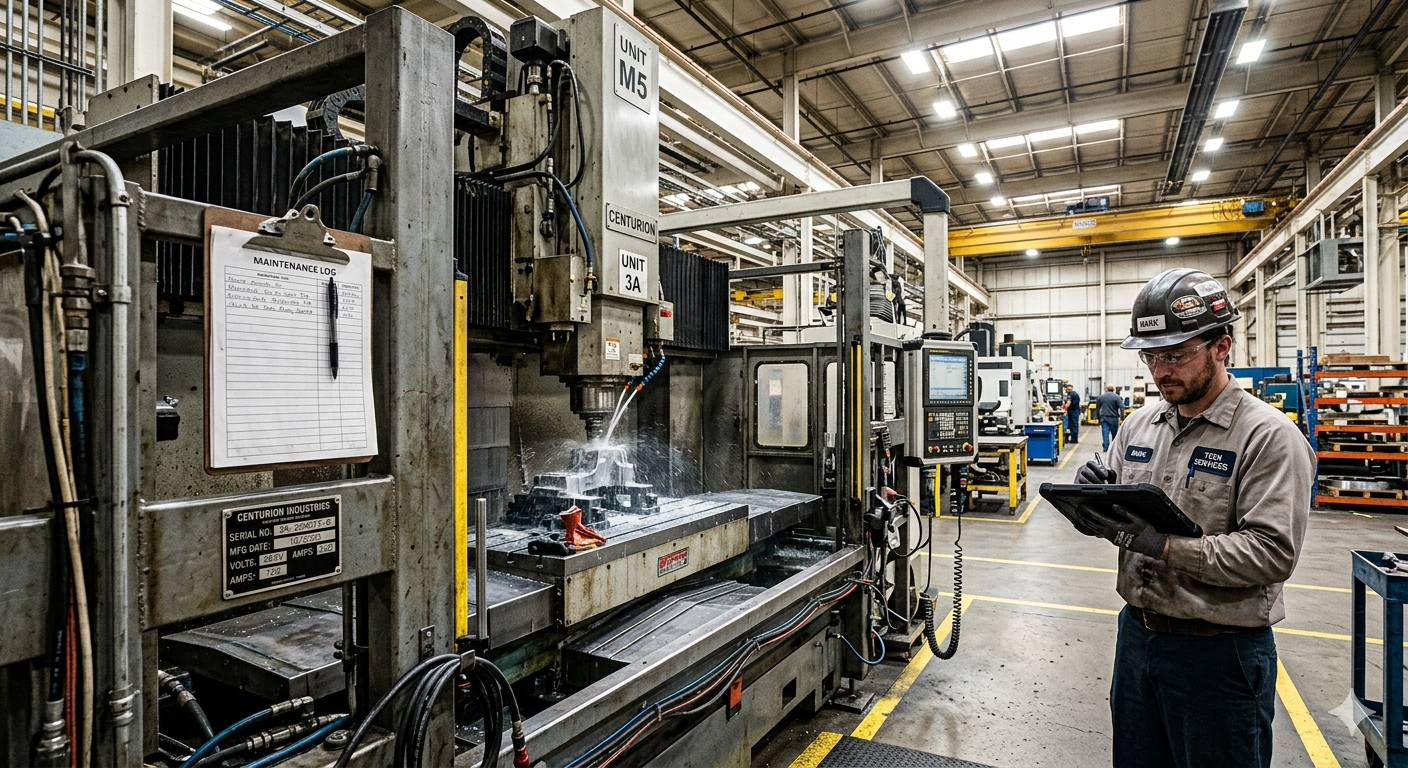
Why Industrial Equipment Needs a Digital Identity
A factory worker straps on an exoskeleton at 6am. By lunchtime, it is sitting in a corner because a spring mechanism feels off. Nobody logs it. The unit gets picked up by a different worker on the afternoon shift. Six weeks later, an HSE inspector asks for the service history of every exoskeleton on the floor. The answer, from a spreadsheet last updated three months ago, is a guess at best.
This is the state of industrial equipment management for many manufacturers. High-value, safety-critical hardware (passive exoskeletons, power tools, fall-arrest harnesses, PPE) ships with a serial number printed on a label and nothing else. Once it leaves the factory, the manufacturer has no idea where it is, who is using it, or whether it has been maintained correctly.
That is a problem the market is about to solve, and the brands that build the digital identity layer first will win enterprise procurement conversations competitors cannot enter.
What a Digital Identity Actually Means
A digital identity for a physical product is not a barcode linked to a spreadsheet. It is a persistent, unit-level record that travels with the asset through its entire operational life.
For industrial equipment, that means five things delivered through a single QR code attached to the unit:
1. Unique identity. Every unit gets a globally unique identifier: serial number, manufacturing date, batch, model variant. This is specific to this physical object, not shared at the product line level.
2. Service history log. Every inspection, repair, component replacement, and firmware update is timestamped and attached to that unit's record. Technicians scan the QR to log work done. The record is immutable and exportable for audit.
3. Maintenance schedule. Based on cycle count or calendar intervals, the system surfaces the next required service date. Workers and fleet managers see a simple status: green, amber, or red. No spreadsheet required.
4. Spare parts access by exact model and serial. When a component needs replacing, the scan page shows the exact compatible part for that unit, not a generic catalogue. Order directly. No phone call to a distributor. See spare parts discovery for connected products.
5. Worker assignment record. Who checked this unit out today? Who used it for the last 90 days? This matters for ergonomic compliance, insurance claims, and incident investigation.
The Competitive Pressure Is Already Here
The industrial equipment market is splitting into two tiers: products that ship with a digital layer and products that do not.
Where a manufacturer ships equipment with a connected dashboard that tracks usage data, monitors performance, and provides fleet-level analytics, the offer becomes a fundamentally different commercial proposition: not just hardware, but a data product with recurring value.
For manufacturers of passive equipment (harnesses, manual tools, non-powered exoskeletons), this creates an urgent positioning question. The hardware will commoditise over time. The software layer will not. Connected competitors are building the enterprise procurement argument that disconnected brands cannot make: "Buy our equipment and get a compliance dashboard, maintenance alerts, and HSE audit-ready reports."
Brands that add digital identity now, before enterprise procurement criteria formalise around software capabilities, can compete on equal terms. Brands that wait will find the software expectation baked into RFP requirements they cannot meet.
What HSE Compliance Actually Requires
The UK Health and Safety Executive does not mandate a specific technology for equipment records. Under PUWER regulation 6, what it requires is evidence: evidence that equipment was inspected at suitable intervals by a competent person, that the results were recorded and kept, and that defects were identified and acted on. (Separate PUWER duties, regulations 8 and 9, cover providing information, instruction, and training to the workers who use the equipment.)
In practice, this means manufacturers selling into enterprise accounts are increasingly expected to provide tools that make compliance documentation easy. A fleet manager who can export a complete service history for 200 units in 30 seconds has a fundamentally different conversation with an HSE inspector than one who reconstructs records from spreadsheets and filing cabinets.
Digital identity (specifically, scan-to-log service events) makes compliance a byproduct of normal operations rather than a separate administrative burden. Every time a technician scans the unit to log a repair, the audit trail writes itself. This approach is fundamental to product serialisation for manufacturers.
The Enterprise Procurement Shift
Enterprise buyers in manufacturing, logistics, and construction are changing how they evaluate industrial equipment, and different roles in the buying group tend to weigh different things. A safety manager is likely to care about compliance reporting. A procurement lead is likely to scrutinise total cost of ownership. A fleet manager is likely to value anything that automates maintenance scheduling.
Hardware alone does not answer those questions. Digital identity does.
The brands that understand this now (that the QR code on the unit is not a traceability afterthought but the entry point to a long-term service relationship) will be the ones writing the RFP requirements their competitors struggle to meet. For how this fits into a broader connected product stack for mid-market manufacturers, the architecture is straightforward: serialised identity, service logging, parts commerce, and compliance reporting from a single platform.
FAQ
What is a digital product identity for industrial equipment?
A digital product identity is a unit-level record linked to a physical asset via QR code or NFC tag. It contains the product's unique identifier, full service history, maintenance schedule, and spare parts catalogue. Unlike a printed serial number, it is updateable, shareable, and auditable throughout the product's operational life.
How does digital identity help with HSE compliance?
When service events are logged by scanning the unit's QR code, the audit trail is created automatically. Fleet managers can export a complete inspection and maintenance history for any unit or entire fleet in seconds, exactly what HSE inspectors require without manual record reconstruction.
Can a small manufacturer implement digital identity without a software team?
Yes. Platforms like BrandedMark provide the full infrastructure (QR generation, unit records, service logging, maintenance alerts, and spare parts integration) as a managed service. The manufacturer configures the experience through a dashboard; no in-house software development is required.
BrandedMark gives industrial equipment a digital identity: QR codes, unit-level records, service logging, maintenance schedules, and spare parts catalogues, deployed under the manufacturer's own brand. See how it works.