Connected Products for Outdoor and Sports Brands
Key Takeaways
- Outdoor gear has the longest product lifecycles in consumer goods (8–15+ years), creating sustained engagement windows that most product categories cannot match.
- The secondhand market captures 35–50% of premium outdoor gear — without connected product infrastructure, manufacturers permanently lose those second and third owners to brand invisibility.
- Scan-at-first-use registration achieves 65% capture rates versus the 18% industry average for manual processes — a difference of 23,500 direct customer relationships per 50,000-unit launch.
- EU ESPR regulation requires Digital Product Passports for textiles by 2027; brands building connected product infrastructure now get DPP compliance as a consequence of their customer experience investment.
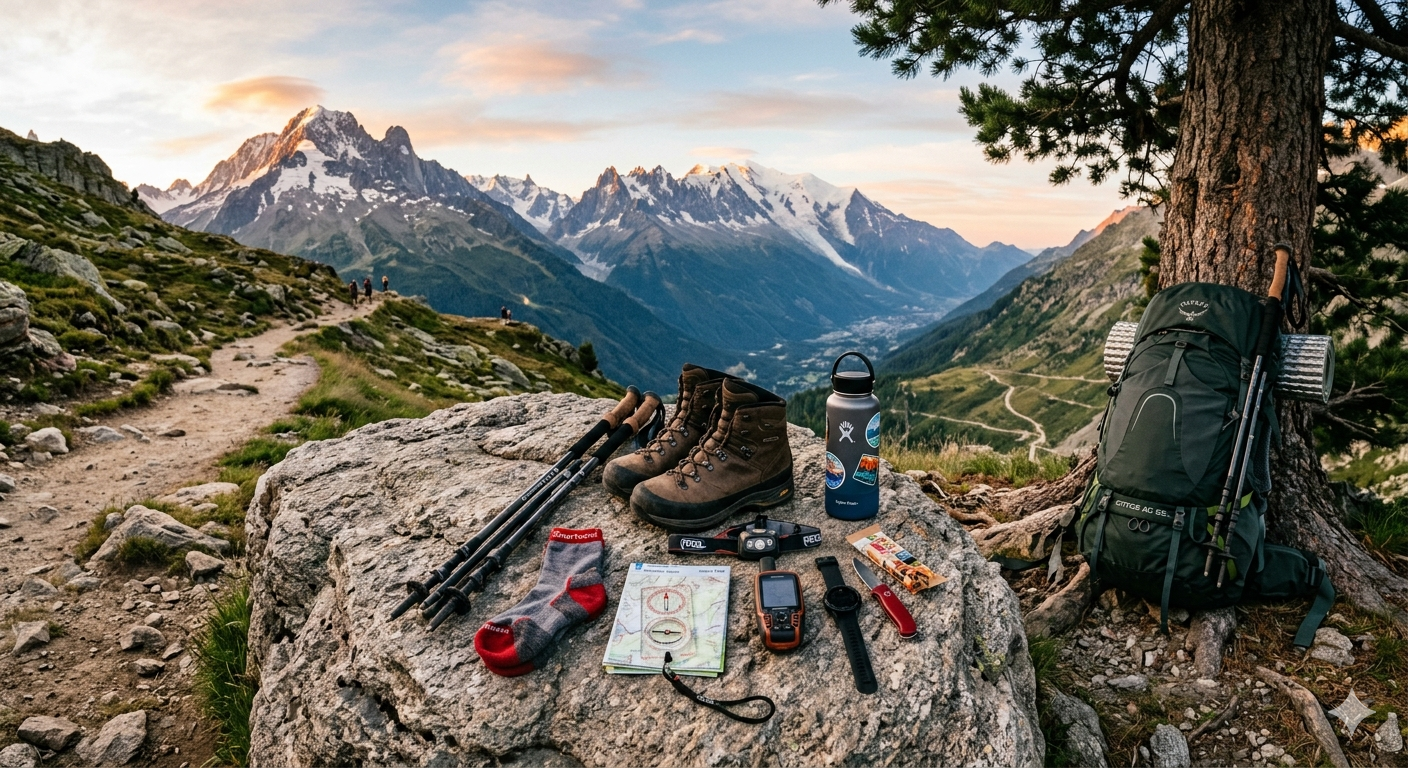
A hiking boot purchased today might still be on a trail in 2040. A tent bought this season might get passed between three friends before it's retired. A high-end touring bike will likely change hands twice, get serviced at two different shops, and accumulate thousands of kilometres of riding history before anyone considers replacing it.
Outdoor and sports equipment occupies a unique position in the consumer goods landscape: it is loved deeply, used hard, repaired deliberately, and resold actively. Owners form emotional attachments to gear in ways that most product categories can only aspire to.
And yet most outdoor brands treat their products as if they disappear the moment they leave the warehouse. No digital identity. No ongoing relationship. No way for the brand to stay connected as the product moves through a five, ten, or fifteen-year life.
That is the gap connected product identity was built to close.
Outdoor Brand Priorities for Connected Products
| Capability | Outdoor Brands | General Retail | B2B Equipment |
|---|---|---|---|
| Long-lifecycle product support (8–15+ years) | Critical | Low | Medium |
| Care and maintenance guides | High value | Low | Medium |
| Repair enablement (manuals + locators) | High value | Low | Medium |
| Spare parts availability and ordering | High value | Medium | High |
| Ownership transfer on resale | High value (35–50% resale market) | Low | Low |
| Community loyalty building | Critical | Medium | Low |
| DPP compliance ready | High (textiles 2027) | Medium | High |
| Warranty registration capture | Medium (20–30% baseline) | Medium | High |
| Time-to-first-engagement after purchase | 24–48 hours | 30 days+ | Installation |
Competitive Landscape
Outdoor brands have historically relied on community platforms (forums, ambassador networks, repair partners) to sustain customer engagement post-purchase. Authentication brands like Blue Bite offer counterfeiting verification but no lifecycle support. Resale platforms (Depop, Geartrade) capture the secondary market but without brand involvement. General connected product platforms focus on retail consumer electronics use cases — unboxing, loyalty, direct commerce — and miss the repair, ownership transfer, and long-lifecycle care that outdoor gear requires. BrandedMark's approach is designed specifically for product categories with long lifecycles, passionate communities, and repair culture: web-first registration, care guide delivery, repair locator, parts inventory integration, ownership transfer workflows, and DPP readiness for EU textile compliance.
Why Outdoor Is the Perfect Vertical for Connected Products
Outdoor and sports equipment suits connected product infrastructure better than any other consumer category because four distinct characteristics align precisely with where digital product identity creates value. First, product lifecycles run 8–15+ years — quality tents, technical jackets, and climbing hardware all outlast the brands' ability to maintain relationships through traditional channels. Second, outdoor customers over-index on brand loyalty and peer recommendation; trust earned in this category compounds for decades. Third, 35–50% of premium outdoor gear changes hands through secondhand markets — a sustained customer acquisition opportunity that connected products can capture through ownership transfer workflows. Fourth, genuine repair culture — demonstrated by Patagonia's Worn Wear and Arc'teryx repair programmes — creates sustained demand for care guides, parts access, and authorised repairer networks. Connected products deliver all four capabilities at the exact moment of need, transforming a one-time purchase into a multi-year brand relationship with documented history.
Compliance Is Coming — Sooner Than Most Brands Think
The EU Ecodesign for Sustainable Products Regulation (ESPR), established under EU Regulation 2024/1781, mandates Digital Product Passports across multiple product categories. Textiles — including technical outerwear, sportswear, and performance apparel — face delegated acts requiring DPP compliance by 2027, with equipment categories following in subsequent regulatory waves. A Digital Product Passport is not a simple QR code on a hangtag. It is a structured, machine-readable record of a product's identity, materials, sustainability credentials, and lifecycle data — accessible throughout the product's entire life, surviving ownership transfers, and updatable as circumstances change. The infrastructure required to meet this standard is functionally identical to what a connected product platform already provides: a serialised identifier per unit, a scannable access point, and a persistent data record. Outdoor brands building connected product infrastructure now absorb DPP compliance as a minor extension of an investment already made for customer experience purposes. Brands that wait will face a costly retrofit under regulatory deadline pressure.
Five Use Cases That Transform the Product Relationship
Connected products unlock five distinct engagement opportunities across the outdoor gear lifecycle, each solving a friction point that disconnected products leave unaddressed. Warranty registration at first use replaces low-conversion paper cards with a thirty-second scan, achieving 65% capture rates versus the 18% industry average — a difference of 23,500 direct customer relationships per 50,000-unit launch. Care guide delivery puts model-specific, updatable maintenance instructions in the customer's hands exactly when needed. Repair manuals and certified repairer locators surface qualified help when self-repair is not viable, reducing premature product disposal. Spare parts ordering connects customers directly to correct components for their specific unit, bypassing aftermarket sellers. Ownership transfer on resale converts the secondhand market from a brand blindspot into a customer acquisition channel. These five use cases cover the complete outdoor gear lifecycle — from first use through eventual resale — capturing every point where a brand would otherwise permanently lose the customer relationship.
1. Warranty Registration at First Use
Traditional warranty registration is a friction-laden process that fewer than 20% of outdoor product owners complete. The paper card goes in the bin. The online form gets abandoned halfway through. The product and its owner remain strangers to the brand.
A connected product changes the registration event. The customer scans the QR code on the jacket's inner label, or the tent bag's care tag, or the bike's frame sticker — at the moment of first use, while they are already engaged with the product. Registration takes thirty seconds: name, email, purchase date. The product is now in their name, warranty active, record created.
For a brand launching a new jacket with 50,000 units in the market, the difference between 18% registration (the industry average for manual processes) and 65% registration (achievable with scan-at-first-use) is 23,500 additional direct customer relationships. Those relationships have measurable dollar value: direct access for recall communications, access to the product's support journey, a channel for spare parts revenue, and a foundation for the brand community that outdoor brands live and die by.
2. Care Guides and Maintenance Instructions via Product Scan
Outdoor gear requires care that most owners either do not know about or struggle to execute. DWR treatments need periodic refreshing. Down insulation needs specific washing protocols. Technical fabrics have cleaning restrictions. Ski bindings need annual servicing. Climbing ropes need regular inspection against specific criteria.
A product scan delivers care instructions specific to that exact product — not a generic category page, but content calibrated to the model, the materials, and the vintage of production. Instructions can be updated when the brand discovers better methods or common failure modes. A QR code on the gear tag never goes stale, because the content behind it can always be refreshed.
This is support that costs almost nothing to deliver and has measurable impact on product longevity and customer satisfaction. It is also a natural touchpoint for the brand to stay present in the customer's life through the full product lifecycle.
3. Repair Manuals and Certified Repairer Locator
The outdoor repair economy is underpowered relative to demand. Customers want to repair their gear; they struggle to find qualified help when self-repair is not an option. A product scan can surface a locator that shows the nearest authorised repair point — filtered by brand, product type, and repair capability — alongside a structured repair guide for common issues.
For brands building repair networks, connected products give those networks a distribution channel. The customer who scans their worn jacket and finds three authorised repair options within ten kilometres is significantly more likely to repair than replace. The brand retains a loyal customer, reduces its Scope 3 emissions, and collects data on what is wearing out and why. This is the core principle behind right-to-repair as a competitive advantage.
Repair data from connected products is product intelligence. Brands that understand which components fail, at what usage intensity, and under what conditions have a direct feedback loop into product design that no focus group can match.
4. Spare Parts Ordering
Outdoor equipment has a long tail of replacement parts: buckles, poles, zipper pulls, shock cords, lenses, straps, and dozens of other components that wear out before the core product does. Today, finding the right spare part for a five-year-old tent or a three-year-old pack requires a degree of research competence that most customers do not have. The result is either a wrong part ordered in frustration, a product discarded prematurely, or an aftermarket purchase that enriches a third-party seller while the original manufacturer sees nothing.
A product scan surfaces the exact parts catalogue for that specific product, with current stock availability and direct ordering. The customer who would have bought a generic buckle from an outdoor surplus store instead orders the right part directly from the brand. The product gets repaired. The customer stays in the relationship.
5. Ownership Transfer on Resale
When an outdoor product is sold secondhand, the seller gets money and the brand gets nothing. The new owner inherits a product with no context, no documentation, and no relationship with the brand.
Connected product identity enables a structured ownership transfer: the seller initiates the handover via the product's QR code, the new owner completes registration, and the digital record — care history, service events, parts replacements, warranty remaining — transfers to the new account. The brand now has a relationship with the second owner. The second owner now has full access to everything the brand offers.
For high-value outdoor equipment — bikes, ski systems, paddleboards, climbing gear — provenance and service history carry real economic value. A product with a documented ownership history commands a higher resale price. The brand that enables this documentation provides tangible value that competitors without connected product infrastructure cannot match.
The Community Angle: Connected Products Build Brand Loyalty
The outdoor industry's most powerful competitive asset is community — self-organising networks of passionate owners who create content, provide peer recommendations, and recruit new customers at zero cost to the brand. Sustaining that community requires direct relationships with registered owners and returning customers. Connected products provide the technical foundation for those relationships at scale. Every scan is a brand touchpoint. Every registration is a direct customer handshake. Every care guide delivered, part ordered, or repair facilitated demonstrates that the brand remains invested through the product's full lifecycle — not just the first sixty days. The measurable signal is engagement: maintenance reminders sent to registered owners twelve months after purchase consistently outperform standard marketing emails because they are relevant, timely, and genuinely useful. A pre-season reminder to re-treat a waterproof jacket is not marketing — it is service. Outdoor brands that deliver this kind of ongoing value build the trust that defines category leaders and drives the peer referrals that no paid channel can replicate.
Implementation: Lightweight, Web-First, No App Required
Implementing connected product infrastructure for an outdoor brand does not require a custom mobile application. App installation rates for product-specific applications fall below 10% in most consumer categories; outdoor customers using gear in the field perform worse than that baseline. A web-first experience — a scannable QR code linking to a mobile-optimised page with no download required — eliminates the adoption barrier entirely. QR codes are embedded on inner care labels, hang tags, zip pulls, or product bags: durable placements that remain scannable after years of hard use. Serialised QR codes, unique per unit rather than per model, enable individual ownership tracking and service history that makes resale transfer and repair locator use cases viable. Implementation follows a phased model: warranty registration and care guides in phase one, with parts ordering and ownership transfer added as subsequent layers on the same infrastructure. BrandedMark's no-code Experience Designer allows brand teams to build and update product experiences without engineering resources, while handling GS1 Digital Link compliance and EU Digital Product Passport requirements simultaneously.
What Comes Next
The outdoor and sports industry faces converging forces that all point to the same conclusion: every product needs a digital identity. Customers care more about their gear than almost any other consumer segment and expect brands to remain present through the full product lifecycle. Products last 8–15 years or more — long enough for a sustained digital relationship to be economically significant. Resale culture is normalising product provenance and documented service history as real components of secondhand value. EU ESPR regulation will require Digital Product Passport infrastructure for textiles by 2027, with equipment categories following. Brands that build connected product infrastructure now — positioned as a customer experience investment rather than a compliance project — gain structural advantages across all dimensions simultaneously: deeper owner relationships, stronger resale participation, richer repair data feeding product development, and regulatory readiness already embedded. The question is no longer whether to connect outdoor products. It is what those products will say, and what relationship they will offer, when someone finally scans them.
Explore how connected product identity works across the full product lifecycle in Why Every Product Needs a Digital Identity. For the resale dimension, see How Brands Stay Connected Through the Secondhand Market. The right-to-repair opportunity is covered in Right to Repair is a Revenue Opportunity. And for how fashion learned DPP lessons that outdoor brands can apply today, see What Durable Goods Brands Can Learn from Fashion's DPP Journey.
FAQ: Connected Products for Outdoor and Sports Brands
Why is outdoor gear the ideal product category for connected product infrastructure?
Outdoor gear has five characteristics that align perfectly with connected product value creation: (1) Long product lifecycles of 8–15+ years, creating multi-year windows for customer engagement and service; (2) Passionate customer base with above-average brand loyalty and peer recommendation behavior; (3) Massive secondhand resale market (35–50% of premium gear is resold), creating ongoing customer acquisition opportunities; (4) Genuine repair culture where customers intentionally maintain gear rather than replace it; (5) Technical product knowledge requirements (care protocols, maintenance schedules, spare parts identification) that can be solved with personalized digital support. Retail consumer electronics, by contrast, have 2–4 year lifecycles and minimal resale value recapture. Outdoor is the inverse: long-term relationships are economically valuable, repair infrastructure keeps the brand profitable per unit over years, and resale creates opportunities to maintain brand relationships with new customers.
How does ownership transfer in a secondhand market work with connected products?
When an outdoor product is resold, the original owner initiates a handover through the product's QR code. They confirm they no longer own the product and approve the transfer. The new owner scans the same QR code, registers their details, and receives a transfer confirmation. The digital record — which includes care history, service events, parts replacements, warranty remaining, and maintenance schedules — transfers to the new owner's account. The brand now has a relationship with the second (or third) owner instead of losing them entirely to the secondhand market. For high-value equipment like bikes, ski systems, or premium climbing gear, this documentation of provenance and service history makes the product more desirable and commands a higher resale price, incentivizing authentic registration. The brand captures a new customer relationship at effectively zero acquisition cost.
Why can outdoor brands avoid requiring a dedicated app for connected product experiences?
Outdoor customers, who are often in backcountry or areas with unreliable connectivity, have exceptionally low app installation rates (below 10% for product-specific apps). A web-first, app-free experience — simply a scannable QR code linking to a mobile-optimized webpage — eliminates the adoption barrier entirely. No download required. No forced login. No app updates. A customer can scan the QR code on their jacket's inner label, care tag, pack strap, or product bag and immediately access care guides, repair locators, parts ordering, or ownership transfer — all in the browser. The QR code placement itself is part of the design: inner labels, hang tags, zip pulls, and product bags are durable placements that remain scannable even after years of use. This lightweight, web-first approach also makes it easier for outdoor brands to update content (new care instructions, new repair partners, new parts availability) without waiting for app updates.