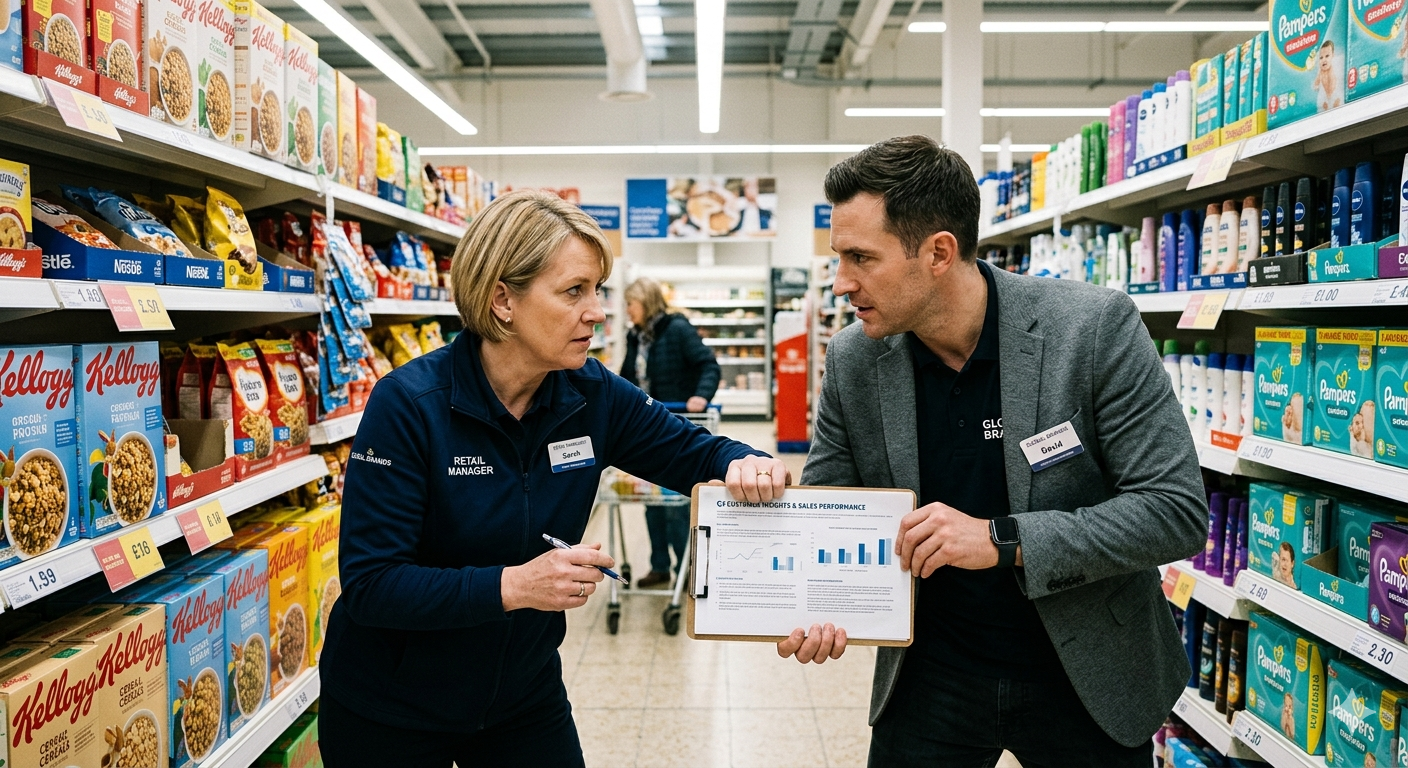
Manufacturer vs Retailer: Who Owns the Customer?
Key Takeaways
- Retailers own the transaction data — name, email, purchase history, geography — while manufacturers typically receive only wholesale invoices and aggregate sell-through figures.
- This structural data imbalance costs manufacturers in four measurable ways: inability to upsell, reactive-only support, broken loyalty loops, and no product performance signal.
- Post-purchase data capture via product-embedded QR codes does not require retailer cooperation — it happens after the sale is complete, entirely within the manufacturer's control.
- Manufacturers who build a direct post-purchase channel retain the retail relationship while claiming the ownership experience that retailers never served.
You designed the product. You engineered it, tested it, manufactured it, and built the brand around it. You spent years and millions to put it on shelves. And then, the moment a customer walks out of the store with it, you lose them entirely.
The retailer has the email address. The retailer has the purchase history. The retailer knows what accessories the customer bought, what they browsed, and when they're likely to buy again. You have a unit shipment count and a wholesale invoice.
This isn't a minor inconvenience. It's a structural imbalance that costs manufacturers billions in lost revenue, broken loyalty loops, and preventable support failures. And for most brands, it's been accepted as an unavoidable cost of selling through retail — until now.
The Data Imbalance Nobody Talks About
Ask any large retailer for a customer list tied to your product sales, and the answer will be no. That data is their competitive moat. They use it to cross-sell your customers into adjacent products, to run loyalty programs that shift buying behavior toward their own private labels, and to build first-party datasets they monetize through retail media networks.
Meanwhile, the average manufacturer knows almost nothing about the person using their product. Consider what each party actually has:
| Data Dimension | Retailer | Manufacturer |
|---|---|---|
| Customer name and email | Yes | Rarely |
| Purchase date and price paid | Yes | No (wholesale only) |
| Geographic location | Yes | No |
| Product model and SKU purchased | Yes | No |
| Co-purchases and accessories | Yes | No |
| Return history | Yes | No |
| Repeat purchase behavior | Yes | No |
| Post-purchase engagement | Via loyalty app | Almost never |
| Direct communication channel | Email, SMS, app | None |
The asymmetry is stark. Retailers treat your product as one node in a customer relationship they own end to end. Manufacturers treat the sale as the end of the story — when it should be the beginning.
Why It Matters More Than You Think
The consequences of this imbalance aren't abstract. They show up in four concrete, expensive ways.
You can't upsell or cross-sell. A customer who buys your $400 power tool is a natural candidate for blade sets, carrying cases, and extended warranties. Without knowing who they are, you route that revenue opportunity through the retailer — who will happily sell them a competing brand's accessories if the margin is better.
You can't deliver proactive support. When firmware issues, recalls, or safety advisories emerge, manufacturers with no direct customer contact are forced to rely on retailer cooperation and media announcements. Industry data suggests traditional recall completion rates sit between 15% and 30%. Brands that can contact customers directly routinely hit 70–80%. The US Consumer Product Safety Commission (CPSC) has cited direct manufacturer-to-consumer notification as the single most effective lever for improving recall completion rates in durable goods categories.
You can't build loyalty. Brand loyalty is built through ongoing contact — maintenance reminders, anniversary touchpoints, upgrade nudges. None of that is possible when you don't have a customer database. Your product sits in someone's home for five years with zero communication from you. When they're ready to buy again, the retailer — not your brand — is first in their mind.
You can't learn. Product failures, common support questions, usage patterns, geographic clustering — all of this is signal that should feed back into product development. Without registered customers, you're flying blind on real-world performance data.
Three Ways Manufacturers Reclaim the Relationship
This problem is solvable. The shift doesn't require bypassing retail or renegotiating distributor contracts. It requires inserting a manufacturer-owned touchpoint into the post-purchase experience — before the retailer gets another chance to deepen their hold.
1. Registration at Unboxing
The moment a customer opens a new product is the highest-intent moment in the ownership lifecycle. They're engaged, they're excited, and they're holding the product in their hands. A QR code on the insert card, the product itself, or the packaging creates a direct path from unbox to registration — entirely under the manufacturer's control.
The key is making registration frictionless and immediately valuable. A scan-to-register flow that takes under 30 seconds and instantly delivers the setup guide, warranty confirmation, and a spare parts link converts at dramatically higher rates than a paper card or a URL buried in the manual. Industry benchmarks show scan-based registration outperforms traditional methods by 3–5x — and the gap is widening as QR familiarity increases among consumers. A 2023 NielsenIQ report found that QR code engagement among consumers rose 57% between 2020 and 2023, driven largely by post-pandemic familiarity with scan-based interactions.
The moment that scan happens, you have a customer. You know who bought your product, when, and where. That's the foundation of a direct relationship the retailer cannot touch.
2. Warranty as a Relationship Trigger
Warranty registration has historically been low-value friction — a form customers ignore and manufacturers file away. That framing is wrong. Warranty registration is the most natural exchange in post-purchase commerce: the customer provides their details, the manufacturer provides documented protection and peace of mind.
Done right, the warranty moment becomes a relationship trigger. A 10-second QR registration flow that delivers an immediate digital warranty certificate — along with setup guidance, product tips, and a direct support channel — creates a reason to register that customers actually act on.
From that single interaction, manufacturers gain the customer's identity, the product's serial number, the registration date, and permission to communicate. Every subsequent touchpoint — a six-month maintenance reminder, an accessory recommendation, a firmware update notification — builds on that foundation.
3. Support as a Channel
Post-purchase support is typically viewed as a cost center. For manufacturers without direct customer relationships, it's worse — it's a cost center they don't even control, because support often routes through the retailer's service desk or call center.
Manufacturers who own the support channel own the conversation. A product-embedded QR code that routes to a manufacturer-hosted support experience captures customer identity at the moment of highest engagement: when they have a problem. Troubleshooting flows, video guides, and AI-assisted product assistants resolve issues faster and at lower cost — and they do it while capturing customer data that builds the direct database.
Support, warranty, and registration are three different doors into the same outcome: a manufacturer-owned customer record that exists outside the retailer's ecosystem.
The Retailer Objection (and Why It Doesn't Hold)
At this point, many manufacturers anticipate a retailer pushback: retailers won't share customer data, and they'll resist any manufacturer activity that threatens their relationship ownership.
This objection collapses under scrutiny. Manufacturers aren't asking retailers for data. They're capturing it directly — from the product itself, via a scan the customer initiates after the sale is complete. The retailer's transaction is done. The manufacturer's relationship is just beginning.
A QR code on a product box, inside the lid, or on the product chassis is entirely within the manufacturer's control. No retailer contract prevents a manufacturer from including a registration touchpoint in their own packaging. No distribution agreement stops a customer from scanning a product they just bought and registering it with the brand.
The retailer objection is a red herring. The real obstacle is internal: manufacturers who haven't built the infrastructure to capture and act on that post-purchase scan. That's a technology and process problem, not a channel politics problem.
The D2C Hybrid Model
The most sophisticated manufacturers aren't choosing between retail and direct — they're building a D2C layer on top of their retail footprint. The model looks like this: sell through retail for discovery and physical availability; own the post-purchase relationship directly.
A customer buys your product at a national chain. The retailer captures the transaction. But the product ships with a manufacturer-controlled QR experience. The customer scans, registers, and enters your ecosystem. From that point forward, you own the channel: support, accessories, upgrades, loyalty, and eventually the next product purchase.
This hybrid isn't theoretical. It's the logical end state for any manufacturer who takes post-purchase seriously. The retailers keep their distribution function. The manufacturer reclaims the customer relationship. Both parties get what they're actually good at.
The business case for this model is measurable and compelling: registered customers generate higher lifetime value, lower support costs per contact, better recall outcomes, and stronger repurchase rates. The ROI of owning the customer relationship isn't a soft marketing metric — it's a hard finance argument.
What Competitors in This Space Are Doing
The post-purchase ownership problem has attracted serious software investment. Platforms like Registria, Brij, and Layerise have each built products that address parts of this challenge — warranty registration, product experiences, and digital product pages respectively. The category is real and growing.
What differentiates the approaches is depth of product identity. Surface-level solutions treat the product scan as a landing page redirect. More complete approaches — like BrandedMark — treat it as the entry point to a full product operating system: serialized identity per unit, lifecycle management, jurisdiction-aware warranty rules, support flows, spares commerce, and EU Digital Product Passport compliance built in.
The right question for manufacturers isn't "which tool should I use?" It's "do I want a marketing landing page, or do I want a direct customer relationship at scale?" The answer should drive the platform decision.
The Fundamental Business Case for Product Identity
Step back from the tactical detail and the core argument is simple: every product your company makes should have a digital identity, and that identity should connect the product to its owner.
Not the owner's retailer. Not a third-party marketplace. The manufacturer — the company that designed, built, and stands behind the product — should know who owns it, when they bought it, and how to reach them.
This is what product identity means. A unique, manufacturer-controlled digital identity per unit, anchored to a customer record, that persists for the life of the product. It enables everything else: support, recalls, loyalty, compliance, aftermarket revenue. Without it, manufacturers are operating blind in the post-purchase phase — a phase that, across most durable goods categories, represents the majority of the customer's economic relationship with the product.
Retailers will always own the transaction. That's their business model. But the transaction is a moment. The product's life is measured in years.
Manufacturers who build direct relationships through product identity aren't competing with their retail partners — they're extending their own reach into a phase of the customer journey that retailers never claimed and never will.
Frequently Asked Questions
Can manufacturers really capture customer data without retailer cooperation?
Yes. Post-purchase data capture happens through the product itself — a QR code on the packaging, product chassis, or insert card that routes to a manufacturer-hosted registration experience. This occurs after the retail transaction is complete. Retailers have no visibility into or control over what happens when a customer scans a product they already own. The customer is interacting directly with the manufacturer's platform, not the retailer's.
Won't low registration rates limit the value of this approach?
Registration rates are heavily influenced by the friction and value proposition of the experience. Paper card registration historically achieved under 15% participation. Scan-based registration flows that deliver immediate value — instant warranty confirmation, setup guide, support access — routinely achieve 40–60%+ for motivated product categories. The benchmark varies by category, but friction reduction is the primary lever. A 10-second scan that delivers something useful will always outperform a form that asks for 12 fields and returns nothing.
How does this work for products sold through multiple retail channels?
Product identity is channel-agnostic. A QR code on the product itself — not the retailer's packaging or tag — fires the same registration experience regardless of where the sale happened. Whether the customer bought through a national chain, an independent dealer, an e-commerce marketplace, or a distributor, the post-purchase scan routes to the manufacturer's platform. The retailer channel is irrelevant. The product is the constant.