Why AI Warranty Agents Fail Without Product Identity
Key takeaway: AI warranty agents are genuinely impressive, yet speed without data is not resolution. If the product was never registered, the owner is unknown, and warranty status is uncertain, even the fastest AI agent starts from zero. Product identity is the data layer that turns AI speed into AI accuracy.
AI agents are processing warranty claims faster than ever. They triage requests automatically, route repair decisions without human intervention, and deflect tier-one support queries at scale. The technology works.
And yet, for most manufacturers, none of it solves the actual problem.
The bottleneck in warranty operations is not claim processing speed. It is that most interactions begin with a fundamental gap in knowledge: who owns this product, when was it purchased, is the warranty still valid? Even a fast AI agent still spends the first part of every interaction establishing context that should already exist. The speed gain is real. The cold start is the problem.
The Cold Start Problem
In machine learning, a "cold start" describes the failure of a recommendation system encountering a new user with no history. No preferences to draw on, no basis for a personalised response. The system works for established users. For new ones, it guesses.
Warranty operations face the same problem. Consider what an AI warranty agent typically knows when a claim arrives:
- The customer's name and contact details (if they emailed rather than called)
- A vague description of the problem ("it stopped working")
- Sometimes a model number, more often just "the one I bought"
- Rarely: a purchase date, proof of purchase, or a serial number
This is not a failure of the AI. It is the consequence of a product that was never registered, an owner the manufacturer has never met, and a warranty status that exists only in the customer's head.
Only around 6% of consumers "always" register a product with its manufacturer, while the majority register rarely or never (University of Michigan, 2015). The AI warranty agent arrives at the conversation knowing nothing about this specific product, this specific unit, or this specific owner.
The agent then does what any system does without data: it asks. It collects. It creates a ticket from scratch, and a human reviews it later. The AI has automated the data collection. It has not automated the resolution.
What AI Warranty Agents Actually Need
Genuine automation (not just structured data collection) requires three things to be true before the conversation starts.
1. Serialised Product Identity
Not a model number. Not a SKU. A serial number tied to a specific physical unit: manufactured on a specific date, dispatched to a specific distributor, registered to a specific owner.
Warranty policies are not generic. They depend on when the unit was built (component revisions, batch recalls), where it was sold (jurisdiction-specific warranty law), and who owns it (original buyer vs. secondhand purchaser). An AI agent working from a model number can only apply generic policy and cannot make a binding warranty decision. A human still has to.
Serialised identity removes that ambiguity. The agent knows the manufacture date, the revision, the channel, and the registered owner. The AI has a basis for a real decision, not an approximation.
2. Ownership History
A warranty claim is about the relationship between a product and a person, and that relationship has a history that changes what the warranty covers.
Without ownership history, an AI agent cannot verify entitlement. It can check whether a warranty is theoretically in force on the model, but not whether this owner is entitled to claim it. The agent must ask for proof of purchase. The burden falls on the customer. The resolution waits on the customer's response.
With ownership history, particularly where ownership is cryptographically tied to the person making the claim, the agent verifies entitlement in seconds. The claim passes or it does not. The decision is made on facts.
3. Current Warranty Status
Warranty status depends on the original purchase date, the warranty term, any extensions purchased, any prior claims that may have exhausted coverage, and any repairs that may have restarted the clock.
An AI agent working from a claim email has none of this. It must ask, trust the answer, and flag for human review. An AI agent working from a live warranty record (updated at registration, at each claim, at each repair event) makes that determination instantly.
This is not a capability gap in AI. It is a data gap. The model is capable of the decision. The data simply does not exist.
What Happens Without Product Identity
The practical outcome is a faster version of the same broken process.
The AI collects information more efficiently than a human would. It routes tickets accurately and applies triage without waiting for a senior agent. But the resolution (the actual decision about whether the claim is valid) still requires human review, because the AI cannot verify the facts the decision depends on.
This is why warranty automation projects frequently disappoint. Operational metrics improve: handling time drops, ticket volume increases through the queue, escalation rates fall. But resolution rates (claims fully closed without human intervention) remain low. The AI is faster at gathering uncertainty. It is not better at resolving it.
The cold start is not solved by making the AI more capable. It is solved by making the data available before the conversation begins.
For a deeper look at how AI changes when it has proper product context, see Agentic Product Support: Why Context Is the Real Differentiator.
What Changes With Product Identity
When every product has a digital identity, established at manufacture, confirmed at registration, and maintained through ownership transfers and service events, the AI warranty agent's starting position changes entirely.
Instead of arriving at a blank conversation, the agent arrives with: the exact product unit (serial number, batch, revision), the registered owner, the purchase date and channel, the warranty status, the service history, and the applicable jurisdiction.
The customer's first message ("my product has stopped working") triggers a lookup, not an interrogation. The agent knows who they are, what they own, and whether they are entitled to claim. The conversation moves immediately to fault diagnosis and resolution routing.
This is the difference between AI warranty automation that resolves the majority of claims automatically and AI automation that still routes most interactions to human review. The AI capability is identical. The data foundation is not.
For manufacturers tracking the real ROI of connected product warranty operations, this shows up directly in cost-per-claim figures and customer satisfaction scores.
The Registration Gap Is the Real Bottleneck
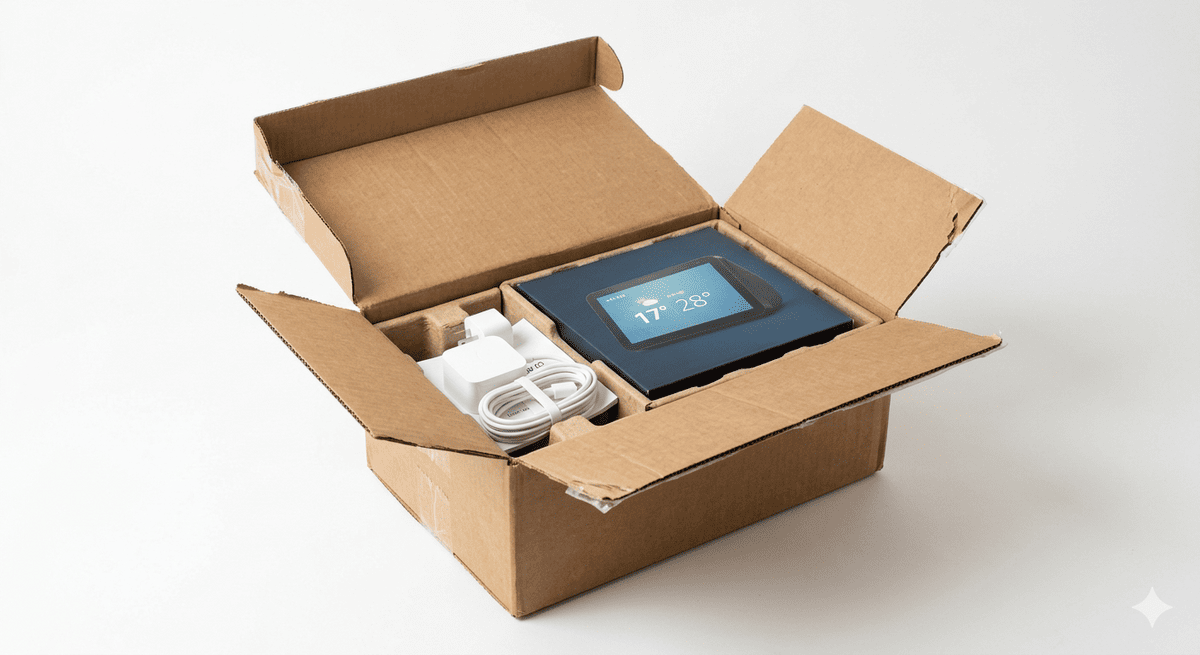
Registration is the harder problem. Claim processing tools deploy at the back end, where the customer has already identified themselves. Registration happens at unboxing, before any friction has accumulated.
A URL on a card in the box is not near-zero friction. Most customers skip it.
A QR code on the physical product, leading to a short registration flow, substantially outperforms a registration URL printed on a card in the box. The University of Michigan research from 2015 shows that 87% of consumers say they would register their product if doing so were required to activate their warranty coverage. The product is the trigger. When registration is built into the unboxing experience, every subsequent AI interaction benefits from the foundation that creates.
The Manufacturer's AI Advantage
Retailers know the customer because they processed the transaction. Their AI agent starts with a purchase record: name, email, purchase date, SKU. The cold start problem is partially solved by order data.
Manufacturers know the product, but without a direct relationship with the owner established at activation, their agent arrives knowing the product technically but not knowing the owner: the mirror image of the retailer's problem, and the harder one to solve.
Product identity closes this gap. When a manufacturer's QR code captures the owner at unboxing, the manufacturer holds the complete picture: product plus owner, transactional data and physical product history together.
That is the manufacturer's AI advantage, and it only exists if the identity layer is in place.
For manufacturers evaluating their options, what to look for in warranty software built for manufacturers covers the architectural differences in more depth.
FAQ
Q: We already have an AI agent handling warranty claims. Why would we need product identity on top of that?
Your AI agent is solving the back-end processing problem. Product identity solves the front-end data problem. If your agent spends significant time asking for serial numbers, proof of purchase, and model details before it can begin triage, the bottleneck is not the agent. It is the data layer feeding it. Product identity pre-loads that context so the agent can spend its capacity on resolution, not collection.
Q: What if most of our products are sold through distributors or trade counters? Does product identity still work?
Yes, and this is where product identity has the most value. When products go through indirect channels, the manufacturer has no purchase record at all: no Shopify order, no email address, no transaction date. Without identity at the physical product level (QR/NFC on the unit), the manufacturer is permanently blind to who owns their products. Product-level identity activated at unboxing works independently of the sales channel, which is exactly why it matters most for manufacturers selling through distributors, installers, and trade.
Q: Does product identity require customers to complete a registration flow? Most of our customers won't bother.
The friction problem is real, which is why the activation mechanism matters. A registration URL on a card in the box is easy to ignore, and most customers do. A QR code on the product itself, scannable at unboxing and leading to a short mobile flow, captures customers at the highest-motivation moment they will ever have: the product is new, they are engaged, and 87% say they would register if it activated their warranty coverage (University of Michigan, 2015). See Digital Warranty Card UX: What Makes Customers Actually Register for how flow design affects completion rates.
The Foundation Underneath the Speed
Speed is a multiplier. Applied to a good data foundation, it produces genuine operational improvement: faster resolution, lower cost per claim, higher satisfaction. Applied to a cold start, it produces faster uncertainty. The AI reaches the same impasse a human agent would, only more efficiently.
Product identity is not a feature to bolt onto an AI warranty agent. It is the data infrastructure that makes AI warranty automation deliver on its actual promise: knowing the product, knowing the owner, knowing the answer before the question is even asked.
If your warranty operations still start from zero for the majority of claims, the conversation to have is not about which AI agent to deploy. It is about establishing the product identity layer that makes any AI agent work the way it should.