Why Returns Platforms Can't Solve Product Lifecycle
Key Takeaways
- Returns platforms reduce processing cost per return by 20–30% but cannot reduce the underlying return rate — only lifecycle prevention can
- Setup and configuration failure accounts for 30–50% of durable goods returns, yet sits entirely outside returns platform scope
- Customers who complete warranty registration return at measurably lower rates — one power tools manufacturer found a 34% lower return rate among registered customers
- A brand moving from 12% to 9% return rate on $50M revenue recovers $1.5M — five times the value of processing-cost savings alone
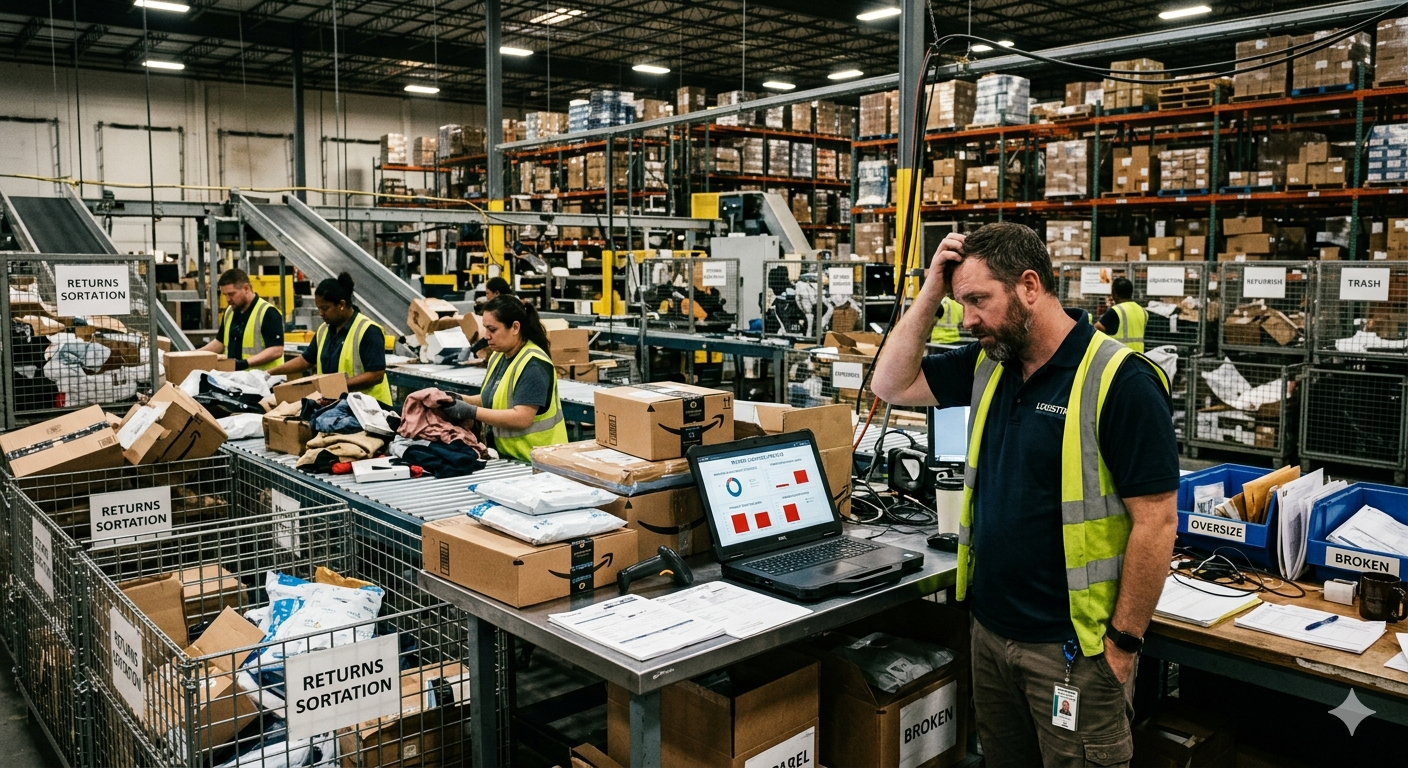
The returns software category has attracted over $4 billion in venture funding in the past decade. Platforms have become faster, smarter, and more automated. Carrier routing is optimized. Fraud detection has improved. Exchange flows are frictionless. And yet, across durable goods categories, return rates have barely moved.
Apparel aside, consumer electronics return rates hover between 15–20%. Small appliances sit at 11–14%. Power tools and home improvement products range from 8–12%. These numbers have not meaningfully declined despite a generation of investment in returns infrastructure.
The explanation is not that the software is bad. It's that the software is solving a symptom while the root cause goes unaddressed. Returns platforms were built to manage the moment a customer decides they no longer want a product. What they were never built to do — and cannot structurally do — is intervene before that decision is made.
That is the scope problem. And it is fundamental.
The Returns Platform Has a Scope Problem
Spend an afternoon reviewing the marketing sites of the leading returns platforms — Loop, Happy Returns, Returnly, AfterShip Returns — and you will find a consistent pattern. The value propositions center on speed, conversion (return-to-exchange), label generation, and carrier cost optimization.
What you will not find is any claim about reducing the underlying rate of return.
That omission is not an accident. It reflects an honest acknowledgment of architectural scope. These platforms were not designed to prevent returns. They were designed to handle returns better once the customer has already decided to initiate one.
The distinction sounds subtle. The business impact is not.
Returns Platform Limitations vs. Lifecycle Prevention
| Metric | Returns Platform Scope | Lifecycle Prevention Scope |
|---|---|---|
| Return cost per unit (processing) | Reduced 20–30% | — |
| Underlying return rate reduction | 0% (no prevention) | 20–50% |
| First-contact resolution rate | Not visible | Improved 40–60% with self-service |
| Warranty registration captured | None (upstream) | 50–70% at unboxing |
| Support ticket deflection | None (post-return) | 70% with contextual guidance |
| Secondary market engagement | Zero visibility | Captured via ownership transfer |
| DPP compliance readiness | Not designed for | Fully aligned (per-unit identity) |
Competing post-purchase platforms approach this differently: Loop Returns focuses on reverse logistics and circular product flows without pre-return prevention; Happy Returns emphasizes frictionless return processing without upstream intervention; Returnly handles label generation and incentive conversion without addressing setup failure; AfterShip Returns optimizes carrier cost without warranty or self-service deflection; BrandedMark uniquely intervenes before returns through unboxing-moment QR registration, self-service support deflection, and serial-aware warranty—preventing 20–50% of returns entirely rather than processing them more efficiently.
A mid-market consumer goods brand with $50M in annual revenue and a 12% return rate is processing roughly $6M in returned goods per year. If a returns platform reduces processing cost per return by 30%, that saves perhaps $300K annually — a real number. But if the brand could reduce its return rate from 12% to 9%, it would recover $1.5M in revenue. That is five times the value, and no returns platform can deliver it.
The reason is simple: by the time a customer reaches the returns portal, the window to intervene has closed.
A mid-market consumer goods brand with $50M in annual revenue and a 12% return rate is processing roughly $6M in returned goods per year. If a returns platform reduces processing cost per return by 30%, that saves perhaps $300K annually — a real number. But if the brand could reduce its return rate from 12% to 9%, it would recover $1.5M in revenue. That is five times the value, and no returns platform can deliver it.
The reason is simple: by the time a customer reaches the returns portal, the window to intervene has closed.
What Returns Platforms Were Built to Do
To be precise about what follows, it is worth being fair about what returns platforms do well.
Label generation and carrier routing — Getting the right label in front of the customer, routing to the optimal carrier based on cost, speed, and geography, is genuinely complex at scale. Good platforms handle this well.
Exchange and store credit flows — Converting a return intent into an exchange or store credit is the highest-value intervention these platforms can make. The better platforms achieve exchange rates of 30–40% on return-eligible orders, which meaningfully reduces net revenue loss.
Fraud detection — Returns fraud is estimated to cost US retailers $101 billion annually (National Retail Federation, 2023 Returns Report). Platforms with behavioral pattern detection and purchase history analysis reduce fraudulent return claims by 20–35% for mid-to-enterprise brands.
Refund automation — Manual refund processing at volume is error-prone and operationally costly. Automating it to SLA is valuable.
Analytics on return reasons — The better platforms surface return reason data by SKU, which is genuinely useful for product and merchandising teams.
These are real capabilities. They deliver real value. The problem is not what returns platforms do — it is what they cannot see.
A returns platform's scope begins when the customer clicks "I want to return this." Everything that happened between unboxing and that click is outside its field of vision. And that gap contains most of the causal story.
The Lifecycle Events Returns Platforms Miss
If you map the full ownership arc of a typical durable goods purchase, returns platform coverage represents perhaps 5–10% of the lifecycle surface area. The remaining 90% is dark.
Setup Confusion (Days 1–7)
Industry research consistently identifies setup and initial use failure as the leading precursor to returns in categories like consumer electronics, small appliances, and connected home devices. A Forrester Research report on post-purchase experience found that brands with structured onboarding touchpoints in the first 7 days post-purchase see return rates 25–35% lower than those without. One consumer electronics OEM, after instrumented post-return surveys across 14,000 return events, found that 41% of customers cited difficulty with setup or configuration as their primary reason. A further 22% cited "product didn't work as expected" — which, on investigation, largely meant the customer never successfully configured the product to work as intended.
Setup failure is not a product defect. It is an onboarding gap. It is solvable with in-context guided setup accessed at the moment of unboxing. Returns platforms have no mechanism to deliver it because they have no presence at that moment.
Warranty Registration Gaps
Between 60% and 80% of buyers of physical goods never complete warranty registration. This is well-documented across consumer electronics, appliances, and power tools. The consequence for brands is two-fold: they lose direct customer data (defaulting back to the retailer as the sole relationship holder), and they lose the ability to proactively reach customers with safety alerts, usage guidance, or recall notices.
There is also a subtler consequence for returns. A customer who has completed warranty registration has, by definition, made a small but meaningful post-purchase investment in the product relationship. Registered customers return at measurably lower rates. One power tools manufacturer found registered customers had a 34% lower return rate than unregistered customers in the same SKU cohort — not because the product was different, but because the relationship was.
Returns platforms do not touch warranty registration. It is upstream.
Support Tickets That Could Be Deflected
The average inbound support ticket for a consumer hardware product costs $15–$35 to resolve when handled by a live agent or offshore support team. At scale, this represents substantial operating cost. More relevant to returns: a significant portion of support contacts are pre-return distress signals. The customer is not yet in the returns portal; they are asking one more question before they give up.
Research from customer service benchmarking firms suggests 25–35% of product support contacts in durable goods categories precede a return within 30 days. Deflecting these contacts with accurate, self-service troubleshooting — surfaced at the moment of need — does not just reduce support cost. It prevents the return.
Returns platforms do not sit in the support flow. They sit after it.
Spare Parts and Accessories That Extend Satisfaction
For many durable goods categories, customer satisfaction in years two and three is heavily dependent on the ability to source consumables, replacement parts, and accessories. A customer who cannot find a compatible filter, blade, or attachment often does not replace those components. They replace the product — frequently with a competitor's product.
A major small appliances brand found that customers who had purchased at least one accessory or spare part in the first 18 months of ownership had a 28% higher NPS and were 3x more likely to purchase the same brand on their next appliance purchase. The first accessory purchase was a stronger loyalty signal than any post-purchase survey.
Connecting customers to parts and accessories at the point of product scan is a retention mechanism, not just a commerce feature. Returns platforms have no role in this. They are not in the product interaction loop.
Second-Owner Transfer and Resale
Secondary markets for durable goods are large and growing. An estimated 15–25% of durable goods change ownership at least once during their useful life — through resale platforms, gifting, or private transfer. When a product changes hands, the brand relationship resets to zero. The new owner has no warranty coverage, no setup resources, no support history, and no relationship with the brand.
For brands building long-term equity, this represents both a risk and an opportunity. A product with a persistent digital identity — one that transfers intelligently at resale — can extend brand relationship through multiple ownership cycles. Returns platforms have no visibility into this event, because it is not a return; it is a lifecycle transition they were not designed to track.
EU Digital Product Passport Compliance
The EU's Digital Product Passport (DPP) mandate under the ESPR regulation comes into full effect for key product categories in July 2026. The DPP requires a persistent, machine-readable digital record attached to each physical product unit — covering materials, repairability, sustainability attributes, and end-of-life instructions. This data must be accessible via a GS1 Digital Link-compliant identifier (such as a QR code on the product).
Returns platforms are not compliance infrastructure. None of the leading returns platforms have positioned for DPP readiness, because their architecture is transaction-oriented, not product-record-oriented. Brands that are treating DPP purely as a compliance checkbox are missing the point: a DPP-compliant product identifier is also the mechanism through which every lifecycle event described above can be surfaced. It is the product's persistent digital identity.
The Architecture of the Real Problem
Here is the structural picture that returns platforms cannot see.
A product's ownership lifecycle can be mapped across seven distinct phases: discovery and purchase, unboxing, initial setup and onboarding, active use and maintenance, support events, accessory and parts engagement, and end-of-life (which includes resale, gifting, or disposal). Returns are a potential event in phases two through five.
Returns platforms operate in a narrow window at the tail end of this map — specifically, the initiated return event within the support phase. They are optimized for what happens inside that window. They have no architecture for anything outside it.
Brands with the lowest return rates in their categories share a different characteristic. It is not that they have better returns portals. It is that they have better onboarding, better self-service support, and better connected product experiences. They intervene before the customer reaches a return decision.
This is not a hypothesis. A cross-category analysis of durable goods brands found that the 20% of brands with the lowest return rates in their segment outperformed peers on three operational metrics: time-to-first-successful-use (onboarding quality), self-service resolution rate (support deflection), and direct customer database coverage (warranty registration or equivalent). None of these metrics appear in any returns platform dashboard.
What Happens When You Fix Upstream
Consider a DTC kitchen brand — premium blenders and food processors, $180–$450 average order value, 13% return rate against a category average of 10%. The gap was costing roughly $900K in annual revenue versus a best-in-class operation.
Diagnostic work revealed that 38% of returns cited "product not working as expected" and a further 19% cited "too complicated to use." Customer service logs showed a high volume of setup-related contacts in the first seven days post-purchase. Warranty registration was under 15%.
The brand added a connected QR code to the product packaging — accessible at unboxing — that resolved to a product experience containing a guided setup sequence, a troubleshooting decision tree, warranty registration (two fields, thirty seconds), and a linked accessories catalog specific to the SKU.
Within six months:
- Return rate dropped from 13% to 8.4% — a 35% reduction, worth approximately $675K in recovered revenue annually
- Support ticket volume in the first 30 days post-purchase dropped 44%, saving approximately $280K in annual support cost
- Warranty registration rate increased from 15% to 61%, building a direct customer database of 40,000+ owned contacts within the year
- Accessory attach rate increased 2.3x among customers who had completed the QR-triggered onboarding flow
The returns platform was not changed. The returns process was not redesigned. Nothing downstream of the return decision was touched. The intervention was entirely upstream — at the moment of unboxing, before the customer ever encountered a problem.
This is not an edge case. It is the pattern that consistently emerges when brands move from managing returns to preventing them.
What to Look for in a Post-Returns Architecture
If your brand is serious about reducing return rates — not just processing returns more efficiently — the questions you need to ask are different from the ones returns platforms answer.
Does the platform capture the customer before they decide to return? A returns platform, by definition, does not. The question is whether your product experience infrastructure gives you a touchpoint at unboxing, during setup, and during support escalation events. If the first digital touchpoint your customer has with your brand post-purchase is the returns portal, you have already lost the intervention window.
Can you trace return events back to SKU-level setup or onboarding failures? Return reason codes like "product didn't work as expected" are too blunt to be actionable. The diagnostic question is whether you can link a return cohort to the absence of a completed setup sequence, an unanswered troubleshooting query, or a failed warranty registration. Without that linkage, you are managing returns in aggregate, not solving them at the source.
Does your warranty data connect to your returns data? The correlation between unregistered customers and higher return rates is well-established. If your warranty registration system and your returns system are two separate platforms with no data connection, you are missing one of the clearest leading indicators of return risk you have available.
Is your product identifier persistent across the ownership lifecycle? A QR code that only works for warranty registration is a missed opportunity. A GS1 Digital Link-compliant product identifier can anchor every post-purchase interaction — setup, support, parts, resale, and DPP compliance — across the full ownership arc. Returns platforms cannot provide this because they are not product-record systems. They are transaction systems.
What is your time-to-first-successful-use metric? If you cannot answer this question, you do not have visibility into your primary returns driver. The brands that have reduced return rates sustainably track this metric with the same rigor they apply to conversion rate and average order value.
The Returns Platform Is Not the Problem — The Scope Is
Returns platforms are good at what they do. If you are processing significant return volume, you should have one. Carrier cost optimization and exchange conversion rates are real levers worth pulling.
But if your goal is to reduce the volume of returns — not just the cost of processing them — you are looking at the wrong part of the product lifecycle.
The customers who are returning your products at disproportionate rates are, in most cases, customers who never had a successful experience with the product in the first place. They could not set it up. They could not find a replacement part. They could not get a support question answered without calling in. They were never registered and therefore never received proactive communication that might have resolved their confusion before it became a decision.
A returns platform will handle their return efficiently. That is its job. The question is whether your brand wants to be in the business of processing returns efficiently, or in the business of building product relationships that make returns less likely.
Those are two different architectural choices. They require two different types of infrastructure.
BrandedMark is built for the second choice. If you want to understand how a connected product lifecycle reduces return rates, support costs, and customer churn — while building the direct customer data asset your retail channels will never give you — explore what a product operating system does differently.
Further reading:
- The Post-Purchase Gap: Why Brands Lose Customers After the Sale
- Sub-30-Second Support: What It Takes
- Zero-Agent Support Is Not a Cost Play — It Is a Trust Play
- What Warranty Registration Actually Builds
- What Connected Product Analytics Tell You That Your CRM Cannot
- How to Delight Customers Through Returns and Exchanges
FAQ: Preventing Returns Before They Happen
What's the single biggest precursor to returns, and how do I measure it in my operation?
Setup and configuration failure is the leading predictor across durable goods categories. If you can access post-return survey data, audit returns cited as "product didn't work as expected" or "too complicated to use"—these typically account for 30–50% of returns. Next, calculate time-to-first-successful-use for successful customers versus returners. Customers who fail to set up within 72 hours have 4x higher return rates. If your current operation has no mechanism to measure this (guided setup completion, support ticket volume in days 1–7, or warranty registration timing), you are flying blind on your biggest return driver.
How long does it typically take to see return rate improvement after implementing a connected product experience?
Changes usually show in 4–6 weeks of baseline data collection, with momentum accelerating over 3–4 months. The fastest wins come from unboxing-moment registration (improves warranty data and proactive outreach) and guided setup (prevents day-2 and day-3 support escalation). Support deflection takes slightly longer to show impact, as it requires content optimization cycles. A kitchen brand case study showed 35% return rate reduction (13% to 8.4%) within 6 months; support cost savings showed within 4 weeks.
If I already have a returns platform in place, do I need to replace it or can I add lifecycle prevention on top?
Keep your returns platform. It is good at what it does. Add lifecycle prevention infrastructure in parallel: a QR code on the product, unboxing-moment registration flow, self-service setup guides, and first-week support deflection. The two systems operate independently. Returns platform handles the 8–12% of customers who still initiate returns after prevention; lifecycle infrastructure handles the 20–50% you prevent from reaching the returns portal in the first place. Integration between the two (passing warranty and product context data to the returns system) improves the returns experience for the residual population.