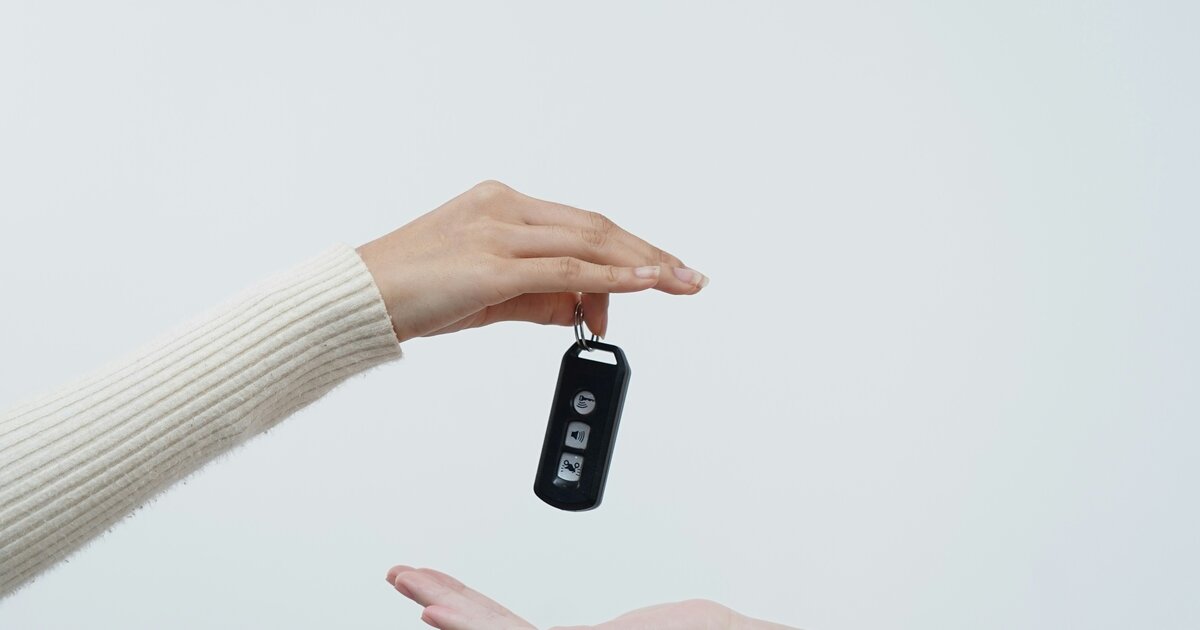
Product Trust vs Product Ownership
A manufacturer sells a professional bench grinder to a trade distributor. The distributor sells it to an electrical contractor. The contractor gifts it to an apprentice who uses it for three years, then sells it on eBay. At each step, the manufacturer's systems see nothing. When the fourth owner files a warranty claim, the support team has no idea who this person is, which revision of the product they hold, or whether the warranty has any validity left.
This is not a fraud problem. It is an ownership problem.
A new category of platform has emerged that positions itself around "product trust," framing warranty verification and claims validation as the central challenge manufacturers face after a product ships. The logic is appealing: if you can prove a claim is legitimate, you've solved the post-sale problem. But this framing misses the deeper issue. You cannot verify a claim from someone whose ownership you never established.
The structural difference is this: trust-focused platforms ask "is this claim valid?" and start from the claim, working backwards. Ownership-first platforms ask "who holds this product right now?" and start from the product itself, following it forward. One is reactive claims infrastructure. The other is a persistent relationship that travels with the product.
What "Product Trust" Actually Solves
Trust, in a product context, refers to the confidence that a claim is legitimate: the person asserting warranty rights actually owns the product, the product is genuine, and the failure falls within covered terms. Trust-focused platforms are genuinely good at this.
The architecture is built around the claims event. A customer makes contact, provides purchase evidence, the platform verifies eligibility, and the claim is processed or rejected. Strong platforms in this space have built significant capabilities around AI-assisted claims processing, repair routing, and fraud detection.
This is real value. For high-volume customer service operations, automated claims processing measurably reduces cost per interaction and the ROI is typically visible within weeks.
But look at what the model requires to function: a customer-initiated trigger, a purchase record, and a product that was registered in the original transaction. The platform waits for the claim to arrive. It has no view of the product between purchase and claim. It cannot tell you how many of your products were never registered, and it has no answer for the product that changes hands.
The claims-first blind spots
The unregistered majority. The majority of physical products are never registered with the manufacturer. For trust-focused systems, these products simply do not exist until a claim event forces them into view. The owner relationship is built at the moment of crisis, not at the moment of ownership.
The non-ecommerce channel. If a product is gifted, purchased from a trade counter, bought secondhand, or won in a promotion, there is often no purchase record to anchor the trust verification. The platform cannot confirm ownership. Not because anything fraudulent occurred, but because no digital trail connects this person to this product.
The second owner. The most valuable asset in post-sale product data is the transfer event: who used to own this, who owns it now, and does the new owner's warranty relationship continue, reset, or lapse? Trust-focused platforms are architecturally unequipped to answer this question. Their data model ends at the original sale.
The gap between claims. Most products have a low warranty claim rate. The overwhelming majority of owners never trigger a claims interaction at all. For trust-focused infrastructure, those owners are invisible for the entire product life. There is no engagement, no relationship, no revenue opportunity until the claim arrives.
What "Product Ownership" Means Instead
Ownership-first architecture begins at the product, not the purchase record. The central concept is a per-unit digital identity: every individual product (not every SKU, but every serialised unit) carries a persistent identifier that can be claimed by whoever physically holds it.
This identity is established at the most reliable moment available: unboxing. When the new owner scans the QR code on the product, registration happens in under 30 seconds. The product knows it has an owner. The manufacturer knows who that owner is. The relationship is established before any problem occurs.
From that moment, ownership is continuous:
Support is personalised. Every support interaction begins with the exact unit, its revision history, its warranty state, and the owner's claim record. No generic FAQ, no anonymous chatbot. AI-assisted product support only delivers this level of accuracy when grounded in per-unit identity data. Without it, the AI is guessing.
Spare parts are contextual. When an owner needs a replacement filter, compatible blade, or service kit, the system knows exactly which version of the product they hold. It surfaces the right part, not a catalogue the owner has to navigate alone.
Claims are pre-validated. When a warranty event does occur, there is no verification theatre. The owner is already known. The product's history is already recorded. The claim processes against fact, not assertion.
Ownership transfers. When the product changes hands, ownership transfers cryptographically and verifiably, with the product's full history intact. The new owner inherits the relationship. B2B equipment resale becomes commercially useful rather than a manufacturer blind spot.
The framing matters: ownership is not a feature bolted onto claims processing. It is the foundational layer that makes everything downstream coherent and accurate: support, claims, parts, and compliance.
Trust Is a Feature. Ownership Is a Platform.
This distinction is not semantic. It maps directly to what the manufacturer can do with the system.
| Dimension | Trust-Focused Platform | Ownership-First Platform |
|---|---|---|
| When does it activate? | At the claim event | At first scan (unboxing) |
| What does it know? | Purchase record + product SKU | Per-unit serial, owner identity, scan history |
| Who does it serve? | Owners who have a problem | All owners, from day one |
| Does it work for gifts? | Rarely | Yes: physical product is the anchor |
| Does it work for secondhand? | No | Yes: ownership transfers |
| What happens between claims? | Nothing | Ongoing relationship, engagement, parts, support |
| Data model | Order → Customer | Product → Owner → History |
| Strategic output | Faster claims resolution | First-party owner database |
A trust-focused platform makes claims cheaper. An ownership-first platform makes manufacturers valuable to their customers between claims, which is the vast majority of the ownership period.
The scale of this gap matters for mid-market manufacturers in particular. Enterprise consumer brands that sell through large retail chains often have strong first-party data from loyalty programmes and direct channels. For a UK manufacturer of commercial catering equipment, HVAC systems, or professional power tools selling through distributors and trade merchants, the ownership-first model may be the only way to build a direct customer relationship at all. Without it, every owner interaction starts from scratch.
The Lifecycle Question
Product trust platforms define "lifecycle" as the span of a warranty claim: intake, assessment, resolution. This is a defensible but narrow definition.
Product ownership defines lifecycle as the entire period during which a person holds and uses a product: from the first scan at unboxing to the moment they transfer it to someone else. It is a fundamentally longer arc, and it creates fundamentally different commercial opportunities.
Consider a manufacturer of commercial kitchen equipment with a product life measured in years, not months. Under a trust-only model, the manufacturer interacts with the owner only when something goes wrong: once when a fault is reported, once when a service is booked. The rest of the product's life is invisible to the brand.
Under an ownership model, that same product becomes a persistent data asset. The manufacturer knows the unit's scan history, service events, owner identity, ownership duration, and (when the product is transferred) the chain of owners who have held it. Understanding product lifecycle from a digital identity perspective shows why this matters beyond compliance: it creates a dataset that informs product development, aftermarket revenue strategy, and warranty pricing that reflects real-world failure patterns.
As ESPR delegated acts and the EU Battery Regulation's battery passport requirements begin applying to specific product categories from 2027, manufacturers will need to demonstrate lifecycle data, not just claims resolution rates. A trust-focused platform that only activates at the claim event cannot produce this. Ownership-first architecture that follows the product from first scan produces the lifecycle record as a by-product of normal operation. The relationship between DPP compliance and product identity explains why manufacturers building for compliance should start with the ownership layer, not the reporting layer.
Why This Distinction Is Becoming Urgent
The post-purchase software market is consolidating around two narratives. One argues that the core problem is trust: validating claims, preventing fraud, processing resolutions efficiently. The other argues that the core problem is relationship: knowing who owns your products, engaging them directly, generating revenue from the ownership period.
Both narratives have merit. Neither should be dismissed. But they lead to structurally different products, and manufacturers choosing between them should understand what they are buying.
If your primary pain is claims volume (too many warranty interactions, too much manual handling, too high a cost per resolution), a trust-focused platform will reduce that pain directly. It is optimised for exactly this problem.
If your primary challenge is that most of your products have no registered owner, that your support team starts every call with no product history, that secondhand buyers contact you without any record of their existence, and that your aftermarket revenue depends on knowing who holds your products, then claims efficiency is not the constraint. The ownership layer is.
The manufacturer who builds the ownership layer first gets the trust functionality as part of it. Claims process faster because the owner and product are already known. The manufacturer who builds only the trust layer will always be starting from zero when the relationship matters most.
FAQ
What is the difference between product trust and product ownership?
Product trust is the ability to verify that a warranty claim is legitimate: confirming that the claimant owns the product and the claim is valid. Product ownership is the persistent, unit-level record of who holds a product at any given time, established at first use rather than at the point of claim. Trust verification is a property of a single interaction. Ownership is a continuous record that makes every subsequent interaction accurate from the outset: support, parts, and resale.
Can a trust-focused platform support ownership transfer?
In most architectures, no. Trust platforms are built around the original purchase record, which means their ownership model ends at the first sale. When a product is gifted, resold, or inherited, there is no purchase event to anchor a new ownership claim. Ownership-first platforms use per-unit digital identity attached to the physical product rather than to a software record, which means ownership can be transferred by the new holder scanning the product regardless of how they came to hold it.
Do manufacturers need both trust and ownership infrastructure?
Most manufacturers will eventually need both, but the sequence matters. Building ownership infrastructure first means that when a claim arrives, it arrives with context already attached: verified owner identity, product serial and revision history, and scan record. The trust verification step then takes seconds rather than minutes. Manufacturers who build trust infrastructure first and attempt to retrofit ownership later face a harder problem: they have claims data but no relationship data, and the two systems do not share a common anchor. Starting from product identity and extending into claims is architecturally simpler than the reverse.
BrandedMark gives every physical product a persistent digital identity, tracking it from first scan at unboxing through every owner, service event, and lifecycle stage. Start with the free tier and register your first 100 products with no credit card required.