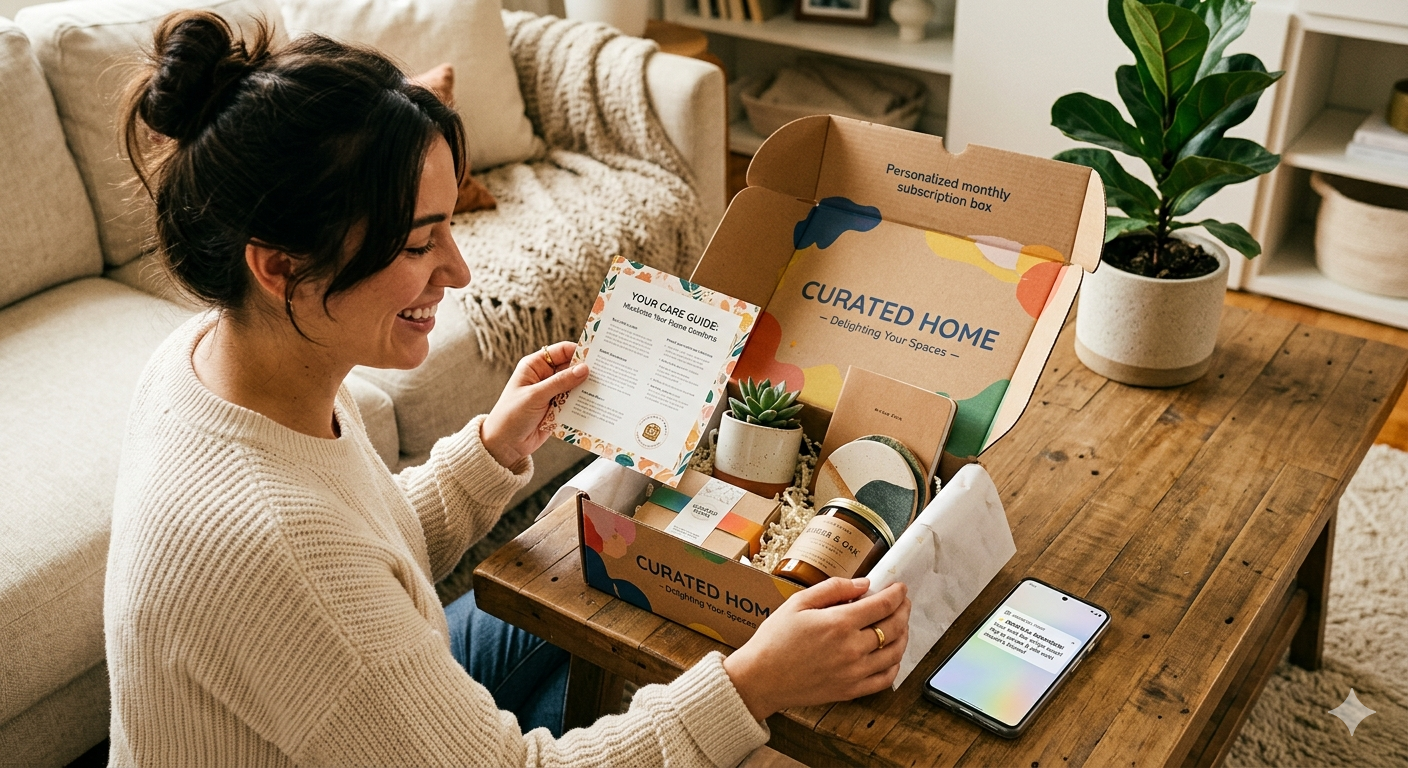
Product Experience Reduces DTC Subscription Churn
Key Takeaways
- The average DTC subscription brand loses 40–60% of customers within six months — not because the product fails, but because the relationship never forms beyond inbox-based email sequences.
- Customers who scan their product QR code two or more times before their second shipment renew at materially higher rates; scan frequency is a leading churn predictor, not a lagging one.
- A connected product experience — personalised usage content, timely refill prompts, loyalty rewards, educational sequences — creates the emotional reason to stay that the product alone cannot.
- The QR-connected approach beats email and app-based retention channels on timing, personalisation depth, and reach, requiring no app download from the subscriber.
The average DTC subscription brand loses between 40% and 60% of its customers within the first six months. Not because the product is bad. Not because the price is wrong. Because the relationship never formed.
Most DTC brands treat their physical product as a delivery vehicle. The most successful ones treat it as a relationship touchpoint.
This distinction — seemingly small — accounts for the entire gap between a 30% annual churn rate and a 70% one. Subscription businesses that connect their physical product to an ongoing digital experience retain customers at dramatically higher rates. Brands that ship boxes and send emails do not.
This article looks at why the product itself is the most underleveraged retention asset in DTC, how connected product experiences change the churn equation, and what that looks like for coffee, supplements, and razors.
The DTC Churn Problem Nobody Wants to Name
The subscription economy grew fast on a simple promise: convenience and savings in exchange for commitment. But commitment is not loyalty. Customers who subscribe for a discount will cancel the moment the novelty fades or the credit card statement gets scrutinised.
Industry benchmarks tell a consistent story:
- Month 1 retention: typically 70–80% (the trial cohort is still engaged)
- Month 3 retention: drops to 50–60% — the "is this worth it?" window
- Month 6 retention: falls to 40–55% — churn accelerates among marginal subscribers
- Month 12 retention: 25–40% for most categories, with outliers at both ends
The cost of this churn is compounding. DTC brands spend £30–£90 to acquire a new subscriber (based on BrandedMark's analysis of published DTC acquisition benchmarks across coffee, supplements, and personal care categories). If that subscriber cancels after two shipments, the economics are deeply negative. The model only works if customers stay long enough to become profitable — typically month four or five, depending on average order value and cost of goods.
Where Most Brands Look for the Answer
The default playbook is email. Better onboarding sequences, more personalised campaigns, exit-intent surveys, pause offers. These interventions help at the margin, but they address symptoms rather than the root cause: the customer's relationship with the brand lives in their inbox, not in their experience of the product.
When the inbox stops converting, there is nothing left to hold them.
The Physical Product Is Your Most Valuable Retention Asset
Every subscription customer owns a physical object with your brand on it. A bag of coffee sitting on their counter. A supplement bottle in their bathroom cabinet. A razor in the shower. That object is present in their daily life in a way your email is not.
The question is whether the product speaks back.
A package with a QR code linked to a personalised product experience is not just packaging — it is a persistent relationship channel. Every time a customer scans it, they engage with your brand on their terms, in the context of using your product. That is qualitatively different from opening a marketing email.
What a Connected Product Experience Delivers
A scan-triggered product experience can deliver a range of retention-building touchpoints that email cannot:
- Personalised usage content — brewing guides tuned to the specific roast in the box, dosing advice calibrated to the supplement formula, shaving technique tips matched to the blade type. Content that is specific to what they received, not generic brand content.
- Timely refill prompts — triggered by time elapsed since last delivery rather than a fixed schedule. A customer who scans frequently is getting value from the product; a customer who stops scanning is at risk. Both signals can drive different interventions.
- Community access — a scan can route a customer into a brand community (a Discord, a recipe exchange, a challenge programme) without requiring a separate app download. The product is the entry point.
- Loyalty rewards — scan frequency can accumulate points, unlock tier benefits, or surface exclusive content. Loyalty that lives in the product experience rather than a third-party programme.
- Educational sequences — for supplement and wellness brands especially, a staged content sequence (week one: what to expect; week four: optimise your routine; week eight: stack recommendations) dramatically increases perceived product value and reduces cancellation during the critical first 90 days.
How Scan Frequency Correlates with Retention
Loyalty Without an App: QR Scan Moments Replace Downloads documents the broader principle. In the DTC subscription context, the data is particularly striking.
Customers who scan their product QR code two or more times before their second shipment renew at materially higher rates than those who never scan. This is not a marketing intervention driving the difference — it is the engagement signal itself. Scanning correlates with active use, curiosity about the product, and emotional investment in the category. These are the customers who will stay.
Treating scan frequency as a churn-prediction metric — rather than just a marketing engagement stat — changes how you operate the business. Product registration data predicts customer churn at the SKU level, allowing proactive intervention before the cancellation decision is made.
The practical implication: if a subscriber received two shipments but never scanned, they are not an engaged customer waiting for a better email. They are a churned customer who hasn't cancelled yet.
The Subscription–Product Identity Connection
Subscription businesses face a structural challenge that product businesses solved decades ago: identity. A physical product, when given a digital identity, becomes a known entity. You can track its history, anticipate its needs, and serve the person who owns it.
Most DTC subscriptions have customer identity (account, email, billing address) but not product identity. They know who is subscribed but not how they are using the product, which variant they prefer, or whether the product is even being consumed.
Product identity enables subscription and service models at a different level of sophistication. When every unit shipped has a unique serial identity tied to the subscriber's account, the business gains:
- Usage intelligence — consumption patterns inferred from scan behaviour and refill timing
- Variant personalisation — if a coffee subscriber consistently scans the medium roast and ignores the dark, future curation should reflect that
- Lifecycle awareness — knowing that a subscriber is on their sixth bag triggers different content than someone on their first
- Churn prediction — a drop in product engagement before the next billing cycle is a leading indicator, not a lagging one
This is not theoretical. It is the infrastructure difference between a subscription brand that grows and one that spends its entire margin re-acquiring customers it should have kept.
Three Categories Where This Changes Everything
Coffee and Beverages
The premium coffee subscription market is intensely competitive. Entry is frictionless; so is cancellation. The brands that win long-term are those that build a ritual around the product, not just the product itself.
A connected bag — scan to access tasting notes, brewing parameters for the specific roast, origin stories, and a next-shipment preview — turns a commodity purchase into a considered experience. Customers who engage with origin content and brewing guides consistently show lower churn than those who treat the bag as a generic commodity. The product experience creates the emotional reason to stay that the product alone cannot.
Supplements and Wellness
The supplement churn problem is fundamentally a results problem. Customers who don't perceive results cancel. Customers who do perceive results are among the most loyal consumers in any category.
Connected packaging bridges the gap by helping customers achieve results. A scan on day one delivers a welcome sequence and dosing guide. A scan at day 30 surfaces a progress check and stack optimisation. A scan at day 60 provides a reorder prompt with a loyalty reward for staying on schedule. The product experience scaffolds the behaviour that produces the results that justify the subscription.
Razors and Personal Care
Razors are the canary in the coalmine for DTC subscription economics. Every major entrant has faced the same cliff: strong initial adoption, aggressive price-matching from incumbents, and high churn once the novelty of the brand story fades.
The brands that retain subscribers longest are those that built product-led relationships. Refill timing prompts based on typical blade longevity, skin-type shaving guides, and loyalty rewards for scanning after each shipment turn a commoditised consumable into a personalised routine. The subscription persists because the experience is consistent — not because the customer hasn't gotten around to cancelling.
Platform Comparison: Connected vs. Disconnected DTC
Not all subscription platforms give brands the tools to execute this model. Here is a practical comparison across the approaches most DTC brands use today:
| Capability | Email-only approach | App-based approach | QR-connected product experience |
|---|---|---|---|
| Reach | 20–30% open rate on good days | 2–5% of subscribers install the app | Any subscriber who scans — frictionless |
| Timing | Marketer-scheduled | Push notification (high ignore rate) | Customer-initiated at moment of product use |
| Personalisation | Segment-level at best | User-level (if logged in) | Product-level — specific to the unit in hand |
| Scan engagement data | Not applicable | Requires app activity | Native — every scan is a data point |
| Churn prediction | Lagging (email disengagement) | Moderate (app inactivity) | Leading (product disengagement before cancel) |
| Setup friction | Low | High | Low (QR on packaging) |
| Examples | Standard ESP workflows | Most consumer apps | BrandedMark connected product platform |
The QR-connected approach wins on the metrics that matter for retention: timing (at point of product use), personalisation (product-level), and leading churn signals (scan frequency). It also wins on reach, because it requires no download.
Three Questions DTC Brands Ask About This Model
Does this require a tech team to set up?
No. Platforms designed for this use case — including BrandedMark — offer no-code experience builders. A brand manager can create a scan-triggered product experience, set up refill reminders, and configure loyalty reward logic without engineering involvement. The QR codes are applied to packaging through the same process as any other print element.
Will customers actually scan?
The engagement data says yes, provided the scan delivers immediate value. A QR code that links to a generic homepage will not be scanned twice. A QR code that links to personalised brew parameters, a dosing guide tailored to the subscriber's stated goals, or an exclusive community access point will be scanned repeatedly. The experience has to earn the behaviour. When it does, scan rates on DTC consumables consistently exceed 15% — far above app download rates.
How does this connect to subscription billing and fulfilment?
Through API or webhook integrations with existing subscription platforms. Scan events, registration data, and engagement signals can trigger fulfilment actions (schedule an early refill), billing actions (apply a loyalty discount), or CRM actions (flag a subscriber as at-risk). The connected product layer sits on top of existing infrastructure rather than replacing it.
Frequently Asked Questions
Why do DTC subscription brands have such high churn rates?
Industry benchmarks show 40–60% of DTC subscribers cancel within six months. The core problem is that the customer relationship lives in the inbox — built on email sequences rather than genuine product engagement. When email stops converting, there is nothing left to retain the subscriber. The product itself, sitting on the customer's counter or in their bathroom, is the most consistently present brand touchpoint — but most brands treat it as inert packaging rather than a relationship channel.
How does scan frequency predict subscription churn?
Customers who scan their product QR code two or more times before their second shipment renew at materially higher rates than those who never scan. Scanning correlates with active use, product curiosity, and emotional investment in the category. Conversely, a subscriber who received two shipments and never scanned is not an engaged customer waiting for a better email — they are a churned customer who has not cancelled yet. Treating scan frequency as a churn-prediction metric allows proactive intervention before the cancellation decision is made.
What does a connected product experience include for a DTC brand?
A scan-triggered product experience can deliver personalised usage content specific to the exact product variant in the box (brewing guides for the specific roast, dosing advice calibrated to the supplement formula), timely refill prompts based on elapsed time since last delivery, access to brand communities without a separate app download, loyalty rewards accumulated through scan frequency, and educational sequences staged across the first 90 days of the subscription. These touchpoints happen at the moment of product use — not in the inbox.
Does this require customers to download an app?
No. The QR-connected approach requires no app download from the subscriber. A QR code on the packaging links directly to a mobile-optimised product experience in the browser. Scan rates on DTC consumables consistently exceed 15% when the experience delivers immediate value — far above typical app download rates of 2–5% of subscribers.
The Retention Lever Most Brands Overlook
DTC subscription brands have invested heavily in acquisition, email automation, and retention email sequences. They have largely ignored the one touchpoint that exists inside every customer's daily life: the product itself.
The physical product, when connected to a digital experience, becomes the most powerful retention tool in the stack. It is present at the moment of use. It delivers value specific to that exact product. It generates engagement signals that predict churn weeks before a cancellation email arrives.
Brands that treat their product as inert — a thing that ships and sits — will continue to replace churned customers at enormous cost. Brands that connect their product to an experience that grows with the customer's relationship will find that churn is not an inevitability of the subscription model. It is a design flaw they haven't fixed yet.
BrandedMark gives every product a digital identity, lifecycle, and ongoing relationship with its owner. If you're running a DTC subscription and your retention curve looks like the industry average, the product experience is worth examining before the next email campaign goes out.
Related reading: Loyalty Without an App: QR Scan Moments Replace Downloads — Product Identity Enables Subscription and Service Models — How Product Registration Data Predicts Customer Churn