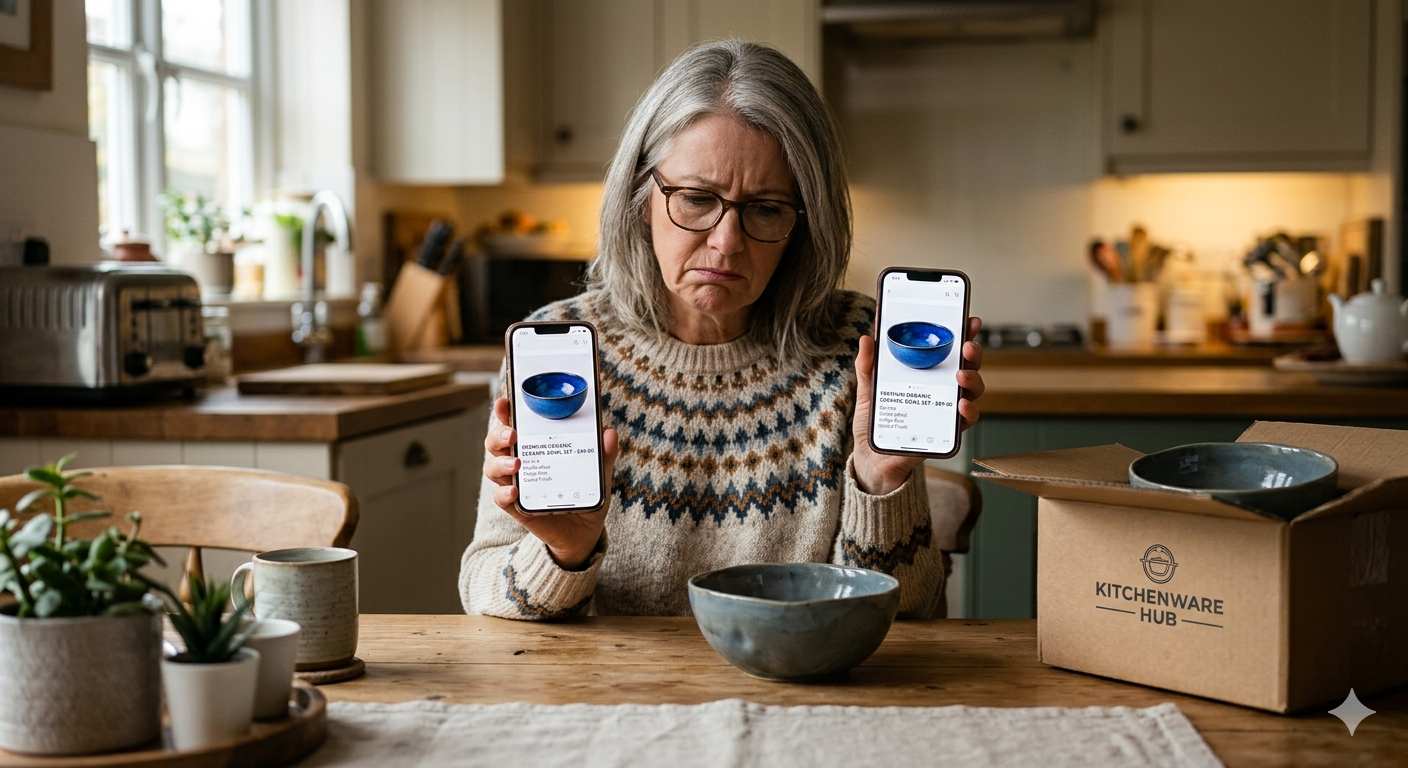
The Product Experience Gap: Expectations vs Reality
You spend a serious sum on a professional-grade power tool. The box is beautifully designed. The product feels engineered to last a decade. You get it home, crack open the packaging, and find a folded paper booklet the size of a takeaway menu and a phone number for customer support that operates Monday to Friday, business hours only.
That moment is the product experience gap. And it is costing manufacturers more than they realise.
How the Best Digital Brands Rewired Customer Expectations
Consumers do not benchmark your product against your competitors. They benchmark it against the best experience they have ever had with any product, full stop.
The most admired consumer brands taught an entire generation that unboxing a product should feel like an event, that a connected product can update itself and get measurably better over time, and that even physical equipment can carry a rich software experience. These companies did not just sell hardware. They sold ongoing relationships, delivered digitally, from the moment of purchase.
The consequence? Every manufacturer now operates in a world where customers unconsciously carry a high bar for post-purchase experience. It does not matter whether you make fitness equipment, garden tools, or industrial compressors. The moment your customer opens that box, they are comparing you, however unfairly, to the best digital experience they have ever had.
The expectation bar has been set by the best. The reality most manufacturers deliver has barely moved in a generation.
What Customers Actually Expect Today
For many buyers, post-purchase experience now sits alongside product quality as a reason to stay loyal to a brand. When a customer buys a durable physical product, here is the kind of experience they increasingly look for:
- Instant, guided setup: a digital walkthrough that adapts to their specific model and configuration, not a generic printed booklet
- Digital warranty registration: frictionless, completed in moments, with confirmation they can trust
- Self-service support: answers late on a Sunday night, without waiting on hold or searching through an ageing forum
- Personalised recommendations: when the product is a month old, they want to know what accessories actually work with it, not a generic catalogue
- Proactive communication: maintenance reminders, firmware notes, safety updates, delivered before problems occur
- Ownership transfer: a simple way to pass the product on and prove provenance if they resell it
None of these expectations are unreasonable. Every single one is already delivered by brands in adjacent categories. Customers have simply started expecting them everywhere.
What Most Manufacturers Actually Deliver
The honest version of the post-purchase experience for the majority of manufactured goods looks like this:
| Customer Expectation | Manufacturer Reality |
|---|---|
| Digital setup wizard | Printed manual, often multilingual, largely unread |
| Digital warranty registration | Paper card in the box, or a clunky legacy web form |
| Round-the-clock self-service support | Call centre (business hours only) or generic FAQ page |
| Personalised accessory recommendations | Generic "products you might like" from a retailer, not the brand |
| Proactive maintenance reminders | Silence until the product fails |
| Ownership verification on resale | No mechanism, so the buyer has no proof of service history |
| Product-specific troubleshooting | Third-party videos, not the manufacturer |
| Instant recall or safety notification | Press release and hope for media coverage |
| In-app firmware or content updates | Not applicable, because the product has no digital presence |
| Spare parts identification | Call the dealer, describe the part, wait for a quote |
| Community and tips from fellow owners | Unofficial social media group, if one exists |
| Environmental/sustainability credentials | Nothing accessible at point of use |
The gap between columns one and two is not a minor inconvenience. It is a strategic chasm, and it is widening every year.
The Gap by Category: Where It Hurts Most
The experience gap is not uniform. It bites hardest in categories where the product is expensive, technically complex, or has a long ownership lifetime.
Power tools and professional equipment: A tradesperson buys a premium cordless system. Setup should include a battery conditioning guide, torque settings by application, and a direct link to compatible accessories. They get a leaflet. When the tool develops a fault well into ownership, they have no easy way to log it, check warranty status, or find the right replacement part without calling a distributor.
Domestic appliances: A household invests in a range cooker. The brand's post-purchase presence is a warranty card buried in the packaging and a support line that resolves most queries by asking the customer to read the manual they already tried. Years later when a burner fails, the customer has no idea who manufactured the igniter or whether it is still under any form of cover.
HVAC and heating systems: Installers fit a system, hand over commissioning documents, and leave. The homeowner has no digital record of what was installed, when, or what maintenance schedule applies. When something goes wrong, they start from zero.
Consumer electronics: The contrast here is especially stark. The most digitally mature brands begin the experience in the box. A comparable product from a mid-tier brand often sees the experience end there.
Garden and outdoor equipment: A robotic mower arrives with a paper setup guide, a PIN code on a sticker, and a support email. Seasonal reminders, blade replacement schedules, firmware updates: none of it arrives automatically. The customer either finds it themselves or it does not happen.
In every category, the underlying dynamic is the same. The manufacturer optimised for getting the product built and shipped. What happens after delivery was never engineered at all.
Why the Gap Exists: The Production Mindset Problem
Manufacturers are, by training and incentive, optimised for production and distribution. The KPIs that matter inside most manufacturing organisations are units shipped, defect rates, distribution costs, and retailer margins. Post-sale experience sits in a different budget, a different team, and often a different building.
This creates a structural blind spot. The engineering, operations, and supply chain functions that dominate manufacturing culture are not built to think in terms of ongoing customer relationships. That is a software company mindset, and most manufacturers do not see themselves as software companies.
The result is that post-sale investment is perennially underfunded. Support teams run on legacy systems. Warranty processes were designed to minimise claims, not to serve customers. Digital channels, where they exist at all, are bolt-ons rather than native experiences.
And critically, because manufacturers often sell through retail channels, they frequently do not even know who their end customer is. The retailer owns that relationship. The manufacturer ships into a void and hopes for the best.
The Real Cost of the Expectation Gap
Manufacturers who have not measured this gap tend to underestimate it. The costs are real and compound over time. The post-purchase gap explores where manufacturers are losing revenue and loyalty.
Returns and refunds: A meaningful share of product returns are not caused by defects. They are caused by customers who could not figure out setup, could not find support, and gave up. Closing the experience gap is, in effect, a returns reduction strategy.
Support call volume: Every inbound support contact carries a fully loaded cost. A manufacturer shipping a large volume of units and averaging even one support contact for every few units is spending a substantial sum each year on calls that a good digital support experience would deflect. Many of those calls are about setup, basic troubleshooting, or warranty status, all solvable with self-service.
Negative reviews: Post-purchase experience failures drive one-star reviews. A customer who cannot get set up, cannot reach support, or cannot register their warranty will often go public. A customer who had a seamless digital experience rarely does. The asymmetry is punishing.
Lost repeat purchase: This is the biggest cost, and the hardest to measure. A customer who had a poor post-purchase experience may not come back. They may not buy your accessories. They may not upgrade to your next model. They may recommend against you to colleagues. The lifetime value lost from a single bad post-purchase experience can dwarf the value of the original sale.
Counterfeiting and grey market exposure: Without product-level serialisation and a digital ownership record, manufacturers cannot easily verify authentic products in the field. Counterfeit spare parts, grey market imports, and fraudulent warranty claims are all harder to combat without a connected product identity.
How to Close the Gap: The Product Experience Platform Approach
The brands that have closed this gap share one structural characteristic. They treat the post-purchase experience as a product in its own right.
They have a defined digital experience for every product, delivered at the moment of scan or first use. They capture ownership data at registration. They deliver support through self-service flows that are specific to that product and configuration. They push maintenance and accessory recommendations proactively. They can reach every registered customer quickly if a safety issue emerges.
The assumption used to be that building this required the engineering resources of a major technology company. It no longer does.
Platforms like BrandedMark now provide manufacturers with a no-code Product Experience Platform (PXP): a system that gives every physical product a digital identity, a connected owner experience, and an ongoing relationship channel, without requiring a software engineering team to build it. A manufacturer can design a complete product experience, covering the setup guide, warranty registration, troubleshooting flows, spare parts catalogue, and maintenance reminders, then publish it against a product's unique serial number, accessible via a single QR scan. For the financial view, a CFO's view of how product identity drives ROI walks through the business case.
The customer scans the product. They get a polished, guided experience. The manufacturer gets the ownership data, the support deflection, and the direct channel for future revenue.
This is not a marginal improvement on a paper manual. It is a structural shift in how manufacturers relate to their customers after the sale.
Frequently Asked Questions
Is the product experience gap really a manufacturer problem, or is it a retail channel problem?
Both, but it is the manufacturer's problem to solve. Retailers control the purchase experience, but manufacturers control the product itself. A connected product experience, delivered via a QR code or NFC tag on the product, operates independently of the retail channel. The manufacturer can reach the end customer directly, regardless of where the product was purchased. Waiting for retailers to close the gap is not a strategy.
How do smaller manufacturers compete on post-purchase experience without large budgets?
The cost of building a bespoke digital product experience has fallen sharply. Product Experience Platforms allow manufacturers to design and publish connected product experiences without writing code, without building apps, and without maintaining infrastructure. The work that once required a dedicated software team can now be done by a product manager or marketing team in a short time. A capability that used to take years to build is now available as a platform.
Which product categories see the highest ROI from closing the experience gap?
Products that are technically complex to set up, have a long ownership lifetime, generate ongoing consumable or spare parts revenue, or are sold through intermediary channels tend to see the strongest returns. Power tools, domestic appliances, HVAC, professional equipment, and consumer electronics are among the highest-impact categories. But any product sold at a meaningful price point and expected to last more than a year has a compelling case for a connected post-purchase experience.
The Expectation Bar Is Not Coming Down
Customers are not going to lower their expectations because a category has "always worked that way." The brands that close the product experience gap first will own the loyalty, the data, and the repeat revenue in their categories. The brands that do not will keep funding expensive support centres, losing customers to negative reviews, and watching lifetime value leak out of every sale.
The gap is real. The technology to close it exists. The question is whether manufacturers choose to act before their competitors do.
To understand what the experience looks like when a customer actually scans your product, read What Happens When a Customer Scans Your Product at 2am. For a deeper look at how connected products change the competitive picture, see Your Competitors' Products Are Getting Smarter Than Yours. And if your current setup guide is a PDF nobody reads, here is how to fix it.
Every product should have a digital life. The ones that do are pulling ahead.
BrandedMark is the Product Operating System for manufacturers of physical goods: serialised product identity, connected experiences, warranty registration, and Digital Product Passport readiness in one platform. See how it works at brandedmark.com.