Product Authentication for Consumer Electronics: Stopping Fakes at Scale
Key Takeaways
- Consumer electronics counterfeiting costs legitimate brands $100B+ annually; the broader counterfeiting market is projected to reach $4.2 trillion globally by 2027 (ICC).
- Static holograms and packaging features are replicated within 6–12 months of deployment at scale — cryptographic serialization is the only durable protection.
- Serialized unit-level authentication reduces fraudulent warranty claims by over 60%, verified by brands deploying the system within the first two quarters.
- Authentication and warranty registration can be unified into a single scan event, capturing first-party customer identity at zero acquisition cost.
Every year, consumers buy fake chargers that catch fire, counterfeit headphones that deliver nothing close to the promised audio, and cloned batteries that swell and fail. They think they're buying your product. They're not. And in many cases, they'll blame you anyway.
Consumer electronics counterfeiting isn't a fringe problem. It's a $100 billion-plus annual drain on legitimate brands — one that erodes revenue, destroys brand trust, generates fraudulent warranty claims, and in some cases creates genuine safety liability. The counterfeiters have become sophisticated: packaging is pixel-perfect, barcodes scan correctly, and products look authentic right up until the moment they fail.
Traditional brand protection tools haven't kept pace. The only approach that works at the scale electronics brands require is serialized digital authentication — one unique, cryptographically verifiable identity per unit, delivered at the point of manufacture and readable by any customer with a smartphone.
| Key Metric | Value |
|---|---|
| Global Counterfeiting Market | $4.2 trillion (by 2027) |
| Electronics Category Rank | Top 3 most-counterfeited |
| Traditional Anti-Counterfeiting Failure Rate | 60–80% of fakes replicate successfully |
| Fraudulent Warranty Claims (Pre-Auth) | 15–25% of claims |
| Fraudulent Claims (Post-Serialization) | 5–8% of claims (60% reduction) |
| Authentication Scan-to-Verification Time | Under 3 seconds |
Product Authentication Vendors: Electronics Focus
Electronics brands evaluating authentication solutions compare Scantrust (QR + NFC specialist), Blue Bite (NFC-first), Polytag (QR engagement), Nabcore (supply chain + product authentication), and BrandedMark (identity-platform approach). For consumer electronics specifically, the key differentiator is warranty integration: Scantrust excels in luxury and high-value electronics; Blue Bite leads in tap-based UX; Polytag focuses on consumer QR engagement; Nabcore specializes in supply chain traceability. BrandedMark combines authentication with warranty registration and customer acquisition in a single scan event—eliminating the need for separate authentication and registration flows.
The Scale of the Problem
The International Chamber of Commerce (ICC) estimates global counterfeiting and piracy will reach $4.2 trillion annually by 2027, with consumer electronics consistently ranking among the top three most-counterfeited product categories. The specific products at highest risk tell you exactly where the economic incentive lies:
- USB-C and Lightning chargers — high volume, low scrutiny, real safety risk from substandard components
- Wireless earbuds and headphones — premium price points with minimal visible differentiation from fakes
- Smartphone accessories (cases, screen protectors, cables) — fast-moving, price-sensitive, sold at scale through marketplaces
- Laptop and device batteries — high-margin originals, dangerous counterfeits, difficult to distinguish physically
- Gaming accessories — controllers, headsets, charging docks sold through grey market and resale channels
The losses are not limited to lost unit sales. A consumer who buys a counterfeit charger and experiences a battery failure may return the genuine device under warranty. A brand's customer satisfaction scores absorb the impact of products it never made. Its support teams field calls about problems they can't diagnose, because the hardware in question doesn't match the specs they shipped.
This is the hidden cost of counterfeiting — and it scales with your product's popularity.
Why Traditional Anti-Counterfeiting Methods Fail Electronics Brands
The instinct when counterfeiting becomes visible is to add physical security features: holographic stickers, specialty inks, embossed seals, serialized barcodes. These interventions were adequate in an era when counterfeiters operated with limited tooling. That era is over.
Holograms Are Now Commodity Items
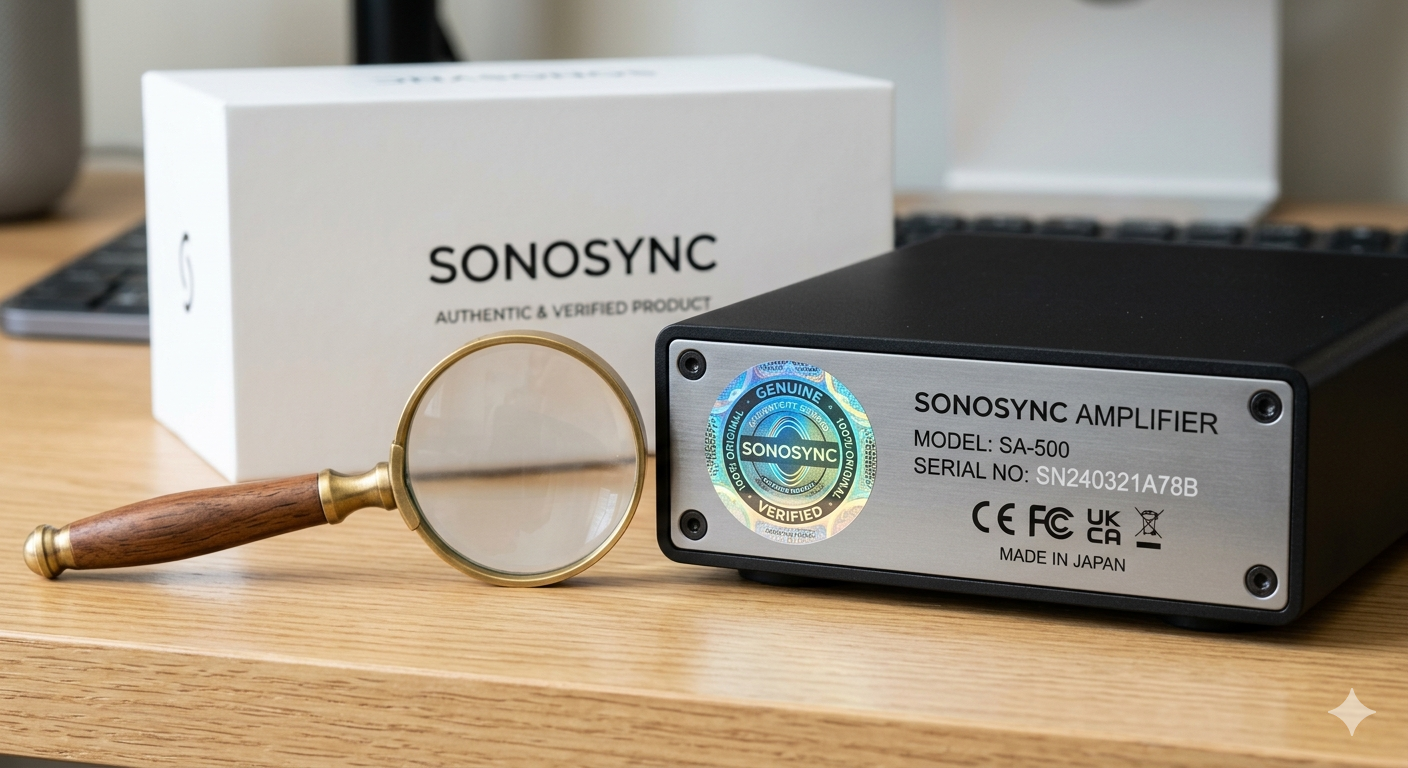
Holographic stickers that were near-impossible to replicate in 2005 can be sourced in bulk from the same supply chains counterfeiters use for everything else. When a packaging feature is visible and static, it becomes a replication target. The more commonly a brand deploys a hologram, the more frequently it appears in fake product lines. In high-volume electronics categories, assume any passive physical security feature will be replicated within six to twelve months of deployment.
Packaging Cloning Has Become Industrial
Modern counterfeiters don't just copy products — they copy packaging with a fidelity that confuses experienced retail buyers. High-resolution scans of retail packaging, accurate color matching, and access to similar substrate materials mean that the box, the insert card, and the quick-start guide are all reproduced faithfully. Consumers don't open packaging looking for security features. They open it expecting a product.
Retail Channel Dilution
Electronics brands sell through a complex web of distributors, regional wholesalers, authorized resellers, online marketplaces, and third-party logistics providers. At each point of handoff, authentic and counterfeit stock can intermingle. By the time a fake product reaches a consumer, its chain of custody has been sanitized through multiple layers of legitimate-looking transactions. Static barcodes and batch-level serial numbers cannot detect this infiltration — they confirm the product model, not the specific unit's provenance.
The Marketplace Amplification Problem
Third-party marketplaces have made counterfeiting structurally easier. Commingled inventory, third-party seller programs, and algorithmic buy-box optimization mean that a listing for your genuine product can be fulfilled by a counterfeit unit without either the platform or the consumer knowing. When that unit fails, the review and the return hit your product page.
The conclusion is blunt: any anti-counterfeiting approach that relies on features a counterfeiter can examine once and replicate at scale will eventually fail. The only durable solution is one that requires the counterfeiter to break cryptographic security they cannot access — because it lives in your system, not on the product.
Serialized QR Authentication: How It Works End to End
The modern authentication model replaces passive, replicable security features with an active, digital verification layer. Every unit gets a unique identity at the point of manufacture. That identity is the credential. The QR code is just the delivery mechanism.
Step 1: Unique Code Generation at Manufacturing
Before a product leaves the line, it is assigned a cryptographically generated unique identifier — not a sequential batch number, but a per-unit code that ties to a specific GTIN, serial number, and manufacture record. This code is embedded in a GS1 Digital Link-compliant QR code applied to the product or packaging. The code resolves to a live, brand-controlled endpoint.
Step 2: Customer Scans the Code
At any point — during unboxing, before use, when registering for warranty, or when reselling the product — the customer scans the QR code with their smartphone camera. No app required. The code resolves immediately to a product authentication page.
Step 3: Cryptographic Verification
The authentication endpoint checks the unique identifier against the brand's product identity database in real time. The system verifies:
- Authenticity: Is this code valid? Was it generated by the brand's system?
- Status: Has this code been activated before? When? Where?
- Provenance: Does the geographic region of the scan match the expected distribution channel?
If the product is genuine, the customer sees a verified confirmation — and a digital product experience. If the code is invalid, cloned, or scanned anomalously (e.g., hundreds of activations in different countries), the system flags it and the customer receives an alert.
This matters because static QR codes — the kind that simply link to a product URL — can be copied onto fake products trivially. Serialized codes with cryptographic backing cannot be replicated without access to the key-generation system. A counterfeiter can copy the visual appearance of a code. They cannot generate a valid cryptographic credential.
Step 4: Warranty Activation and Customer Capture
Verification and registration happen in the same interaction. Once a product is authenticated, the customer is invited to register ownership — activating their warranty, submitting proof of purchase, and entering the brand's direct relationship pipeline. This is the moment the manufacturer gets visibility into who actually owns this specific unit.
For brands selling through retail or marketplace channels, this first-party customer capture is often the only opportunity they have to establish a direct relationship. Authenticated registration converts product authentication into a business asset.
The Warranty Fraud Problem Nobody Talks About
Serialized authentication solves a second, often underestimated financial problem: fraudulent warranty claims.
When counterfeits circulate, some percentage of customers who buy them will submit warranty claims against the genuine brand. They don't always know they bought a fake. They bought something that looks like your product, it stopped working, and they want a replacement.
The cost structure of this problem is significant:
- Replacement unit cost for claims the brand honors on products it never manufactured
- Diagnostic labor for support teams trying to troubleshoot problems with hardware they've never seen
- Parts and shipping for repair workflows that cannot succeed because the device doesn't match the bill of materials
- Customer relationship damage when claims are rejected and customers feel cheated — by you
Serial validation at the point of claim eliminates this exposure. When a customer submits a warranty claim, the system checks whether the serial number on their unit exists in the brand's manufacturing records, whether ownership was registered to this customer, and whether the registration geography and timeline are consistent. A counterfeit unit cannot produce a valid registration record. The claim can be declined — not arbitrarily, but with evidence.
This same mechanism protects brands from gray-market warranty abuse: products manufactured for one region being registered and claimed in another, or refurbished units being registered as new. Per-unit serialization creates an audit trail that makes these schemes detectable.
A consumer electronics manufacturer dealing with sustained warranty fraud estimated — after deploying unit-level serialization — that fraudulent claims as a percentage of total claims dropped by over 60% within the first two quarters. The financial return on the authentication infrastructure paid for itself in warranty cost avoidance alone.
Authentication as a Marketplace and Resale Advantage
The economics of consumer electronics resale are substantial and growing. Refurbished and secondhand electronics represent a multi-billion dollar market segment, with consumers increasingly willing to buy pre-owned devices from private sellers, resale platforms, and certified refurbishers. The purchasing friction in this market is trust: how does a buyer know the product is genuine?
Serialized authentication changes this dynamic. A product with a verifiable digital identity is worth more on the resale market than a product without one.
Verified Resale Creates Brand Premium
When an original owner transfers ownership through the product's digital identity — registering the sale, transferring warranty coverage, and logging the new owner — the resale product carries verifiable provenance. A buyer can scan the QR code and see:
- Confirmed genuine manufacture by the brand
- Full ownership history
- Original purchase date and registration
- Remaining warranty coverage, if applicable
This is not theoretical. Platforms in adjacent categories — luxury goods, sneakers, collectibles — have demonstrated that verifiable provenance commands a price premium of 15–30% over unverified equivalents, a pattern documented in StockX's 2024 resale market analysis and corroborated by Bain & Company's luxury resale research. Consumer electronics brands that build authentication infrastructure today are positioning their products to capture this premium in an increasingly active resale economy.
Marketplace Counterfeit Detection
Brands can also leverage their authentication systems proactively on third-party marketplaces. When a unit's QR code is scanned multiple times across different geographies in a short window, or when a code resolves as invalid despite appearing on a product listed as new, the brand has actionable intelligence. That intelligence can be used to flag listings, report to marketplaces, or trigger enforcement actions — systematically, at scale, with evidence rather than suspicion.
What This Looks Like in Practice
A consumer electronics brand launching a new wireless earbuds line deploys serialized QR authentication across the full production run before the product ships to retail. Each unit has a unique, cryptographically signed identifier embedded in a GS1-compliant QR code on the charging case.
At unboxing, the customer scans the code. In under three seconds, they see a verified "Genuine Product" confirmation, the product's warranty terms, and an invitation to register ownership with a one-page form. Forty percent register immediately. Another fifteen percent register within the first week via a follow-up notification tied to their scan event.
Three months later, the brand's analytics surface an anomaly: several hundred scans of unit identifiers that don't exist in the manufacturing database are coming from a single regional marketplace. The brand has a counterfeit cluster they can localize, investigate, and act on — before the problem compounds.
Six months later, when a genuine customer's product develops a fault, their warranty claim resolves in minutes: the serial number is valid, the registration matches the claimant, and the support team has the full unit history. No back-and-forth. No fraud exposure.
This is what product authentication delivers at electronics scale — not a sticker or a hologram, but an operating layer that connects every unit to the brand's systems, for the lifetime of the product.
Making the Investment Case Internally
For product managers and brand protection leaders building the internal case for serialized authentication, the ROI sits across multiple line items:
- Warranty fraud reduction: Direct, measurable cost avoidance from filtering invalid claims
- First-party data acquisition: Customer registration value that would otherwise require paid marketing to achieve
- Counterfeit investigation efficiency: Intelligence-driven enforcement rather than reactive, anecdotal reporting
- Brand equity protection: Fewer bad product experiences attributed to your brand for products you didn't make
- Regulatory readiness: GS1 Digital Link serialization is the foundation for EU Digital Product Passport compliance under ESPR — work done for authentication is work done for compliance
The counterargument — "our customers don't scan QR codes" — has collapsed. Smartphone camera-native QR reading, normalized through restaurant menus and payment flows over the past several years, means friction is near-zero. In categories with active enthusiast communities, authentication scans can become a social signal: customers share verified product confirmations as proof of authenticity.
The Authentication Baseline Is Moving
The question for consumer electronics brands is no longer whether serialized unit-level authentication is worth pursuing. The question is how quickly the category will treat it as table stakes — and whether early movers will have built durable advantages in customer trust, warranty efficiency, and marketplace integrity before it becomes mandatory.
Brands investing in this infrastructure now are not just solving a counterfeiting problem. They are building the connective tissue between every product they ship and the customer who owns it — a direct relationship channel that no retailer, no marketplace, and no distributor can intermediate.
That relationship is the long-term asset. Authentication is just where it starts.
BrandedMark's serialization and authentication platform is built for manufacturers who need unit-level product identity at scale — with warranty registration, customer capture, and GS1 Digital Link compliance built in from day one. If you're evaluating how to protect your electronics line and build direct customer relationships in the same motion, explore how BrandedMark approaches product authentication or see how other hardware brands are applying these principles in luxury goods and security-critical categories. For a broader view of how authentication fits into an integrated brand protection strategy, read our piece on manufacturer brand protection.
Frequently Asked Questions
How can I prevent counterfeits of my electronics products?
Serialized QR authentication is the most cost-effective approach at scale. Each product receives a unique, cryptographically signed identifier at manufacture. Customers scan the code at unboxing or before registration, and a real-time verification confirms authenticity against your database. Static QR codes or holographic stickers can be replicated; cryptographic credentials cannot. The infrastructure also captures first-party customer data, enabling warranty validation and recall management—multiplying the ROI beyond counterfeiting prevention alone.
What happens when a customer scans a counterfeit product's code?
The system flags it as invalid (never generated) or as a duplicate (this serial number has already been activated in a different geography/timeframe). The customer receives an alert—either "Product not found in our database" or "This unit has been registered already. Possible counterfeit." For high-volume counterfeiting clusters, the scan data reveals geographic hotspots (e.g., a specific marketplace or region), enabling targeted enforcement action.
Does serialized authentication increase product cost significantly?
No. Printing a unique QR code on a product adds $0.001–0.01 per unit at scale. The platform cost is typically $300–1,500/month for mid-market brands. The per-registered-customer cost is often lower than traditional brand protection spend, and the warranty fraud reduction and customer capture value routinely exceed the authentication infrastructure cost by 5–10x.
Can I add authentication to products already in the market?
Yes, but with caveats. Products already shipped cannot have codes added to the physical unit. You can offer an alternative verification path: customers photograph a product label or serial number, and your system verifies it against manufacturing records. This recovers some of the already-shipped population, though new production units with built-in codes will always achieve higher verification rates.