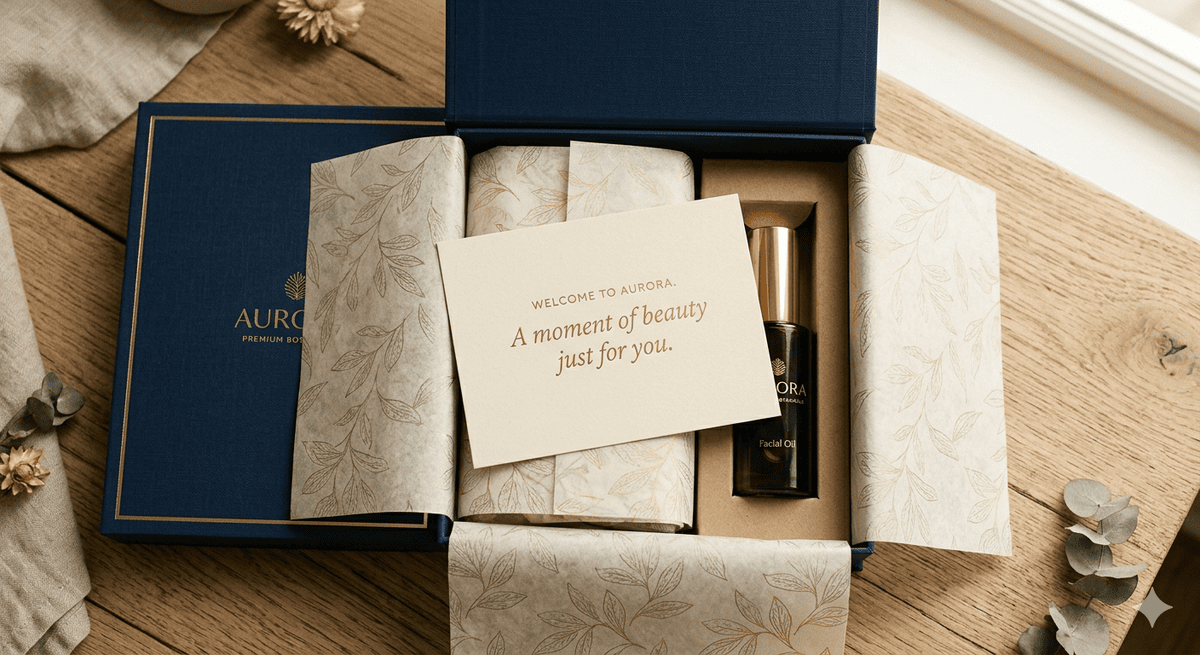
First Impressions Count: Designing the Unboxing Experience
Key Takeaways
- The unboxing moment is the highest-engagement point in the customer lifecycle — brands that design for the full ownership journey here, not just the reveal, build lasting relationships
- QR-based registration flows at unboxing capture 3–4x more customers than post-purchase web forms, making the box the most efficient registration channel a manufacturer has
- Premium unboxing experiences correlate with higher customer lifetime value, lower return rates, and organic reach from user-generated content that outperforms brand content
- Sustainable and connected unboxing design are not in conflict — the same QR code that delivers the brand story can drive setup, warranty registration, and ongoing product support
In the age of social media, your packaging isn't just protection -- it's performance. Research consistently shows that packaging design influences purchasing decisions, and a significant share of consumers share unboxing experiences on social media. The unboxing moment is also the entry point to a much longer relationship — and the brands that design for that whole journey, not just the reveal, are building something that creates lasting brand experience.
The Unboxing Economy
The unboxing moment has transformed from a private interaction into one of the most powerful organic marketing channels available to product brands. When a customer opens a package, they are not just retrieving a purchase — they are experiencing a carefully staged brand encounter that shapes their entire relationship with the product. Brands that design deliberately for this moment generate measurable downstream benefits: higher social sharing rates, stronger brand recall, and lower return volumes compared to brands that treat packaging as a commodity. The economy around unboxing is real: YouTube search data shows over 60 million monthly queries for "unboxing" alone, and TikTok and Instagram consistently amplify package-reveal content far beyond standard brand posts. That audience reach comes at zero paid media cost. For manufacturers, the unboxing moment is also the highest-attention window for capturing product registration and beginning a direct customer relationship. Designing for it is not a luxury — it is a growth lever.
Unboxing has evolved from a private moment to a public performance:
The Social Media Multiplier
- "Unboxing" videos generate billions of views annually on YouTube alone — the search term "unboxing" has been queried over 60 million times per month on Google, according to Google Trends data
- Instagram and TikTok unboxing content consistently outperforms standard brand content in engagement
- User-generated unboxing content drives significantly more website traffic than brand-created content
Business Impact Beyond Buzz
Smart unboxing design delivers measurable results:
- Higher customer lifetime value for brands with premium unboxing experiences
- Lower return rates when packaging includes proper product presentation
- Meaningful organic reach from shareable packaging design
- Improved customer satisfaction scores from thoughtful unboxing sequences
Psychology of the Perfect Unboxing
What turns a routine delivery into a moment customers photograph, share, and remember? The answer lies in how the human brain processes anticipation and reward. Unboxing activates the same dopamine pathways as gift-giving: each layer removed generates a small anticipation hit, and the final reveal provides a satisfaction response that correlates directly with emotional brand attachment. Brands that understand this design packaging as a sequence, not a container. Every element — the resistance of a lid, the weight of a box, the sound of tissue paper — contributes to or detracts from that sequence. Sensory engagement across multiple channels (tactile, visual, auditory) creates multi-dimensional memory encoding, which is why customers recall premium unboxing experiences months later but forget generic ones immediately. The sharing impulse is a by-product of that peak emotional state: customers reach for their phones when a brand has successfully built and then exceeded their expectations through staged, deliberate revelation.
The Anticipation Build
Layer Revelation: Great unboxing creates progressive discovery
- Outer shipping box sets initial expectations
- Branded inner packaging builds excitement
- Protective layers that reveal glimpses of the product
- Final reveal that exceeds initial expectations
Sensory Engagement: Multiple senses create memorable experiences
- Tactile: Quality materials that feel premium
- Visual: Color palettes and design that align with brand identity
- Auditory: Satisfying sounds of quality closures and materials
- Olfactory: Subtle scents that enhance brand recall
The Sharing Impulse
Instagram-Worthy Moments: What makes customers reach for their phones?
- Surprise elements: Unexpected gifts, notes, or packaging details
- Beautiful presentation: Products displayed like jewelry in a showcase
- Personalization: Custom messages or configurations that feel unique
- Story elements: Packaging that tells a brand story or product journey
Anatomy of Exceptional Unboxing
Exceptional unboxing experiences are structured in three distinct tiers, each serving a specific psychological function in the customer journey. The outer experience sets initial expectations and communicates brand intent before the product is visible. The brand revelation layer delivers the emotional payoff — the moment packaging signals that what is inside was chosen and presented with care. The product presentation tier is the culmination: the hero reveal that either meets or exceeds the anticipation built by the prior two layers. Brands that collapse these tiers into one undifferentiated box miss the compounding effect of staged discovery. The most effective packaging systems treat each tier as a deliberate design brief, with materials, messaging, and structure chosen to serve the specific psychological need of that stage. Connected packaging elements — QR codes linking to product registration flows — belong at the outer or revelation tier, where customer attention is highest and registration intent is strongest.
Tier 1: The Outer Experience
Shipping Box Strategy
- Branded shipping boxes vs. plain brown alternatives show notably higher brand recall
- Right-sized packaging reduces damage and improves presentation
- Tamper-evident sealing that builds trust and security
First Impression Moments
- Custom tape, labels, or stickers that hint at what's inside
- Opening instructions that build anticipation ("Open carefully for the best experience")
- QR codes linking to exclusive content or experiences — including product registration flows that capture ownership at the highest-engagement moment
Tier 2: The Brand Revelation
Inner Packaging Design
- Branded boxes, bags, or wrapping that feels like a gift
- Color psychology that reinforces brand identity and product positioning
- Materials that communicate quality level (premium vs. accessible)
Information Architecture
- Welcome messages that connect emotionally with customers
- Clear product information without overwhelming the experience
- Positioning of accessories, documentation, and support materials
Tier 3: The Product Presentation
Hero Product Display
- Product positioned as the star of the show
- Protective materials that enhance rather than hide the product
- Reveal sequences that create anticipation and satisfaction
Supporting Cast Organization
- Accessories and components organized logically and beautifully
- Clear identification of what each component does
- Documentation that enhances rather than clutters the experience
Case Studies: Unboxing Excellence
The most instructive way to understand what makes unboxing design work is to examine brands that have made it a competitive advantage. Apple, Glossier, and Warby Parker represent three distinct approaches — premium minimalism, social-native design, and service-first packaging — each calibrated to a specific customer relationship model. None of these outcomes happened by accident. Each company runs packaging decisions through the same lens as product design: what does this communicate, how does it feel, what does the customer do next? The common thread across all three is intentionality. Every material choice, every layer, every printed element serves a defined purpose in building the brand relationship. The lesson for other brands is not to copy the aesthetic of any of these examples, but to adopt the same rigour: treat packaging as a strategic asset that works every time a product ships, at scale, without a salesperson in the room.
Apple: The Master Class
What They Do Right:
- Clean, minimalist design that lets the product be the hero
- Progressive revelation through carefully designed layers
- Premium materials that communicate quality before the product is even revealed
- Consistent experience across all product categories
Measurable Impact:
- Apple unboxing videos consistently outperform competitors in views by a wide margin
- The vast majority of Apple customers describe unboxing as "satisfying" or "exciting"
- The unboxing experience is frequently cited as a factor in Apple brand loyalty
Lessons for Other Brands:
- Consistency across product lines builds brand recognition
- Simple can be more impactful than complex
- Quality materials justify premium pricing
Glossier: Social Media Native
What They Do Right:
- Pink bubble mailers that are instantly recognizable
- Holographic stickers and fun, branded inserts
- Product presentation optimized for flat-lay photography
- Surprise elements that encourage sharing
Measurable Impact:
- A large share of Glossier customers share unboxing content on social media
- User-generated content drives a significant portion of new customer acquisition
- Unboxing posts generate engagement rates well above industry averages
Lessons for Other Brands:
- Know your audience's social media habits
- Design for the camera, not just the customer
- Consistent brand elements create recognizable moments
Warby Parker: Functional Delight
What They Do Right:
- Try-at-home experience that turns packaging into a service
- Clear organization that makes trying multiple products easy
- Return process built into the packaging design
- Educational content that helps customers make better decisions
Measurable Impact:
- Try-at-home customers convert at rates well above the industry average
- Return rates significantly lower than traditional eyewear retailers
- Customer acquisition costs lower than competitors due to the trial model
Lessons for Other Brands:
- Packaging can enable new business models
- Thoughtful organization reduces customer effort
- Educational content builds confidence in purchase decisions
Designing for Different Product Categories
There is no universal unboxing template that works across product categories. The right packaging design is determined by the product's physical requirements, the customer's emotional state at purchase, and the specific moments of delight or frustration most likely in that category. Electronics customers arrive anxious about setup complexity and reassured by organisation. Fashion customers arrive in a gift mindset and reward presentation. Food and beverage customers are driven by freshness cues and provenance storytelling. Beauty customers respond to ritual and education. Each category has its own version of the "perfect unboxing" — and brands that import packaging conventions from the wrong category signal a mismatch between product and brand that erodes trust. The best starting point is to map the customer's emotional state at each stage of the unboxing and design each packaging element to serve that specific state rather than applying a generic "premium packaging" brief across the board.
Electronics & Tech
Challenges: Complex products with multiple components Opportunities: Educational packaging that reduces support calls
Best Practices:
- Component organization that matches setup sequence
- Visual guides integrated into packaging structure
- Cable management that prevents tangling
- Protective materials that double as organization systems
Example: Gaming headset packaging with numbered compartments matching setup steps, cable management integrated into foam inserts, and QR code linking to setup video.
Fashion & Apparel
Challenges: Varied product sizes and seasonal relevance Opportunities: Personal styling and gift-like presentation
Best Practices:
- Tissue paper and presentation that makes every order feel like a gift
- Consistent brand elements across different product types
- Seasonal packaging variations that feel relevant
- Care instructions integrated beautifully into packaging
Example: Clothing brand using custom tissue paper with styling tips, seasonal color variations, and reusable garment bags.
Food & Beverage
Challenges: Freshness protection and temperature sensitivity Opportunities: Educational content about product origins and uses
Best Practices:
- Protective packaging that maintains product quality
- Information about sourcing, preparation, or nutritional benefits
- Recipe cards or usage suggestions
- Sustainable materials that align with food values
Example: Specialty tea company with individual flavor pouches, brewing guide cards, and compostable packaging materials.
Beauty & Personal Care
Challenges: Product safety and sample integration Opportunities: Education about usage and ingredient benefits
Best Practices:
- Protective packaging that prevents damage and leakage
- Educational materials about ingredients and benefits
- Sample integration that encourages product trial
- Consistent brand aesthetic across product lines
Example: Skincare brand with step-by-step routine cards, protective individual packaging for each product, and samples sized for one week of use.
The Connected Unboxing Experience
Physical packaging is a finite canvas, but the unboxing moment can open into an unlimited digital experience when brands deploy connected packaging intelligently. A QR code placed at the right point in the unboxing sequence — visible before the product is fully revealed — captures customer attention at peak engagement and routes it toward the most valuable digital actions: warranty registration, setup guidance, brand storytelling, or community access. Registration conversion benchmarks consistently show that scan-to-register flows outperform post-purchase web forms by 3–4x, precisely because the customer is already present, attentive, and emotionally invested. Beyond QR codes, augmented reality and personalisation technologies allow packaging to deliver experiences that change based on who the customer is, what they purchased, and when they bought it. The connected unboxing experience does not replace the physical experience — it extends it, turning a one-time moment into the entry point for a long-term digital relationship between brand and owner.
Modern unboxing extends beyond physical packaging to digital integration:
QR Code Integration
Setup and Support: Links to video tutorials, setup guides, or troubleshooting resources — giving customers the option to register their warranty directly from the box is one of the highest-converting connected packaging flows, and registration conversion benchmarks show scan-to-register flows can achieve 3-4x the capture rate of traditional web forms Brand Storytelling: Access to behind-the-scenes content, founder stories, or product development insights Community Connection: Direct links to user communities, social media, or review platforms Exclusive Content: Access to additional resources, discounts, or early product previews
Augmented Reality Enhancement
Product Visualization: AR overlays showing product features or usage demonstrations Setup Assistance: Visual guides overlaid on real-world spaces Social Sharing: AR filters or effects that encourage social media sharing Brand Experience: Interactive elements that extend engagement beyond the physical unboxing
Personalization Technologies
Dynamic Packaging: Custom inserts or messages based on customer data Relevant Accessories: Product combinations based on customer preferences or previous purchases Localized Content: Language, cultural, or regional customization Timing Optimization: Seasonal or event-specific packaging variations
Measuring Unboxing Success
Unboxing design investments are only defensible if they are connected to measurable business outcomes. The challenge is that unboxing impact is distributed across multiple metrics that are rarely tracked in the same dashboard: social sharing, return rates, satisfaction scores, customer lifetime value, and support ticket volume each capture a different dimension of packaging performance. Brands that measure only one dimension — typically social sharing — undercount the return on investment by missing the operational savings from lower returns and reduced support load. A rigorous measurement framework tracks all three tiers of impact: social reach (shares, hashtag performance, user-generated content engagement), customer experience (satisfaction scores, NPS correlation, return rates), and business results (lifetime value differential between high- and low-unboxing-satisfaction cohorts, referral rates, and revenue attribution from social content). Establishing baseline measurements before any packaging change is essential — without a pre-change benchmark, the business impact of improvements cannot be isolated or communicated to stakeholders.
Social Media Metrics
Share Rate: Percentage of customers who share unboxing content Engagement Quality: Average likes, comments, and shares on user-generated content Reach Amplification: How far unboxing content spreads beyond initial followers Hashtag Performance: Usage and engagement with branded hashtags
Customer Experience Metrics
Satisfaction Scores: Specific questions about packaging and unboxing experience Net Promoter Score: Correlation between unboxing experience and recommendation likelihood Return Rates: Impact of packaging quality on product returns Support Ticket Volume: Reduction in setup or usage questions
Business Impact Metrics
Customer Lifetime Value: Comparison between customers with different unboxing experiences Referral Rates: New customers acquired through unboxing social shares Cost per Acquisition: Impact of user-generated content on marketing efficiency Revenue Attribution: Sales directly traceable to unboxing social media content
Common Unboxing Mistakes
Most unboxing failures follow predictable patterns, and understanding them is faster than discovering them through customer complaints. The four most common mistakes share a root cause: packaging decisions made in isolation from the customer's actual experience. Over-packaging frustrates customers who expect a proportionate relationship between effort and reward. Generic design fails to communicate any brand differentiation at the moment when the customer is most open to brand messaging. Ignoring the return journey creates friction at precisely the moment when a customer's trust is most fragile. And designing without considering how packaging photographs means missing the entire social amplification channel that makes unboxing economically significant. None of these mistakes require expensive design budgets to fix. They require a shift in how packaging is briefed: from "protect and contain" to "communicate, delight, and enable" — across the full customer journey, not just the forward delivery.
Mistake #1: Over-Packaging
The Problem: Excessive layers, materials, or protective elements that frustrate customers Better Approach: Right-sized packaging with purposeful layers that enhance rather than complicate
Mistake #2: Generic Experience
The Problem: Packaging that could be from any brand in the category Better Approach: Distinctive brand elements that create recognizable moments
Mistake #3: Ignoring the Return Journey
The Problem: Packaging designed only for initial unboxing, not return or reuse Better Approach: Packaging systems that work for both delivery and returns
Mistake #4: Social Media Blind
The Problem: Packaging designed without considering how it will look in photos or videos Better Approach: Testing packaging design through phone cameras and social media lenses
Building Your Unboxing Strategy
Improving unboxing design is most effective when approached as a structured programme rather than a single redesign project. Brands that treat packaging as an ongoing optimisation cycle — assess, design, pilot, scale, improve — consistently outperform those that make one-time investments. The three-phase structure below mirrors how high-performing consumer brands approach packaging evolution: starting with rigorous current-state assessment, moving through prototype testing with real customers before committing to scale, and maintaining a feedback loop that surfaces improvement opportunities continuously. The assessment phase is where most organisations underinvest. Filming your current unboxing experience from the customer's point of view, benchmarking against competitor packaging, and directly surveying customers about packaging satisfaction generates the evidence base that turns packaging investment decisions from opinion into data. Without that foundation, design changes are guesses. With it, they are targeted improvements with measurable success criteria.
Phase 1: Assessment and Planning
Audit Current Experience
- Video-record current unboxing process from customer perspective
- Identify pain points, confusion moments, and missed opportunities
- Benchmark against competitors and aspirational brands
- Survey customers about current packaging satisfaction
Define Brand Goals
- Determine primary objectives (social sharing, satisfaction, cost reduction)
- Identify target customer segments and their preferences
- Establish budget parameters for packaging improvements
- Set measurable success criteria
Phase 2: Design and Testing
Prototype Development
- Create multiple packaging concepts aligned with brand goals
- Test with focus groups and individual customers
- Iterate based on feedback and practical constraints
- Develop cost models for different approaches
Pilot Programs
- Launch limited tests with select customer segments
- Measure impact on key metrics (satisfaction, sharing, returns)
- Collect detailed feedback through surveys and interviews
- Refine approach based on real-world performance
Phase 3: Implementation and Optimization
Scaled Rollout
- Implement improved packaging across product lines
- Train customer service teams on new packaging features
- Create customer education content about packaging benefits
- Monitor impact on business metrics
Continuous Improvement
- Regular customer feedback collection and analysis
- Seasonal or special edition packaging variations
- Integration of new technologies and materials
- Ongoing optimization based on performance data
Sustainability and Unboxing
Sustainability and premium unboxing design are not competing objectives — but many brands treat them as if they are, either sacrificing the experience for minimal packaging or sacrificing environmental credibility for elaborate presentation. The brands resolving this tension most effectively have recognised that the conflict is largely false. Deliberate, right-sized packaging made from quality sustainable materials can deliver a stronger unboxing experience than excessive multi-layer packaging made from virgin materials. The constraint of sustainability forces a discipline that often improves design: every element must earn its presence, which eliminates the filler and padding that customers discard without noticing. Reusable packaging components — bags, boxes, and pouches designed for ongoing customer use — extend the brand presence beyond the unboxing moment and generate their own social content. Clear, honest end-of-life guidance for packaging materials is itself a brand signal to the growing segment of consumers who factor environmental responsibility into purchase decisions and brand loyalty.
The Green Packaging Challenge
Modern consumers expect both delight and sustainability:
Eco-Friendly Materials: Recyclable, biodegradable, or reusable packaging options Minimal Waste: Right-sizing and efficient design that reduces unnecessary materials Local Sourcing: Packaging materials sourced responsibly and locally when possible End-of-Life Planning: Clear instructions for recycling or reusing packaging components
Sustainable Delight Strategies
Reusable Elements: Packaging components designed for ongoing customer use Educational Content: Information about sustainability practices and environmental impact Take-Back Programs: Systems for customers to return packaging for reuse or recycling Minimal-Maximal Approach: Maximum impact with minimal environmental footprint
Technology Integration for Unboxing
Technology is expanding what packaging can do — from passive container to active participant in the customer experience. Smart packaging solutions already deployed at scale include temperature-monitoring sensors for cold-chain products, tamper-detection indicators that build consumer trust, and NFC tags that trigger digital experiences without requiring a camera scan. These technologies are not speculative: they are available today and cost-effective at meaningful production volumes for brands in electronics, food, pharmaceutical, and premium consumer goods categories. The more forward-looking integrations — AI-driven personalisation that customises insert content per order, voice-guided unboxing sequences, and holographic display elements — are moving from concept to pilot programmes among early-adopter brands. For most manufacturers, the near-term opportunity is not in exotic future technologies but in fully deploying the connected packaging capabilities that are already proven: serialised QR codes, digital product registration, and post-purchase digital experiences that turn the unboxing moment into the start of a measurable customer relationship.
Smart Packaging Solutions
Temperature Monitoring: Sensors that track product condition during shipping Tamper Detection: Technology that alerts customers to package interference Location Tracking: Real-time updates on package location and delivery timing Interactive Elements: NFC tags or smart labels that trigger digital experiences
Future Unboxing Technologies
AI-Powered Personalization: Dynamic packaging customization based on customer data Voice Integration: Packaging that works with smart speakers for guided unboxing Biometric Authentication: Packaging that opens only for intended recipients Holographic Displays: Advanced visual effects integrated into packaging materials
The Branded Mark Unboxing Advantage
Every physical product that ships is a registration opportunity, a brand story delivery, and a potential social media post — but only if the packaging is designed to activate all three. Branded Mark connects physical packaging to digital product ownership at the exact moment those capabilities matter most: when the customer is holding the product, emotionally engaged, and open to registering, exploring, and sharing. A serialised QR code on the inner packaging routes each specific customer to a personalised registration flow that captures ownership, triggers warranty activation, and opens a direct brand-to-owner communication channel — all without friction and without requiring the customer to navigate a website. That same connected layer delivers setup guides, brand storytelling, and social sharing prompts precisely when customer attention is highest. When unboxing also involves assembly, the psychological effect compounds — read about the IKEA Effect and how assembly builds brand loyalty to understand why.
- QR codes that link to setup guides, brand stories, or exclusive content
- Digital integration that turns a static box into an interactive experience
- Social sharing prompts that make it easy for customers to share their excitement
Ready to design unboxing experiences that customers can't wait to share? Join our waitlist to learn how Branded Mark is building connected packaging tools.
Frequently Asked Questions
Why does the unboxing experience matter for customer retention?
The unboxing moment is the first physical interaction between customer and brand — and first impressions set the entire relationship trajectory. Research shows that customers who rate their unboxing experience highly have measurably higher satisfaction scores, lower return rates, and higher likelihood to recommend the brand. More importantly, the unboxing moment is the optimal window for warranty registration and product onboarding: customer attention and emotional investment are at their peak.
What makes a QR code effective at the unboxing moment?
A QR code is effective when it links to something the customer actually needs at that moment: a setup guide, a warranty registration flow, or a quick-start video. A code that links to a general brand page or a marketing story fails at unboxing because it delivers the wrong content for the moment. The most effective unboxing QR codes are serialised — they know which specific unit was purchased and serve content and registration flows accordingly.
How do brands design packaging for social sharing without sacrificing sustainability?
The key is intentionality. Over-packaging generates social shares at the cost of sustainability credibility and return logistics complexity. The strongest approach uses minimal, high-quality materials with distinctive brand elements — unusual textures, signature colours, unexpected structural design — that photograph well and feel premium without excess. Reusable packaging components and clear recycling guidance can themselves become sharable content for environmentally conscious audiences.
What is the connected unboxing experience?
A connected unboxing experience bridges the physical packaging and the digital product relationship. At minimum, it includes a QR code that triggers warranty registration and provides setup assistance. At full implementation, it includes personalised content based on the specific model, a frictionless registration flow that captures customer identity, and a product experience that evolves with the customer across the full product lifecycle — turning the unboxing moment into the start of a multi-year relationship rather than a one-time event.